If you’ve ever walked through a commercial fabrication shop, you’ve almost certainly heard the high, steady whine of an aluminum profile drilling machine—those robust, purpose-built tools that zip through 6061-T6 extrusion like it’s soft foam, punching precise holes for window frames, solar panel mounts, or industrial railings. For years, my team and I (I lead a small manufacturing equipment supply company that’s specialized in aluminum profile drilling machines for over a decade) have gotten the same question: “Can these machines actually be used for anything besides aluminum?” Aluminum Profile Drilling Machine

It’s a fair one. Most of our customers buy our equipment explicitly for aluminum—rightfully so, given how integral those profiles are to modern construction and aerospace. But over the years, we’ve seen our machines tackle everything from soft plastics to mild steel, with the right adjustments, of course. Today, I want to break this down honestly, based on hands-on experience, lab testing, and the dozens of shop owners who’ve come to us with unique material needs beyond aluminum.
First, let’s ground this in what makes an aluminum profile drilling machine different from a standard general-purpose drill press, because that’s the root of the flexibility (and the limits) here. Unlike a standalone drill press that’s built to handle a wide range of materials from steel to wood, aluminum profile drilling machines are designed around the unique properties of extruded aluminum. Extrusions are long, often lightweight, and prone to flexing—so these machines have extra-long worktables, specialized clamping systems that grip the profile evenly along its length, and high-speed drill spindles (usually between 10,000 and 20,000 RPM) that cut cleanly through soft, non-ferrous metal without leaving burrs. They also use carbide-tipped drills optimized for aluminum, which have sharp, smooth flutes that don’t clog with the metal’s ductile swarf.
So, what materials work well with these machines, and what do shop owners need to know before testing them? Let’s start with the low-hanging fruit: non-ferrous metals similar in softness to aluminum. Copper and brass, for example. Last year, a small custom metal fabricator in Chicago reached out to us because their existing drill press broke, and they needed to drill holes in brass electrical busbars for commercial buildings. They’d seen our machines at a trade show and were skeptical—until we walked them through a quick on-site test. Brass is only slightly harder than aluminum, so we just adjusted the spindle speed from 15,000 RPM (ideal for 6061 aluminum) down to 12,000 RPM, swapped the aluminum-specific drill bit for a general-purpose carbide bit (wait—hold on, that’s a key point: tooling can’t always be reused, even for similar metals), and clamped the busbars just like we would an aluminum extrusion. The test holes came out clean, no burrs, and the machine handled the material with zero issues. They bought a used model from us a month later, and now drill 100+ busbars a day on it. Copper works even better—its ductility is very close to aluminum, so you can run the same spindle speed and use the same type of drills, as long as you make sure the swarf (the tiny metal shavings) is cleared properly, since copper swarf is a bit stickier than aluminum.
Next up: soft, non-metallic materials. We’ve seen customers use our aluminum profile drilling machines for PVC, acrylic, and even medium-density fiberboard (MDF)—all things you’d never expect to see a metal-cutting machine handle. A custom sign maker in Miami came to us two years ago, frustrated that his old CNC router was too slow and too expensive to operate for small-batch sign drilling. He needed to drill precise, evenly spaced holes in acrylic signs for retail storefronts, and his router was leaving fuzzy edges and taking too long on small runs. We showed him that our aluminum profile drilling machines can be adjusted to handle these materials easily. For PVC, you drop the spindle speed way down—usually to 3,000 to 5,000 RPM, because high speed melts PVC. You also swap the carbide bit for a high-speed steel (HSS) bit with a pointed tip, which cuts through PVC without chipping. For acrylic, you need to add a bit of coolant to the cutting area, because acrylic has a low glass transition temperature and can crack if it gets too hot. A window fabricator we work with in Dallas even uses their machine to drill holes in foam insulation boards for custom roofing, as long as they use a special drill bit that doesn’t compress the foam. The key here is that these machines have fine control over feed rate—how fast the drill bit moves into the material—which makes them perfect for soft materials that would tear or chip if you pushed too fast.
Now, the part that surprises a lot of people: mild steel. Wait, steel? On a machine built for aluminum? It’s not as straightforward as copper or PVC, but it’s doable—if you’re careful. A structural steel fabricator in Detroit reached out to us in 2021, saying he needed to drill small holes (under 10mm) in mild steel angle brackets for parking garages, and his existing machine could only handle aluminum. He was worried about burning out the spindle on his 10-year-old machine, so we did a series of tests in our own shop. The main issues with running mild steel on an aluminum profile drilling machine are twofold: first, steel is much harder than aluminum (mild steel has a Rockwell hardness of around 70, while aluminum is around 15), so the high spindle speeds that work for aluminum will actually cause the drill bit to wear out almost immediately, and second, the spindle’s torque (the twisting force that turns the bit) is designed for soft metal, so if you push too hard on steel, you can damage the motor.
Our solution? We adjusted the spindle speed down to 5,000 RPM, used a heavy-duty cobalt drill bit (much harder than the carbide bits we use for aluminum), and slowed the feed rate to half what we’d use for aluminum. We also added a flood coolant system to the spindle, which kept the drill bit cool and prevented steel swarf from welding itself to the bit. The result? Clean, accurate holes in mild steel, with drill bits that lasted almost as long as they would on a dedicated steel drill press. The fabricator bought a new machine from us a few months later, and now uses it for both aluminum brackets and steel, depending on the job. That said, we always emphasize that running steel on these machines is a secondary use—if a customer is drilling 50% or more steel, we recommend a dedicated steel drill press for long-term cost savings, because even with adjustments, the spindles and bits will wear faster.
Now, let’s talk about the materials that won’t work, no matter how much you adjust. Hard metals like stainless steel, titanium, or tool steel are out—their high hardness means they’ll destroy even the best drill bits in minutes, and the low torque and high spindle speed of our aluminum profile machines aren’t built to handle the force needed to cut through them. We also don’t recommend hardwood or thick composite materials (like carbon fiber reinforced polymer, or CFRP) without serious modifications. Hardwood, for example, has dense grain that can cause splintering, and while you can adjust speed for soft woods, dense oak or maple will dull bits quickly. CFRP, on the other hand, requires special diamond-tipped drills and very slow feed rates, and most aluminum profile machines don’t have the precision control needed for that level of cutting, so we don’t advise trying it unless you have specific upgrades.
I want to be clear here: this isn’t a “one-size-fits-all” situation. Every material is different, and every machine is slightly different—our newer models have higher torque spindles that can handle more than our 10-year-old used units. Over the years, we’ve built a database of test results for dozens of materials, from aluminum to zinc, and we share that with every customer who asks, because we don’t want them to waste money on adjustments that won’t work, or damage their machine.
Another thing to consider: the design of your part. Aluminum profile drilling machines are built to work with long, straight, uniform profiles—so if you’re working with irregularly shaped parts, like round pipe or complex castings, you might need to use a different clamping system to keep the material stable while drilling. For example, a customer who wanted to drill holes in 2-inch diameter copper pipe had to add custom V-shaped clamps to their machine, since the standard profile clamps only work on rectangular or square extrusions. That’s a small adjustment, but it’s critical for getting accurate holes without damaging the part.
We’ve also seen small businesses save thousands of dollars by using their aluminum profile drilling machines for multiple materials, instead of buying separate tools. A small architectural metal shop in Seattle, for example, uses their machine to drill aluminum window frames during the week, and then switches to copper for custom door hardware on weekends. They told us that instead of buying a separate drill press for steel, they now use their aluminum machine for occasional steel brackets, and have saved over $20,000 in the last three years by not buying extra equipment. That’s the real value here—flexibility for small to medium shops that don’t have the budget to buy multiple specialized tools.
Of course, there are limits. We always tell customers that if their primary material isn’t aluminum, they’re probably better off with a machine designed for that material. If you’re drilling mostly stainless steel, don’t try to force it through an aluminum machine—you’ll just end up with broken bits, damaged parts, and a frustrated team. But for small-batch runs, unique material projects, or occasional secondary uses, these machines can be surprisingly versatile.
Over the years, we’ve learned that the best tool isn’t always the one built for exactly one job—it’s the one that can adapt to your needs, as long as you use it correctly. Our team doesn’t just sell machines; we work with customers to figure out what their actual needs are, whether that’s drilling aluminum extrusions for solar panels, custom copper busbars, or even PVC signs. If you’ve got a material you want to test, bring it in and we’ll run a free test in our shop—no obligation, no pressure to buy.
At the end of the day, our whole business is built on helping fabricators do more with less, and if an aluminum profile drilling machine can do more than just drill aluminum, that’s a win for everyone. We’ve seen customers turn one tool into two, complete projects faster, and save money, all because they were willing to ask, “What else can this do?”
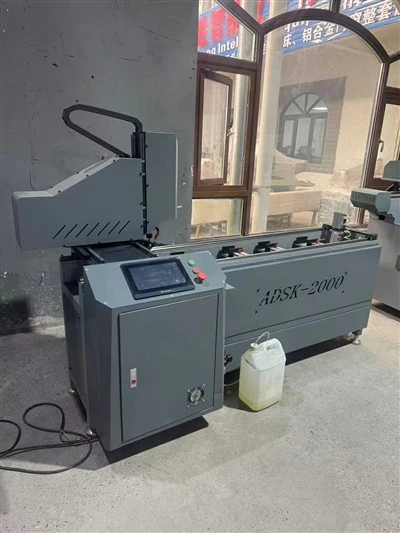
If you’re a shop owner who’s got a unique material project, or you’re curious about whether our machines can work for your specific needs, don’t hesitate to reach out for a consultation. We’re here to help you figure out the best solution for your business, no matter what materials you’re working with.
Dual Head Aluminium Cutter References
ASM International. (2019). Machining of Non-Ferrous Alloys. ASM Handbook, Volume 16: Machining.
Norton, R. L. (2020). Machine Design: An Integrated Approach (6th ed.). Pearson Education.
Society of Manufacturing Engineers. (2021). Drilling Fundamentals for Fabrication Shops. SME Training Series.
Kanghong Building Materials Technology Sdn. Bhd.
As one of the most professional aluminum profile drilling machine manufacturers and suppliers in China, we have world-leading production equipment and strong manufacturing capabilities. Please feel free to wholesale advanced aluminum profile drilling machine for sale here from our factory. Customized orders are welcome.
Address: No.601, Block 2, Xinlianchang Industrial Park, No.2 Taixing Second Road, Taiping South Industrial Zone, Dali Town, Nanhai District, Foshan City
E-mail: 631871392@qq.com
WebSite: https://www.kanghong-building.com/
