As a hot-dip galvanizing equipment supplier specializing in structural components, I’ve spent the last 18 years on factory floors, troubleshooting line slowdowns and fielding questions from fabricators who swear their zinc coating adhesion fails for “no apparent reason.” Nine times out of ten, the issue traces back to the pre-treatment step—often the most overlooked, most finicky part of the galvanizing process. When I explain that pre-treatment chemicals aren’t just “soap and water,” I can almost see the gears turn: fabricators think galvanizing is just dunking steel in molten zinc, but skip the prep and you’re left with flaky coatings, corrosion that starts at the welds, and expensive rework that eats into project timelines. Today, I want to break down the chemicals that make pre-treatment work, how they interact with structural steel’s unique quirks, and why picking the wrong chemistry can tank even a well-maintained galvanizing line. Structural Components Hot-dip Galvanizing Equipment
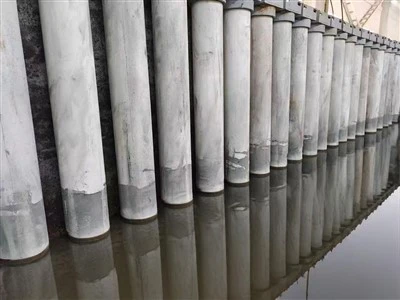
First, let’s ground this in what pre-treatment actually does for structural components, not just generic steel. Structural parts—beams, columns, custom brackets, or heavy machinery frames—aren’t flat, clean sheet metal. They have mill scale, welding slag, oil and grease from rolling and fabrication, and sometimes even residual rust from storage outdoors. Mill scale, that crusty, gray-black layer on hot-rolled steel, is a mix of iron oxides (FeO, Fe₂O₃, Fe₃O₄) that won’t bond with molten zinc. Welding slag is a glassy, silicate-based residue that’s just as inert. If you dunk steel straight into the zinc pot, those layers float to the surface, forming dross that contaminates the zinc, and the underlying steel never sticks—you end up with a paper-thin coating that fails before the project even leaves the fabrication yard. Pre-treatment exists to strip all that away, condition the steel surface, and create a rough, zinc-friendly texture that locks the coating in place.
The first step in almost every galvanizing pre-treatment line is a degreaser, and for good reason: structural steel picks up more oil and grease than any other steel product. Rolling mills use heavy-duty lubricants to shape beams, fabricators use cutting oils and coolants to grind welds, and even outdoor storage leaves grime that’s a mix of petroleum-based oils, dirt, and sometimes even anti-corrosion coatings left on for transport. Skipping degreasing? That’s a guaranteed failure. Grease creates a barrier between the steel and both pickling and flux, leading to bare spots, uneven coating, and excessive dross in the zinc pot over time.
Degreasers for structural components fall into two main categories, and the choice depends on your line’s capacity and the steel’s condition. Alkaline degreasers are the workhorse here—they’re cheap, effective for heavy oils, and easy to integrate into automated lines. The active ingredients are usually sodium hydroxide (NaOH) or potassium hydroxide (KOH), blended with surfactants, emulsifiers, and chelating agents. Surfactants reduce the surface tension of the degreaser, so it can seep into crevices and hard-to-reach spots on complex structural parts, like the gap between two welded plates or the inside of hollow columns. Chelating agents, like sodium tripolyphosphate (STPP) or ethylenediaminetetraacetic acid (EDTA), bind to calcium and magnesium in hard water, preventing those minerals from reacting with the alkaline solution and forming insoluble salts that leave streaks on the steel. For really heavy grease—like residue from steel that’s been sitting in a yard for 6 months—some fabricators use alkaline degreasers with added builders, like sodium silicate, which boost cleaning power without raising pH too high, making the solution gentler on the steel’s base.
The other option is solvent degreasers, which use mineral spirits, trichloroethylene, or more modern, low-VOC (volatile organic compound) solvents. These work faster on light oils, but they’re less common for structural components because they’re more expensive, require expensive containment systems, and they don’t remove the mill scale that alkaline degreasers leave behind. Most structural galvanizers stick to alkaline degreasers because they can handle high volumes, work on multiple contaminants, and are compatible with the automated spray systems we design for our clients.
Once degreasing is done, the next step is pickling, and this is where things get specific. Pickling’s job is to remove mill scale, rust, and any remaining welding slag from the steel surface. For structural components, pickling is almost always done with hydrochloric acid (HCl)—more than 80% of the galvanizing lines we’ve installed use HCl for pickling, and for good reason. Sulfuric acid is cheaper, but it reacts slower with mill scale, so it leaves more residual oxide that causes poor adhesion. Hydrochloric acid is stronger, dissolves mill scale quickly, and produces a more reactive steel surface that’s perfect for bonding with zinc.
But pure HCl alone won’t cut it, especially for structural steel. We almost always recommend adding pickling inhibitors to the acid bath—this is a game-changer for both equipment and coating quality. Inhibitors are organic compounds, usually made from amines or fatty acids, that form a thin, protective film on the steel surface while the acid eats away at mill scale. Without inhibitors, HCl would not only strip the mill scale but also react with the base steel itself, causing “acid burn”—pitting that leaves tiny holes in the structural part, which are not only unsightly but can also become corrosion sites down the line. For fabricators who process high-tensile structural steel, which is extra prone to hydrogen embrittlement (a condition where hydrogen from acid reacts with steel’s grain structure, causing it to crack under stress), we suggest using corrosion inhibitors that also act as hydrogen scavengers, reducing the risk of embrittlement without slowing down pickling.
For structural parts with particularly thick mill scale or heavy welding slag, some galvanizers use a two-step pickling process: a primary HCl bath to strip the bulk of the scale, followed by a weak sulfuric acid bath to smooth out the surface. But this adds time and cost, and for most structural applications, a single HCl bath with inhibitors is more than enough. We always advise clients to test their steel’s mill scale thickness before adjusting their pickling chemistry—too strong an acid for thin scale will cause unnecessary steel loss, too weak for thick scale will leave residue that ruins the final coating.
After pickling, the steel goes through a thorough rinsing step—this is non-negotiable. Any residual acid left on the steel will carry over into the next step, fluxing, and react with flux chemicals to form salts that leave white, powdery “chromate stains” on the finished coating. For structural components, which have lots of hard-to-rinse crevices, we recommend two-stage rinsing: a first rinse with clean tap water to remove bulk acid, and a second rinse with deionized (DI) water to eliminate dissolved solids that can leave streaks. We’ve seen lines cut corners here: a fabricator who skipped DI water rinsing ended up with 20% of their structural beams showing white stains, which had to be reprocessed, costing them $12,000 in labor and material in one quarter alone. That’s the kind of avoidable waste that comes from ignoring pre-treatment details.
The next step is fluxing, and this is where pre-treatment chemistry really starts to shape the final coating. Flux has two jobs: it removes any tiny remaining oxides on the steel surface, and it prevents the steel from oxidizing while it travels from the rinse tank to the zinc pot—structural parts take longer to move through a line than flat steel, so they’re exposed to air longer, making oxidation a bigger risk. The most common flux used for structural components is zinc ammonium chloride (ZAC), a water-based solution of zinc chloride and ammonium chloride.
But here’s where many fabricators get flux wrong: the ratio of those two chemicals matters more than you think. A typical ZAC solution is a 3:1 ratio of zinc chloride to ammonium chloride, but for high-tensile structural steel or parts with heavy welding slag, we often suggest adjusting that ratio to increase ammonium chloride. Ammonium chloride has a lower melting point than zinc chloride, so it burns off faster in the pre-heat step before the steel enters the zinc pot, reducing the amount of salt residue left on the coating. Too little ammonium chloride, and you get “flux residue” that causes uneven coating; too much, and you get excessive fumes in the galvanizing line, which not only is a safety hazard but also can lead to porosity in the zinc coating.
Some galvanizers now use non-ammoniacal fluxes, like zinc chloride alone, or even phosphate-based fluxes, but those are mostly for light-gauge steel or parts with no welds. For structural components, which have welds that are prone to oxide buildup, ZAC is still the standard because ammonium chloride’s reducing properties work especially well on weld surfaces. We also design our flux tanks with heated jackets and constant agitation, because cold flux or stagnant flux doesn’t coat the complex surfaces of structural parts evenly—you end up with some areas coated in flux and some not, leading to bare spots when the steel goes into the zinc pot.
The final pre-treatment step is drying, which might seem simple, but it’s just as important as the chemicals themselves. Any water left on the steel when it enters the zinc pot will react violently with molten zinc, causing “zinc explosion” and dross buildup—dross is that gray sludge that forms on the surface of the zinc pot, and too much of it means you have to skim it out constantly, slowing down production and increasing zinc waste. For structural components, which are heavy and take longer to dry, we usually recommend a hot-air drying step with temperatures between 120°C and 150°C, and sometimes a small pre-heat in an oven set just above the melting point of zinc (419°C, so a 450°C pre-heat) to make sure all residual moisture is gone. We’ve had clients skip proper drying because they thought it was “just water,” and ended up with dross levels 3x higher than average, costing them an extra $5,000 a month in zinc replacement.
Now, I want to talk about common mistakes I see fabricators make with these pre-treatment chemicals, because these are the issues that our equipment is designed to solve. First, using generic chemicals meant for flat sheet steel on structural parts. Flat steel has uniform surfaces, so a degreaser or flux that works for sheet metal will work for beams, but structural parts have crevices, hollow sections, and welds that trap chemicals. That’s why we design our lines with spray systems that target those spots—for hollow structural sections, for example, we add internal spray nozzles during degreasing and rinsing, so the inside of the tube gets cleaned as well as the outside.
Second, not adjusting chemical concentrations for hard water. Many fabricators don’t test their water supply, and if it’s hard water (high in calcium and magnesium), those minerals will react with alkaline degreasers and pickling acids to form insoluble salts that leave spots on the steel. We work with our clients to install water softeners or DI water systems specifically for pre-treatment steps, which cuts down on spot coating defects by 90% in most cases.
Third, skipping inhibitor upgrades. Older pickling lines often use generic inhibitors that work well for mild steel, but not for high-tensile structural steel, which is becoming more common in construction projects. The wrong inhibitor can cause hydrogen embrittlement, which is a silent failure—you won’t see it when the part is delivered, but after a few years of holding heavy loads, the steel will crack, leading to structural failure. We always recommend testing your steel grade with your chemical supplier to pick an inhibitor that’s matched to your material.
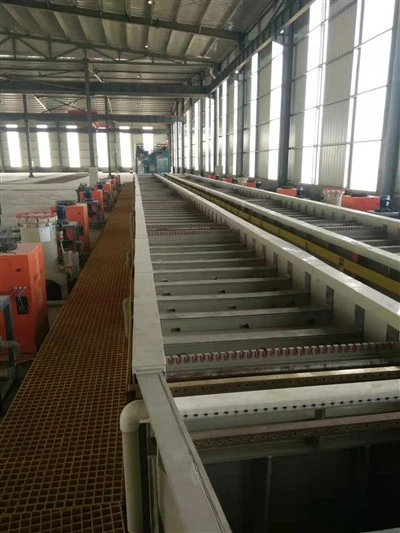
If you’re a structural component fabricator, galvanizing line owner, or project manager dealing with coating adhesion issues that won’t go away, I’m here to help. Our team has over 18 years of experience designing and installing galvanizing equipment tailored to structural parts, and we work with fabricators to optimize their pre-treatment chemical processes so they get consistent, high-quality coatings every time. If you’d like to discuss your line’s specific needs, chemical compatibility, or equipment upgrades, reach out to us to set up a consultation. We can help you troubleshoot current issues, improve your production efficiency, and cut down on costly rework.
Hot Dip Galvanizing Equipment Parts References
- ASM International. (2015). The Making, Shaping, and Treating of Steel: Galvanizing and Coating.
- Hot-Dip Galvanizers Association. (2022). Pre-Treatment Guidelines for Structural Steel.
- Davis, J. R. (Ed.). (1994). Surface Engineering for Corrosion and Wear Resistance. ASM International.
- American Galvanizing Society. (2021). Chemical Selection for Hot-Dip Galvanizing Pre-Treatment.
- NACE International. (2018). Standard Practice for Hot-Dip Galvanizing of Structural Steel Components.
Jinzhou Hongri Galvanizing Equipment Co., Ltd.
As one of the most professional structural components hot-dip galvanizing equipment manufacturers and suppliers in China, we’re featured by quality products and good price. Please rest assured to buy durable structural components hot-dip galvanizing equipment for sale here from our factory. We also accept customized orders.
Address: Yingpan Industrial Park, Taihe District, Jinzhou City. Address: No. 90, Gongwei Street.
E-mail: rsea.jz@163.com
WebSite: https://www.hrgalvanize.com/
