If you’re in the market for high-quality rectangular insulated aluminum stranded cables—whether for large-scale construction projects, industrial power distribution, renewable energy installations, or custom electrical applications—you might have noticed that not all suppliers are created equal. As someone who’s been immersed in the production and distribution of these specialized cables for over 12 years, I’ve heard every frustration from clients who’ve ended up with subpar products: cables that kink mid-install, have insulation that cracks at low temperatures, conductivity that falls short of industry standards, or straight-up fail safety tests. That’s why I’m writing this post, to cut through the noise and lay out exactly where you can find a supplier you can trust—including, of course, why we’ve built our entire business around delivering the reliable, compliant rectangular insulated aluminum stranded cables our clients depend on. Rectangular Insulated Aluminum Stranded Cable
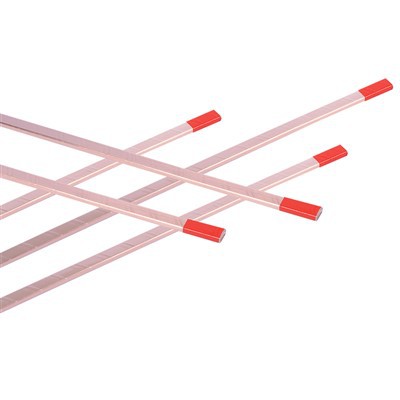
First, let’s clarify what makes rectangular insulated aluminum stranded cables different from standard round cables, because that’s the foundation of choosing the right supplier. Unlike round stranded cables, which are flexible and work well for tight bends or wiring runs in crowded spaces, rectangular insulated aluminum stranded cables are engineered for high-density power transmission. Their flat, uniform rectangular shape means they can be packed tightly into busbars, switchgear, or large raceways without wasting space, which makes them ideal for applications where every inch of real estate matters—think data centers, solar farm combiner boxes, mining operations, or large-scale commercial HVAC systems. The aluminum core is a key draw too: it’s 50-60% lighter than copper, which cuts down on shipping and installation costs, making it a cost-effective alternative for high-power runs, as long as the aluminum is properly alloyed, stranded to avoid breakage, and insulated with a material rated for the voltage and temperature of your application.
The first place to start your search is with specialized electrical component suppliers that focus on power transmission and distribution (T&D) products, not general cable companies. A lot of general cable brands offer rectangular cables as an afterthought, but true specialists understand the nuances of this product. For example, the stranding process for rectangular aluminum cables has to be precise: if the strands aren’t aligned evenly, the cable won’t sit flat, leading to hot spots when it’s installed in busbar systems, which can cause overheating and premature failure. Insulation is another critical point—rectangular cables have sharp edges that can wear through inferior insulation over time, so the material has to be thick enough, bonded properly to the core, and rated for the specific environment your cable will live in. That’s not the kind of detail a general supplier is likely to prioritize.
Next, look for suppliers that adhere to international safety and quality standards, because rectangular insulated aluminum stranded cables are not a “one-size-fits-all” product. The most widely recognized standards for these cables come from organizations like the International Electrotechnical Commission (IEC), specifically IEC 60228 for conductor resistance, IEC 60502 for power cables, and IEC 61089 for stranded conductors. In North America, you’ll also want to check for compliance with ANSI/ICEA S-132, which is the specific standard for rectangular insulated aluminum busbar cables. A reputable supplier will be able to provide test reports for every batch of cable they sell, verifying conductor purity, insulation thickness, voltage rating, and tensile strength. If a supplier can’t produce that documentation, walk away—you’re taking a huge risk with a product that’s part of a critical electrical system.
Now, let’s talk about a gap I’ve seen in the market for years: many suppliers only offer off-the-shelf sizes, but a lot of projects need custom lengths or tailored specifications. For example, a solar farm might need 10-foot sections of 1000 kcmil rectangular cable with cross-linked polyethylene (XLPE) insulation rated for 90°C, while a data center might need 50-foot runs of 500 kcmil cable with fire-resistant silicone insulation for emergency power circuits. A supplier that only stocks standard sizes will make you cut and terminate cables on-site, which introduces labor costs and the risk of human error—something most project managers would prefer to avoid. That’s a big reason so many of our clients come to us: we’ve invested in custom stranding and extrusion equipment that lets us make rectangular insulated aluminum stranded cables to your exact specifications, no minimum order for custom runs over 100 feet.
I should also address a common misconception about aluminum cables: some people think aluminum is inherently less reliable than copper, which is true if it’s not manufactured correctly. The issue with low-quality aluminum cables is that they’re often made with impure aluminum, stranded with too much tension, or insulated with thin, low-grade materials. High-quality rectangular insulated aluminum stranded cables, on the other hand, use 1350-H19 aluminum alloy, which has a conductivity of 61% IACS (International Annealed Copper Standard) and a tensile strength that holds up to installation and operation stress. The stranding is done with precise pitch control to ensure the cable remains flat, and the insulation is extruded in a single, uniform layer that conforms to the rectangular shape, sealing out moisture and resisting abrasion. This is where a specialized supplier adds real value—we don’t cut corners on material or process to undercut prices, because we know that a cable failure can cause millions in downtime, not just the cost of replacing the cable.
So where exactly do you go to connect with a supplier like that? Let’s break down the most reliable channels, beyond a quick Google search for “rectangular insulated aluminum stranded cables.” First, industry trade shows focused on power T&D, renewable energy, or industrial electrical systems. Events like the International Electrical Testing Association (NETA) Show, the Solar Power International Expo, or the National Association of Power Engineers (NAPE) Conference are where reputable suppliers showcase their products, meet face-to-face with engineers and project managers, and provide direct access to product samples and test data. I’ve been attending these shows for over a decade, and I’ve seen more than a few clients come away from a trade show with a much clearer idea of what a quality cable looks like, just by holding a sample from a specialized supplier and comparing it to a generic sample.
Another solid channel is industry-specific online directories, like the Thomasnet platform, which vets suppliers for compliance with standards and manufacturing capabilities before listing them. You can filter Thomasnet for suppliers that specialize in rectangular aluminum stranded cables, check their certifications, and even request a quote directly through the site. The key here is to avoid directories that let any supplier list a product, regardless of their expertise. For example, a general cable company might list “rectangular cables” in their directory profile, but if you look at their product lines, they only make round cables—so that’s a dead end.
Referrals are still one of the most reliable ways to find a quality supplier, too. Talk to electrical contractors, project managers, or engineers in your network who have worked on large-scale projects that use rectangular insulated aluminum stranded cables. Ask them who they used, what their experience was like, and if the cables performed as expected. I’ve gotten most of my repeat business from referrals over the years, because once a client finds a supplier they can trust, they stick with them—especially when that supplier delivers on time, provides consistent quality, and stands behind their products with a solid warranty.
Now, why might we be the right fit for your needs? Let’s be transparent: we’re a supplier that specializes exclusively in rectangular insulated aluminum stranded cables, so we don’t spread our resources across a hundred different cable types. Our facility is equipped with state-of-the-art stranding machines that ensure each cable has a uniform rectangular cross-section, and our insulation extrusion lines are calibrated to apply materials like XLPE, EPDM, and silicone with exact thicknesses tailored to your voltage and temperature requirements. Every batch of cable leaves our facility with third-party test reports verifying conductor purity, insulation resistance, and dimensional accuracy, and we offer custom lengths, colors, and insulation ratings to fit your project, no hidden minimums. We also have a technical team with over 50 years of combined experience in power distribution, so if you have questions about which cable is right for your application—whether it’s a 10kV substation or a commercial building’s emergency power system—we can help you navigate the specifications, not just push a product.
Wait, I should address a common pitfall that many buyers run into: chasing the lowest price. When you’re shopping for rectangular insulated aluminum stranded cables, the cheapest option is almost never the best one. A supplier that undercuts prices by using impure aluminum, thin insulation, or poorly aligned strands will end up costing you more in the long run. A client of mine from a large construction firm told me a story a few years ago: they bought a batch of cheap rectangular cables for a data center project, and within six months, half the cables had overheated because the strands were misaligned, creating hot spots that wore through the insulation. The replacement cost, plus the downtime for the data center, ended up being 10 times more than they would have paid for quality cables from the start. That’s why we always prioritize long-term reliability over short-term cost savings—we stand behind our cables, and we want our clients to have a product that works for 20+ years, not just six months.
Another thing to look for in a supplier is their customer support and logistics capabilities. Large projects often have tight deadlines, and getting cables delivered on time is just as important as getting the right product. A reputable supplier will have reliable shipping partners, real-time order tracking, and a team that communicates clearly if there’s any delay, instead of leaving you in the dark. We’ve built our logistics process around that: we offer standard 7-10 day lead times for stock sizes, and 10-14 days for custom orders, with expedited shipping options for urgent projects. We also provide detailed packing lists that include batch numbers and test reports for every shipment, so you can easily trace the product if you ever have a question.
At the end of the day, finding a supplier of high-quality rectangular insulated aluminum stranded cables comes down to doing your homework: checking for standards compliance, verifying manufacturing expertise, asking for test reports and product samples, and learning from the experiences of other industry professionals. If you’re ready to source cables that will deliver reliable performance, fit your exact specifications, and stand the test of time, we’re here to help. Our team is available to answer your questions, provide custom quotes, and share sample products so you can see the quality of our cables for yourself. Whether you’re working on a small commercial project or a large industrial or renewable energy installation, we have the expertise and products to meet your needs.
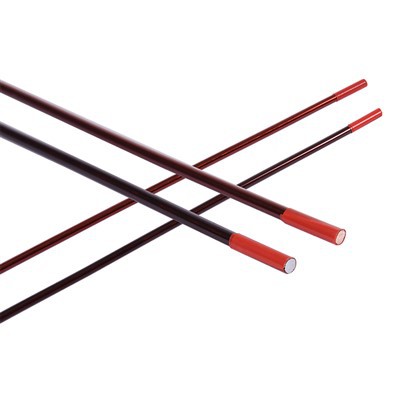
To learn more about our rectangular insulated aluminum stranded cables and discuss your project requirements, feel free to reach out for a consultation. We look forward to helping you find the right cable solution for your needs.
Flat Wire Winding References
IEC 60228:2004, Conductors of insulated cables
IEC 60502-1:2014, Power cables with extruded insulation and their accessories for rated voltages from 1 kV (Um = 1,2 kV) up to 30 kV (Um = 36 kV) – Part 1: Cables for rated voltages of 1 kV (Um = 1,2 kV) and 3 kV (Um = 3,6 kV)
ANSI/ICEA S-132-2020, Standard for Rectangular Insulated Aluminum Busbar Cables
Thomasnet Supplier Verification Guidelines, 2023
National Association of Electrical Distributors (NAED), 2022 Power Cable Market Report
Tianjin Jingwei Power Technology Co., Ltd.
As one of the most professional rectangular insulated aluminum stranded cable manufacturers and suppliers in China, we’re featured by quality products and good service. Please rest assured to buy durable rectangular insulated aluminum stranded cable made in China here from our factory. Contact us for more details.
Address: No.1 Chuangxin Rd. Xiaozhan Industrial Park, Jinnan District, Tianjin, China
E-mail: info@jwdc.cn
WebSite: https://www.jw-dcs.com/
