Hey there! I’m a supplier of antifouling raw materials, and today I wanna chat about how the particle sizes of these raw materials can affect their function. Antifouling Raw Materials

First off, let’s understand what antifouling raw materials are for. Antifouling materials are used to prevent the attachment and growth of organisms like barnacles, algae, and mussels on surfaces, especially those in contact with water such as ship hulls, offshore platforms, and aquaculture cages. These organisms can cause a lot of problems. For ships, they increase drag, which means more fuel consumption and reduced speed. In aquaculture, they can clog nets and affect water flow, harming the fish or other aquatic animals.
Now, let’s dig into how particle size plays a role.
Small – Sized Particles
Small – sized antifouling raw material particles have several unique features that impact their function. One of the main advantages is their large surface – area – to – volume ratio. When the particles are small, there’s more surface area available for chemical reactions. For example, many antifouling agents work by releasing biocides or other active substances to deter fouling organisms. With a larger surface area, the release of these active substances is more efficient.
In a paint – based antifouling system, small particles can distribute more evenly. They can fill in the tiny pores and crevices on the surface to be protected. This creates a more uniform and smooth coating, which is less attractive for fouling organisms to attach to. Imagine a rough surface with big gaps; it’s like a cozy home for barnacles and algae. But a smooth, evenly – coated surface makes it harder for them to get a foothold.
Another thing about small particles is that they can penetrate better into the substrate. If we’re talking about applying an antifouling coating to a ship hull, small particles can seep into the microscopic cracks and dents, providing better adhesion. This means the coating lasts longer, and its antifouling properties stay effective for a more extended period.
However, small particles also have their drawbacks. They can be more difficult to handle during the manufacturing process. They tend to agglomerate, or clump together, because of their high surface energy. When they clump, they lose the advantages of their small size, like the even distribution and large surface – area – to – volume ratio. Special dispersants and handling techniques are often required to keep them separated and in a usable state.
Large – Sized Particles
Large – sized antifouling raw material particles have their own set of characteristics. For starters, they offer better mechanical protection. In high – flow environments, like areas with strong ocean currents or where ships are moving at high speeds, large particles can act as a physical barrier. They are more resistant to being washed away compared to small particles.
Take a look at an offshore oil platform. The waves and currents around it are quite strong. A coating with large – sized antifouling particles can withstand the mechanical forces exerted by the water. These particles can remain on the surface for longer, providing continuous protection against fouling.
Large particles also have a slower release rate of active substances. This can be an advantage in some situations. If you want a long – term, slow – acting antifouling effect, large particles are a good choice. For example, in some deep – sea applications where it’s difficult to re – apply antifouling coatings frequently, a product with large particles that slowly release biocides over time can be very useful.
But large particles also have limitations. They don’t distribute as evenly as small particles. This can lead to a less smooth coating surface, which may be more prone to fouling in some areas. Also, because of their size, they may not provide as much surface area for chemical reactions. So, the initial effectiveness of the antifouling agent might be lower compared to a product with small particles.
Medium – Sized Particles
Medium – sized particles are a bit of a compromise between small and large ones. They offer a balance of the advantages of both. They have a relatively good surface – area – to – volume ratio, allowing for a decent release rate of active substances. At the same time, they are more manageable in terms of agglomeration compared to small particles.
In terms of mechanical protection, they are better than small particles but not as good as large ones. They can distribute fairly evenly on the surface, creating a reasonably smooth coating. This makes them a popular choice in many general – purpose antifouling applications, such as for small boats or some coastal structures.
How to Choose the Right Particle Size
As a supplier, I often get asked by customers about which particle size is the best for their specific needs. Well, it really depends on several factors.
The first factor is the environment where the antifouling material will be used. If it’s a calm, low – flow environment like a small marina, small particles might be a great choice because they can provide a quick and efficient release of antifouling agents. On the other hand, if it’s a high – energy environment with strong waves and currents, large or medium – sized particles would be more suitable for their better mechanical resistance.
The type of fouling organisms in the area is also important. Some organisms are more sensitive to the quick release of biocides, so small – particle products might work better. Others might be deterred more by a long – term, slow – release effect, in which case large – particle products would be the way to go.
The application method also matters. If you’re using a spray – on application, smaller particles might be easier to work with because they can atomize more easily. For a brush – on application, the choice of particle size might be less restricted, but still needs to be considered in terms of the final surface finish.
Conclusion
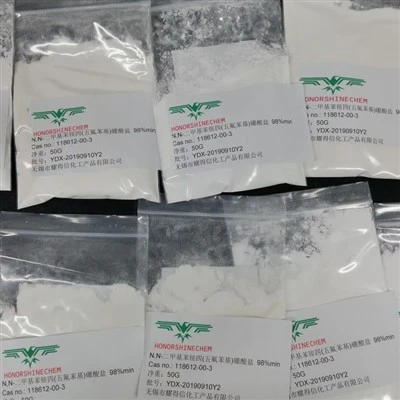
So, as you can see, the particle size of antifouling raw materials has a significant impact on their function. Small particles offer high reactivity and even distribution, large particles provide better mechanical protection and slow – release properties, and medium – sized particles offer a balance.
Acrylate Self-polishing Polymers If you’re in the market for antifouling raw materials and want to discuss which particle size is right for your specific situation, I’d be more than happy to have a chat with you. We can work together to find the best solution for your antifouling needs. Whether you’re protecting a small pleasure boat or a large commercial vessel, or an offshore structure, we’ve got the expertise to help. Just reach out and let’s start the conversation about getting you the best antifouling products.
References
- "Antifouling Technology – Past, Present and FutureSteps Towards Sustainable Antifouling Solutions" by D. Rittschof and A. D. McCormick.
- "Marine Biodeterioration: An Interdisciplinary Study" edited by D. E. Williams and P. le Chevalier.
- "Surface Properties and Their Role in the Fouling of Marine Structures" by J. D. Bryers.
Wuxi Honor Shine Chemical Co., Ltd.
As one of the most professional antifouling raw materials manufacturers and suppliers in China, we’re featured by quality products and good service. Please rest assured to wholesale bulk high-grade antifouling raw materials made in China here from our factory. For free sample, contact us now.
Address: Building 1, Zone D, No. 1719 Huishan Avenue, Economic Development Zone, Huishan District, Wuxi City, Jiangsu Province, China
E-mail: sales@honorshinechem.com
WebSite: https://www.marine-antifouling.com/
