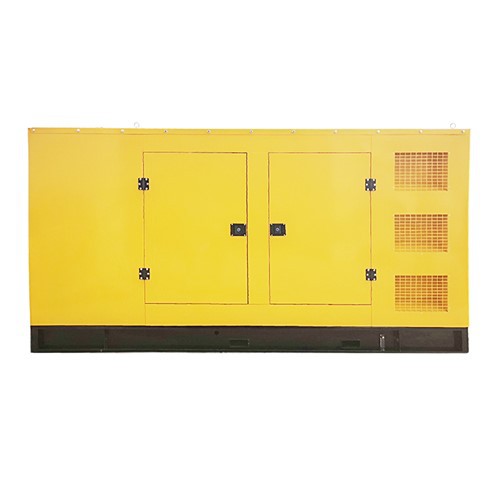
Selecting the appropriate size of a household diesel generator is a crucial decision that can significantly impact the functionality and cost – efficiency of your emergency power supply. As a seasoned supplier of household diesel generators, I’ve helped numerous customers make this decision. In this blog, I’ll share the key factors you need to consider to determine the right – sized generator for your home. Household Diesel Generator
Understanding Power Requirements
The first step in choosing the right generator size is understanding your power needs. There are two main types of power ratings: starting wattage and running wattage. Starting wattage, also known as surge wattage, is the extra power a device needs to start up. This is often higher than the running wattage, which is the power the device consumes during normal operation.
For example, a refrigerator might have a running wattage of around 200 – 300 watts, but its starting wattage could be 800 – 1200 watts due to the initial power required to start the compressor. To accurately calculate your power needs, make a list of all the appliances and devices you want to run during a power outage.
Essential vs. Non – essential Appliances
When planning your power requirements, it’s important to distinguish between essential and non – essential appliances. Essential appliances are those that are necessary for your safety, health, and basic living needs. These may include:
- Refrigerators and freezers: To keep food fresh and prevent spoilage.
- Medical equipment: Such as oxygen concentrators, CPAP machines, etc.
- Sump pumps: To prevent basement flooding.
- Lighting: At least some basic lighting for safety and visibility.
Non – essential appliances, on the other hand, are those that can be turned off during a power outage without significant impact on your well – being. Examples include televisions, gaming consoles, and non – essential kitchen appliances like toasters or coffee makers.
Calculating Total Power Needs
After creating a list of essential appliances, find out their starting and running wattages. You can usually find this information on the appliance’s label or in the user manual. Add up the running wattages of all the essential appliances you want to run simultaneously. Then, add the highest starting wattage of any single appliance on the list to this total. This final number will give you an estimate of the minimum rated wattage you need for your generator.
For instance, if you have a refrigerator with a running wattage of 250 watts and a starting wattage of 1000 watts, a sump pump with a running wattage of 500 watts and a starting wattage of 1500 watts, and some basic lighting that requires 100 running watts, your calculation would be as follows:
Running wattages: (250 + 500+100 = 850) watts
Highest starting wattage: 1500 watts (from the sump pump)
Minimum generator size needed: (850 + 1500=2350) watts
Consideration of Future Expansion
When choosing a generator, it’s also wise to consider potential future expansion of your power needs. If you plan to add new appliances or equipment in the future, such as a larger refrigerator or an electric vehicle charger, you should select a generator with some extra capacity. This will save you from having to replace the generator prematurely.
Generator Sizing Based on Home Size
While calculating power needs based on appliances is the most accurate method, home size can also give you a rough idea of the generator size you might need:
- Small homes (under 1000 square feet): A generator with a capacity of 2000 – 3500 watts may be sufficient to power basic essentials like a few lights, a refrigerator, and a small TV.
- Medium – sized homes (1000 – 2500 square feet): You’ll likely need a generator in the range of 3500 – 7500 watts to handle additional appliances such as a sump pump, multiple lights, and a larger refrigerator.
- Large homes (over 2500 square feet): For larger homes, a generator with a capacity of 7500 watts or more might be required to power all essential appliances and potentially some non – essential ones as well.
Fuel Efficiency and Run – Time
Another important aspect to consider is the fuel efficiency of the generator and its run – time. A larger generator generally consumes more fuel, but it can also power more appliances. You need to find a balance between the generator size and fuel consumption based on your power needs and the length of time you expect to use the generator during a power outage.
Our diesel generators are designed with high – efficiency engines that offer a good balance between power output and fuel consumption. For instance, some of our mid – sized generators can run for 8 – 10 hours on a full tank of diesel while powering essential appliances, which is ideal for most short – to – medium – length power outages.
Noise Level
Noise level is a significant concern, especially if you live in a suburban or urban area. Diesel generators can be noisy, but modern models are designed with sound – reducing features. When choosing a generator, consider the noise level rating, usually measured in decibels (dB).
Our range of household diesel generators includes models with advanced sound – proofing technology. We offer generators that operate at relatively low noise levels, ensuring that your power supply doesn’t cause a disturbance to you or your neighbors.
Safety and Compliance
Safety is of utmost importance when using a diesel generator. Make sure the generator you choose complies with all relevant safety standards. Our generators are built with multiple safety features, such as automatic low – oil shutdown, overload protection, and circuit breakers. These features not only protect the generator from damage but also ensure the safety of your home and family.
Consultation and Assistance
As a household diesel generator supplier, we are committed to helping you make the right decision. If you’re still unsure about what size of generator you need, our team of experts is here to assist you. We can help you calculate your power needs more accurately, answer any questions you may have about our products, and provide recommendations based on your specific circumstances.
Making the Right Choice

In summary, choosing the right size of a household diesel generator involves carefully assessing your power requirements, considering future expansion, and taking into account factors like fuel efficiency, noise level, and safety. By following the steps outlined in this blog, you can make an informed decision that will provide you with reliable power during a power outage.
Industrial Diesel Generator Set If you’re ready to explore our range of household diesel generators or need further assistance in choosing the right size, we invite you to get in touch with us. Our team is eager to discuss your needs and help you find the perfect generator for your home.
References
- "Generator Buying Guide," Consumer Reports
- Manufacturer specifications of various household diesel generators
- Electrical engineering textbooks on power systems and appliances
Dianbida Power Equipment (Jiangsu) Co., Ltd.
We’re well-known as one of the leading household diesel generator manufacturers and suppliers in China. We warmly welcome you to buy advanced household diesel generator at competitive price from our factory. If you have any enquiry about pricelist and quotation, please feel free to email us.
Address: No. 23, Nanhuan Road, Jiangdu District, Yangzhou City, Jiangsu Province
E-mail: 19962469616@163.com
WebSite: https://www.js-dbdpower.com/
