Hey there,
If you’re reading this, you’re probably either a design engineer, a maintenance tech, or a procurement manager who’s currently pulling their hair out trying to figure out if that right angle bevel gear reduction motor you spec’ed (or bought from us) is actually putting out the torque it’s supposed to. Let’s be real—torque is make-or-break for these motors, right? Get it wrong, and your conveyor belt stalls, your packaging machine throws a fit, or that robotic arm you’re integrating just… doesn’t move. As a supplier who’s shipped thousands of these units over the years, I’ve seen way too many folks skip the proper measurement steps and end up with headaches later. So today, I’m breaking down exactly how to measure output torque for a right angle bevel gear reduction motor, no fancy PhD-level math required. Right Angle Bevel Gear Reduction Motor

First, let’s get the basics straight: output torque is the rotational force your motor delivers at the shaft after it’s gone through the bevel gear reduction. Right angle bevel gears are special here because they change the axis of rotation (90 degrees, duh) and boost torque by reducing speed—they’re way different from inline parallel-shaft gears, so don’t use your standard torque method here. A quick pre-check before you even grab tools: make sure your motor is properly loaded the way it would be in your actual application. Don’t measure torque with the motor hanging free— that’s like testing a car’s horsepower with it in park, useless. Mount it to your machine’s load (or a test fixture that mimics that load) first, and run it at its rated input voltage/frequency; if it’s a 3-phase motor, double-check your line voltage is within ±5% of its rating, because voltage drops kill torque output.
Now, the main methods, ranked from most practical for real-world shops to lab-grade. Let’s start with the go-to for most of our customers: the Prony Brake Test. This is super straightforward, and it’s been used for decades with gear reduction motors. Here’s how it works: you attach a adjustable friction device (a Prony brake) directly to your motor’s output shaft. The simplest version is a block of wood clamped around the shaft, with a spring scale hanging off a lever arm sticking out from the brake. Wait, no—don’t wrap wood around a metal shaft (ask me how I know; I once had a customer’s test rig shred a block of wood and fly into their shop’s break room window). Instead, use a professional Prony brake that fits right angle shafts—they’re made for bevel gear outputs, so you don’t have to rig something weird. Once it’s attached, spin the motor up to its rated speed (record that with a tachometer, by the way—speed is non-negotiable for torque calc). Slowly tighten the brake until the motor is running at its rated speed and the brake just starts to slip—wait, no, actually, until you get the maximum load it can handle without stalling, but keep the speed consistent. You’ll measure the force the scale reads (in pounds or newtons) and the length of the lever arm from the shaft center to where the scale is attached. Then torque is just force times lever length. Let me make that simple: if your scale reads 50 lbf, and your lever is 2 feet long, torque is 50*2 = 100 lb-ft. Easy. This method is perfect for on-site testing if you’re troubleshooting a motor already installed, or in your own shop before shipment.
Next up, if you want something even more accurate and less messy: a Torque Transducer. These are the ones we use in our internal quality tests for every motor that leaves our warehouse, so I can vouch for them. A torque transducer is a device you insert directly between the motor’s output shaft and the load. It measures rotational force in real time, no need for manual calculations because most modern transducers have a digital readout that spits out torque (and speed, power too) instantly. For right angle bevel gear motors, make sure you get a transducer that’s built to handle the 90-degree angle—some generic transducers for inline shafts won’t align right, and you’ll get bad data. Also, get one with a range that’s just a bit higher than your motor’s rated torque. If your motor is rated for 200 Nm, don’t get a 500 Nm transducer—it’ll be too imprecise. Pro tip: if you’re testing a used motor, run it for 10 minutes first to get it up to operating temperature—heat changes gear friction and that changes torque output, so cold-test data is usually off.
Wait, what if you don’t want to buy a Prony brake or a transducer? There’s a simpler indirect method, good for rough estimates (like “did this motor even meet spec when I got it”). This one uses the motor’s rated specs and a bit of math, but only works if you know the gear ratio. Right angle bevel gear motors have a ratio listed on their spec sheet—like 10:1, meaning input speed is 10x faster than output speed. Output torque is roughly equal to input torque times the gear ratio, minus a small efficiency loss (usually 90-95% for good bevel gears). To get input torque, you can measure the input current with a clamp meter. Input torque = (9550 * Power) / Input Speed, and power is related to current (for AC motors, it’s approximately Volts * Amps * Efficiency). So if you have a 230V, 3A input at 1800 RPM input speed, and a 10:1 ratio with 92% efficiency, output torque is around (23030.92)/1.34 * 10 / 5252? Wait, no, maybe don’t sweat the exact math here—just know that this method is a ballpark, not exact, because motor efficiency changes a bit with load. But it’s great for a quick check if you’re in a pinch.
Now, common mistakes I see all the time with right angle bevel motors specifically. First, misalignment. Because right angle gears have that 90-degree shaft, if your test fixture isn’t perfectly aligned with the motor’s output shaft, you’ll get friction from the gears binding, which makes your torque measurement way higher than it actually is. I once had a customer think their motor was defective because their measurement said 30% less torque than spec, and it turned out their test rig was misaligned by just 2 degrees—fixed it and it was right on. Second, not accounting for gear backlash. Bevel gears have a tiny amount of backlash (play) which is normal, but if your load is oscillating, that can throw off torque readings. Make sure your test load is steady, not something that’s jerking the shaft back and forth. Third, testing at no load. A lot of people run the motor without a load and think that’s torque, but no—no load torque is just the friction of the gears, not the output torque under actual work.
Also, when you’re measuring, what numbers should you be aiming for? Our right angle bevel gear reduction motors are rated with a continuous torque (that’s the torque they can put out for hours without overheating) and peak torque (short-term, like 10 seconds, for startup). Make sure your test matches the application—if you’re measuring for a conveyor that runs 24/7, use continuous torque, not peak. If it’s for a machine that only starts once an hour, peak is fine.
Now, let’s talk about when you might need to measure this, as a buyer. If you’re pre-testing motors we ship to you, we can send test sheets with every unit that shows our measurements, but it’s always good to confirm on your end. If you’re troubleshooting a motor that’s underperforming in your machine, this is exactly the process to follow—9 times out of 10, it’s not the motor, it’s misalignment or a bad gear.
Here’s the thing: at the end of the day, the most accurate way to measure output torque is to match the method to your needs. If you’re a small shop doing occasional tests, Prony brake or indirect calculation works. If you need lab-grade accuracy, go with a torque transducer. If you’re in a pinch, the current method gives you a quick check. And if you’re working with right angle bevel gear motors specifically, don’t cut corners on alignment—it’s the #1 cause of bad torque readings, hands down.
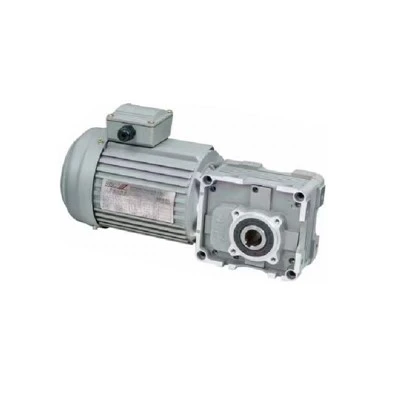
If you’re in the market for right angle bevel gear reduction motors and need units that meet your exact torque specs, no guesswork, just consistent performance, get in touch. We’ve got all sizes, from tiny 1Nm units for small automation to 500Nm heavy-duty ones for material handling, and every single one gets a full torque test before it leaves our facility. We can even help you design a test fixture if you’re not sure where to start. Hit us up, no awkward sales pitches—just straight talk about what works for your application.
Micro Gear Motor References
- ASME B106.1M-1985, Measurement of Vibration Excited by Electric Motor-Driven Machinery
- Norton, R. L., Design of Machinery, 5th ed., McGraw-Hill, 2014, Chapter 13 (Gear Trains and Torque Calculations)
- Bosch Rexroth AG, Gear Motor Technical Manual: Torque Measurement Methods for Right-Angle Bevel Gear Drives, 2021
GuangDong Ruisico Transmission Technology Co., Ltd.
Guangdong Ruisico Transmission Technology Co., Ltd. is one of the most reliable right angle bevel gear reduction motor manufacturers and suppliers in China, also supports customized service. Welcome to buy durable right angle bevel gear reduction motor made in China here and get quotation from our factory. For price consultation, contact us.
Address: No. 70, Anjing Road, Shengfeng Community, Xiaolan Town, Zhongshan City
E-mail: info@risc-drive.com
WebSite: https://www.risc-motor.com/
