If you’ve ever shopped around for a lead acid battery charger, you’ve probably spotted the ultra-cheap options tucked next to the more recognizable brands at parts stores, online marketplaces, and even discount warehouse shops. As someone who’s spent over a decade in the lead acid battery charger supply business, I know how easy it is to reach for that low-priced unit to save a few bucks—whether you’re powering a car, a golf cart, an off-grid solar setup, or a small marine vessel. But what many buyers don’t stop to consider is that those low-quality chargers aren’t just “less efficient” or “slower”—they carry real, tangible risks that can damage your battery, put your safety at stake, and end up costing you far more in the long run. Let’s break down exactly what those risks are, why cutting corners on charger quality never pays off, and how to avoid the mistakes that so many of us make when choosing a charger. Lead Acid Battery Charger

First, and most immediate, is the risk of overcharging, a problem that plagues cheap chargers because they skip the precision components that regulate voltage and current. A lead acid battery relies on a very specific charging curve: for a flooded lead acid cell, the ideal bulk charge voltage hovers around 14.2 to 14.8 volts, followed by an absorption phase where voltage stays steady until the battery nears full capacity, and finally a float phase to maintain charge without overloading the cells. Low-quality chargers rarely have microprocessors or precision voltage sensors to follow this curve. Instead, they use simple, rigid circuits that pump out a constant voltage regardless of the battery’s state. Over hours or even days, that constant overcharge boils away the water in the battery’s electrolyte solution, corroding the internal plates and warping the separators that keep positive and negative cells from shorting out. I’ve seen this firsthand with customers who bought a $20 charger for their golf cart’s 8-volt lead acid batteries; within three months, the plates were so degraded that each battery only held half its rated capacity, and they had to replace all four at a cost of over $1,000. What those buyers didn’t know is that a cheap charger doesn’t cut off absorption phase when it should—it keeps cranking voltage at 15.5 or even 16 volts, turning a standard charge into a slow, destructive process.
Then there’s the flip side: undercharging, which is just as damaging, if more insidious. Cheap chargers often can’t deliver the full rated current their specs claim, so they leave a lead acid battery at only 70 or 80 percent charge. That might be fine for a short trip in a car, but for a deep-cycle battery (used in RVs, off-grid solar, or marine applications), a chronic undercharge leads to sulfation. Sulfation happens when lead sulfate crystals form on the battery’s plates when it’s left partially discharged. Over time, those crystals harden into large, insoluble masses that coat the plates, reducing the battery’s surface area available for chemical reactions, and cutting its capacity and lifespan by as much as 50 percent. I had a customer last year who used a discount charger for his off-grid deep cycle bank; he’d leave the charger plugged in on weekends, but by Monday, his batteries still read 12.1 volts (the equivalent of a 50 percent charge for a 12-volt lead acid unit). After six months, his bank’s total runtime dropped from 8 hours a day to just 2, and he was looking at a $2,500 replacement. The cheap charger couldn’t deliver enough current to fully charge the bank, so sulfation set in fast.
Electrical fires and short circuits are another severe, often underreported risk from low-quality lead acid chargers. Cheap manufacturers often use substandard components: thin wiring that can overheat, flimsy plastic casings that melt, and no overcurrent or overheat protection circuits. Lead acid batteries, especially when charging, produce hydrogen gas—a highly flammable, odorless gas that accumulates in enclosed spaces like a garage, a boat’s bilge, or a small battery compartment. A cheap charger can have a faulty component that sparks when it cuts in or out, igniting that hydrogen. I remember a fire a few years back in a customer’s garage; the cause was a $15 car charger that he’d left plugged in overnight. The charger’s internal wiring overheated, melting the casing, and the spark ignited hydrogen from his car’s battery. Fortunately, no one was hurt, but his garage suffered $10,000 in damage, and his car and battery were totaled. Reputable chargers have safety features like current limiting to prevent overheating, spark-proof circuitry, and thermal shutdown that cuts power if the unit gets too hot—none of which make their way into the cheap no-name chargers.
Even if you avoid a fire, a low-quality charger can damage other connected equipment. Many modern cars, RVs, and solar systems have sensitive electronics, alternators, or charge controllers. A cheap charger can deliver inconsistent voltage spikes or sags that fry these components. For example, some cheap chargers output unregulated DC power that has ripple current—small, rapid fluctuations in voltage that can disrupt the microchips in a car’s engine control unit (ECU) or a solar charge controller. I’ve had customers come to me with a “check engine” light that kept coming back after replacing their alternator; turns out the culprit was a cheap charger that was sending 1-volt ripple spikes through the car’s electrical system, damaging the ECU. Replacing the charger fixed the issue, and saved them from having to spend $800 on a new ECU.
Beyond hardware damage, low-quality chargers can also void your battery’s warranty. Most lead acid battery manufacturers specify that you must use a charger that meets their approved specifications—whether that’s a certain voltage range, current limit, or type of charger (like a smart charger for deep-cycle batteries). If you use a low-quality charger that doesn’t meet those specs, any damage to the battery isn’t covered. I’ve seen this happen dozens of times: a customer’s battery fails within the warranty period, the manufacturer inspects it, sees that it was charged with a non-approved charger, and denies the claim. That means you’re left paying for a new battery out of pocket, on top of the cost of the cheap charger you already bought.
So why do these low-quality chargers exist, and why do people keep buying them? A lot of it comes down to misinformation. Many shoppers see a price tag and assume all chargers do the same thing—they plug in and charge a battery, right? But a lead acid charger isn’t a one-size-fits-all device. Different applications (car, deep-cycle, marine, solar) have different charging requirements, and cheap manufacturers skip all the calibration and quality control that goes into making a charger that works safely and effectively. Another factor is that some marketplaces allow unvetted sellers to list chargers with false specs: a cheap charger might claim it’s a 10-amp smart charger, but it’s actually a 5-amp unit with no regulation. You don’t find those discrepancies with reputable suppliers, because we test every unit to make sure it matches its advertised specs, and stand behind our products.
Over the years, I’ve heard so many customers tell me, “I’ll just buy a cheap one, it’s only once.” But what they don’t account for is the total cost of ownership. A quality smart charger—one that follows the correct charging curve, has safety features, and is built to last—might cost $50 to $100, but it can extend your battery’s lifespan by 2 to 3 times. That’s hundreds or even thousands of dollars in savings over the life of your batteries, not to mention the peace of mind that comes with knowing you won’t have to deal with a fire, a damaged battery, or ruined electronics.
If you’re in the market for a lead acid battery charger, here’s what to look for to avoid the risks I’ve outlined: first, check that it’s a smart charger with multiple charging stages (bulk, absorption, float)—that’s non-negotiable for preventing over and undercharging. Look for safety features like overcurrent protection, thermal shutdown, and spark-proof circuitry. Make sure it’s rated for your specific battery type (flooded, AGM, gel, deep-cycle) and voltage (6V, 12V, 24V, etc.). And buy from a reputable supplier that tests their products, stands behind their warranties, and can confirm that their chargers meet battery manufacturer specifications.
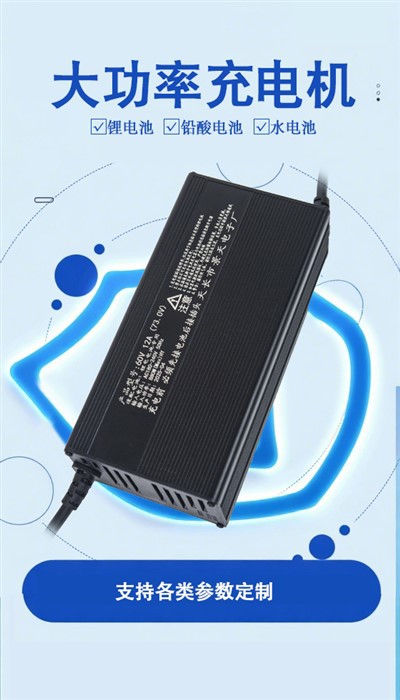
At the end of the day, a lead acid battery is an investment, and the charger is the key to keeping that investment working for you. Cutting corners on a cheap charger might seem like a small way to save money upfront, but the risks are just too high. From damaged batteries and ruined electronics to fires and unexpected replacement costs, the long-term expense of a low-quality charger is almost always far more than the cost of a reliable one. If you’re in need of a lead acid battery charger that’s built for safety, performance, and durability, feel free to reach out to our team to discuss your specific needs. We offer a range of chargers for every application, from automotive to deep-cycle, and can help you find the right one to protect your battery, your equipment, and your peace of mind.
Battery Charger References
- Lead Acid Battery Maintenance and Charging Guidelines, Battery Council International, 2021.
- Safety Standards for Battery Chargers, Underwriters Laboratories (UL), 2022.
- Sulfation Prevention in Deep-Cycle Lead Acid Batteries, Journal of Power Sources, Vol. 315, 2016.
- Electrical Risks of Low-Quality Charging Equipment, National Fire Protection Association (NFPA), 2020.
- Lead Acid Battery Warranty Terms and Conditions, Battery Association, 2023.
Tianchang Hengze Technology Co., Ltd.
With abundant experience, we are one of the most professional lead acid battery charger manufacturers and suppliers in China. Please rest assured to buy bulk lead acid battery charger made in China here from our factory. If you have any enquiry about quotation, please feel free to email us.
Address: No. 8 Sanxing Road, Qinlan Town Industrial Park, Tianchang City, Chuzhou City, Anhui Province, P.R. China
E-mail: 604894957@qq.com
WebSite: https://www.hengzebc.com/
