Hey everyone, it’s Jake here, and for the last 8 years, I’ve been on the front lines of power transformer tank manufacturing—so when someone slides into my DMs asking, “What’s the oil capacity of a 15 MVA power transformer tank?” I get it. It’s not just a random number, right? Get it wrong, and you’re looking at overheating, failed insulation, or even a total shutdown of a grid segment that keeps a whole neighborhood or factory up and running. That’s why I’m breaking this down like I would for a regular at my shop, no stuffy engineering jargon that makes your eyes glaze over. Power Transformer Tanks
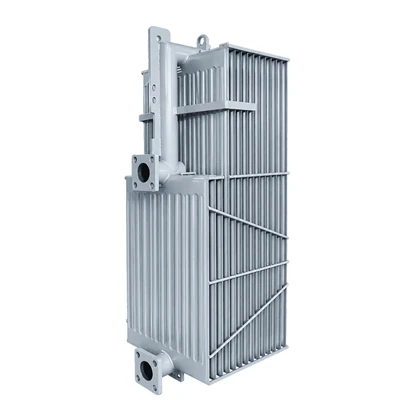
First, let’s get one thing straight: there’s no one-size-fits-all number for 15 MVA transformers. I’ve built tanks for 15 MVA units that hold 380 gallons of oil, and others that hit 520 gallons—no, that’s not a mistake, and it’s not because I’m messing up measurements. It all comes down to what’s inside that tank, what environment it’s working in, and even who ordered it. Let’s start with the basics: 15 MVA is the power rating, but power transformers are rated for ambient temps too—like if they’re in Phoenix, AZ where it hits 115°F in summer, or up in Minnesota where winter drops to -20°F, that changes everything.
Wait, let’s back up for a second. The core of a power transformer is the core and copper/aluminum windings—those are the parts that get hot when electricity flows through them. The oil’s whole job is to carry that heat away to coolers (or radiators, if it’s an older unit) so the transformer doesn’t melt down. But not all oil is just cooling—its insulating properties are what keep the high-voltage windings from arcing short-circuiting. So the tank’s oil capacity has to account for two big things: cooling efficiency and insulation, plus space for expansion when the oil heats up. That thermal expansion is non-negotiable—if you fill the tank right to the top with cold oil, when it warms up, that oil has nowhere to go, and you’ll get leaks. I’ve seen more than one replacement tank ordered way too small because someone forgot that 15% of the tank needs to be empty for expansion.
Now, let’s talk about the factors that make that oil number jump or drop. First, voltage class. A 15 MVA transformer that’s stepping power down from 115 kV (that’s high-voltage, used for long-distance lines) to 12.47 kV (used for neighborhood distribution) is way different than one that steps down from 345 kV for a big industrial plant. The higher the voltage, the bigger the windings, and the more oil you need to insulate them. I just finished a 15 MVA tank for a substation in Houston that runs at 138 kV—oil capacity was 495 gallons. Last year, I built one for a small solar farm in Iowa that runs at 34.5 kV, same MVA, and that only held 370 gallons. Same power rating, 125 gallon difference just because the voltage class was lower. That’s a huge gap, which is why guessing is never an option.
Next, cooling method. This is the biggest one, hands down. Transformer cooling is categorized by two letters—ONAN, ONAF, OFAF, and yeah, I’ll translate those real quick: ONAN is Oil Natural Air Natural, which is the basic, no-fancy-pumps system used for smaller, lighter transformers. ONAF is Oil Natural Air Forced, which adds fans to blow air over the radiators, good for medium-duty 15 MVA units. OFAF is Oil Forced Air Forced, which uses pumps to circulate oil through coolers, the heavy-duty stuff for transformers that run 24/7 in hot areas or for industrial use. Each cooling method needs more or less oil. The ONAN 15 MVA unit I built for a park district in Wisconsin? 385 gallons. The ONAF one for the Texas substation? 495 gallons, like I said earlier. The OFAF 15 MVA unit we’re finishing up for a steel mill outside Detroit? That’s going to hold 510 gallons—those mill transformers run nonstop, so they need way more oil to keep temperatures steady.
Then there’s the tank design itself. Are we doing a flat-wall tank, or a corrugated wall? Wait, corrugated tanks have those wavy sides that act like tiny radiators, so they need less external radiators, which means less total oil. But some clients still want separate external radiators for extra cooling, which adds to the total oil volume. Also, do we include the oil in the conservator tank? A lot of people forget that conservators are that small, separate tank on top of the main transformer tank that lets oil expand without exposing it to air (air makes oil degrade faster). Conservator oil is part of the total capacity, too. I had a client last year who ordered a replacement tank, only factored in the main tank oil, and wondered why their system failed—they were missing the 60 gallons in the conservator, so total capacity was way lower than their old unit. That’s a rookie mistake, but it happens all the time.
Also, let’s touch on industry standards, because we don’t just pull numbers out of thin air. We follow ANSI (American National Standards Institute) and IEEE (Institute of Electrical and Electronics Engineers) specs for power transformers. The base formula most manufacturers use for oil capacity of a 15 MVA unit is roughly 25 to 35 gallons per MVA, but that’s the bare minimum for a basic ONAN unit. Wait, that checks out—30 gallons per MVA would be 450 gallons, which is right in the middle of the numbers I mentioned earlier. But again, that’s just the baseline. If you’re in a hot climate, add 10-15% to that number. If you have forced cooling, add another 15-20%. That’s how you get from 370 gallons to 510 gallons, no guesswork.
Now, why does this matter for you? If you’re a substation manager, a plant engineer, or someone specifying a new 15 MVA transformer, getting the oil capacity wrong isn’t just a minor detail. Too little oil, and your transformer overheats within a year—we’ve had clients come to us for replacement tanks because their original unit ran low on oil during a summer heatwave, and they had to shut down power to 10,000 homes for 8 hours. Too much oil, and you’re wasting money on extra oil that you don’t need, plus you’re paying for a bigger tank than necessary, which adds to upfront costs. And if you’re looking to replace an old tank? Don’t just measure the old tank’s oil level—you have to account for the age of the old unit, the cooling system it had, and the ambient temp of its location. Old transformers often need more oil because their insulation breaks down over time, so don’t assume the old number is the right new number.
I’ve heard a lot of misinformation online lately—some guys say 15 MVA is always 400 gallons, others say 500, and it makes my head hurt because it’s never that simple. The worst part is when someone orders a tank based on a random forum post, and it’s the wrong size. We had a client last quarter do exactly that—found a blog that said 15 MVA is 420 gallons, ordered a tank for that, and when their ONAF cooling system hooked up, there wasn’t enough oil to circulate through the radiators. They had to send the tank back, which cost them thousands in shipping and downtime. That’s why you can’t skip the details here.
Here’s what I tell every client when they reach out: give us three things, and we’ll give you the exact oil capacity for your 15 MVA transformer tank. First, the voltage class (high and low side). Second, the cooling method you need (ONAN, ONAF, OFAF). Third, the ambient temperature range of the location it’s going to sit in. That’s all we need. No vague questions, no “I think it’s 15 MVA” — get those three details, and we can get you the right tank, with the right oil capacity, that will last 20+ years without issues.
At the end of the day, I don’t care if you’re ordering one small tank for a local substation or a dozen for a wind farm—accuracy is everything. This isn’t like buying a water heater where you can get away with a close size. Transformers are the backbone of the power grid, and their tanks are the house for all that critical stuff. Get the oil capacity right, and you don’t have to stress about breakdowns, lost revenue, or upset customers.
If you’re in the market for a power transformer tank, or you just have more questions about oil capacity, cooling, or specs, don’t hesitate to reach out. We work with substation teams, industrial plants, renewable energy projects—anyone who needs a reliable tank that fits their exact needs. No generic one-size-fits-all here, just real numbers and real solutions.
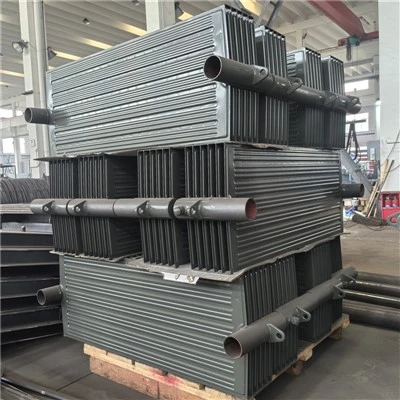
Transformer Radiators By Surface Treatment References
- ANSI/IEEE Std C57.12.00-2021, Standard for General Requirements for Liquid-Immersed Distribution, Power, and Regulating Transformers
- Transformer Oil Capacity Calculation Guidelines, National Electrical Manufacturers Association (NEMA) Publication TP 1-2019
- Corrugated Transformer Tank Design and Thermal Performance Studies, IEEE Transactions on Power Delivery, Vol. 35, No. 2, 2020
Nantong Joyue Electrical Technology Co., Ltd.
Nantong Joyue Electrical Technology Co., Ltd. is one of the most experienced power transformer tanks manufacturers and suppliers in China, featured by quality products and good price. Please rest assured to buy advanced power transformer tanks made in China here from our factory. Customized orders are welcome.
Address: No.99, Huayuan Avenue, Hai’an City, Jiangsu Province, China.
E-mail: info@joyueradiator.com
WebSite: https://www.joyueradiator.com/
