As a supplier specializing in 5 ply flute laminators, I’ve spent thousands of hours walking customers through every detail of their corrugated line setup—and one question always stands out as make-or-break for budgeting: “What’s the typical power consumption for a 5 ply flute laminator?” It’s not just a random number; it’s a thread that weaves through your facility’s utility costs, floor plan, operational efficiency, and long-term ROI. Today, I’m pulling back the curtain on that number, breaking it down beyond a single static figure to show you how it applies to your operation, no matter your production scale. 5 Ply Flute Laminator

First, let’s get clear on what a 5 ply flute laminator does, because that’s where power use all starts. Unlike a 2 or 3 ply unit that just bonds a single liner to a core, a 5 ply unit works with two fluted corrugated medium sheets and two outer liners—plus, the inner liner that holds the two flutes apart. The process requires three key heating stations to set the adhesive: preheating for all five materials before they enter the bonding nip, a large heated bonding platen that applies pressure and heat to fuse the layers, and a post-curing section to make sure the bond doesn’t fail as the board moves through the line. Add in the motors that pull 5 ply (a stiffer, heavier board than thinner grades) through the line, the fans that circulate heat evenly, and the control panel that runs the entire process, and power use adds up quickly.
Now, the typical number you’ll hear across the industry: between 75 kW and 150 kW, but that’s a wide range, and it’s not because of random variations. Let’s break down why the split happens, starting with production speed and board size. A small, entry-level 5 ply laminator, built for small-scale box manufacturers that run 30,000 to 50,000 square feet of board a month, usually runs at 80 to 120 feet per minute (FPM). Those units have a smaller bonding platen (usually 60 to 72 inches wide, the standard for small to medium box sizes) and lower-output heating elements. Their power consumption lands right around 75 kW to 100 kW, which makes sense: less surface area to heat, slower line speed means fewer materials moving through, so less constant energy needed to keep the process consistent.
Mid-range laminators, the workhorses for most corrugated plants that run 50,000 to 150,000 square feet monthly, hit speeds of 120 to 200 FPM, with a 80 to 100 inch wide bonding platen. To keep up with faster speeds, the heating stations need more consistent, higher-output power, and the line motors are stronger to pull the stiffer 5 ply board through without jams. That’s where the midpoint of the range comes in: 100 kW to 125 kW. We see this number most often with clients that produce standard shipping boxes, retail display stands, or lightweight industrial packaging—applications where 5 ply is the sweet spot for strength and cost.
Then there are the high-output laminators, built for large corrugated converters or contract packaging operations that run 150,000 to 300,000 square feet monthly, with line speeds over 200 FPM and platen widths up to 120 inches, capable of making large-format 5 ply sheets for pallets, heavy-duty industrial cases, or bulk storage packaging. These units need extra power for heavy-duty line drives, high-volume heat circulation, and fast-curing adhesive formulas, so their power consumption jumps to 125 kW to 150 kW. I recently worked with a regional converter that upgraded from a mid-range 110 kW unit to a high-output 140 kW model; their power bill went up only 8% when production doubled, because the newer unit was designed to avoid energy waste, which is a key point I’ll circle back to later.
Now, let’s talk about the factors that can shift that number even for identical models, because it’s not just the laminator itself—your setup and operation matter too. First, adhesive type: water-based adhesives, which are the most common for 5 ply, need more heat to evaporate moisture from the bond line than solvent-based adhesives. A client of mine in the Midwest switched from a traditional water-based adhesive to a low-moisture formula last year; their laminator’s power use dropped by 12 kW, which added up to nearly $1,800 a month in utility savings. Second, ambient factory temperature: if your plant is consistently cold (below 60°F), the laminator has to work harder to bring the preheaters and platen up to operating temperature, adding 5 to 10 kW to your daily draw. We’ve had clients in northern states that added insulated covers around the heating sections to cut that extra load, and it worked like a charm. Third, maintenance: a dirty platen or worn heating elements force the unit to run at higher wattage to reach the required temperature, so annual cleaning and element replacement can knock 10 to 15% off your power use over time.
A common myth I hear from new clients is that “bigger power means better performance.” That’s not true. A lot of older laminators use inefficient resistance heating that wastes up to 30% of energy as heat that drifts into the factory instead of going into the bond. Modern laminators—including the units we build—use infrared heating zones and insulated platens that cut energy waste by 20% without sacrificing bond quality. For example, a 120 kW energy-efficient unit will outperform an older 140 kW unit because it directs almost all its power to the process, instead of heating your warehouse floor. That’s why I always tell clients to prioritize efficiency over raw power when they’re comparing options.
Another point to clarify: the 75–150 kW is the total continuous power draw. You’ll see a higher peak draw when the laminator first turns on, as the heating stations ramp up to operating temperature—usually 120 to 180 kW for 5 to 10 minutes during startup. That’s important for your electrical infrastructure planning, because you don’t want to size your plant’s main circuit just for the continuous load; you have to account for that startup peak to avoid circuit tripping or needing expensive upgrades. I worked with a startup packaging plant that didn’t plan for their peak draw, and they spent $12,000 upgrading their electrical panel six months after installation—something we always help clients avoid with a pre-installation audit.
Now, let’s tie this to real-world operating costs, because power consumption isn’t just a number on a spec sheet. Let’s take a mid-range 5 ply laminator running 16 hours a day, 25 days a month, at 110 kW continuous power (the average midpoint of the range). At a typical industrial electricity rate of $0.08 per kWh, that’s 110 kW x 16 hours x 25 days = 44,000 kWh a month, which comes out to $3,520. Compare that to an older 110 kW unit with 30% energy waste: that would be 157 kW of power input to get the same output, costing $5,024 a month. Over a year, that’s a difference of $18,048—enough to cover annual maintenance, adhesive supplies, or even a small upgrade to your line. That’s why we build energy efficiency into every laminator we make; it’s not just a feature, it’s a cost saver for your bottom line.
I also want to address a question we get all the time: “Does power consumption change if I’m running different board thicknesses?” Yes, but only slightly. 5 ply boards are usually either standard (0.16 to 0.20 inches thick) or heavy-duty (0.22 to 0.25 inches thick). The heavy-duty grade requires a bit more heat and pressure to bond, so power use goes up by 5 to 8 kW, but that’s a tiny difference compared to the range from line speed or adhesive type. For context, running heavy-duty 5 ply would push a 110 kW unit to 115–120 kW, which is still well within the mid-range.
Now, let’s talk about how to use this information when you’re shopping for a 5 ply flute laminator. First, don’t just look at the listed power draw—ask about energy efficiency. Spec sheets often list the maximum power, not the continuous operating draw, so we always provide both numbers for our units, plus a report on estimated energy use based on your average line speed. Second, align the laminator’s power capacity with your production needs. If you’re a small shop running 60 FPM, a 75 kW unit is all you need—don’t overspend on a 125 kW unit that will run inefficiently at low speed. Third, plan for your electrical setup upfront. We offer a free pre-installation consultation where we review your plant’s existing electrical panel, circuit capacity, and startup peak draw to make sure your laminator fits without costly upgrades.
At the end of the day, the typical power consumption of a 5 ply flute laminator isn’t a one-size-fits-all number. It’s a range that’s tailored to your production volume, line speed, board type, and the efficiency of the unit itself. As someone who’s been in the laminator business for over a decade, I’ve seen clients chase the wrong power specs and end up with higher bills, or settle for too small a unit that can’t keep up with demand. That’s why we take the time to walk through your specific operation, answer every question, and make sure you get a laminator that fits your needs, not just your budget.
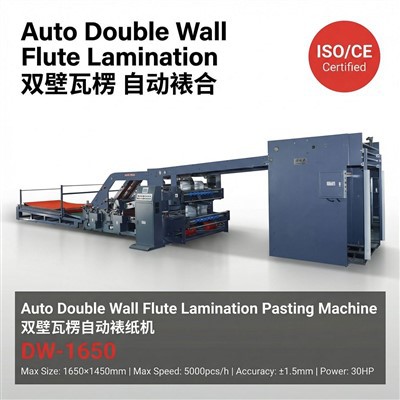
If you’re in the market for a 5 ply flute laminator, or you’re looking to upgrade your current unit to cut energy costs and boost production, I’m here to help. We don’t just sell equipment—we provide support at every step, from pre-installation planning to ongoing maintenance, to make sure your line runs smoothly for years. Don’t hesitate to reach out to discuss your requirements, compare options, and find the right laminator for your operation.
A4 Paper Cutting Machine References
- Corrugated Association International. (2022). Energy Efficiency Guidelines for Corrugated Laminators. National Packaging Association.
- Industrial Electricity Cost Benchmarking Report. (2023). U.S. Department of Energy, Office of Industrial Technologies.
- Corrugated Converter Machinery Specifications Manual. (2021). International Corrugated Packaging Federation.
- Practical Corrugated Manufacturing. (2020). Laminator Operation and Energy Management, Volume 7.
Sheng Ding Group Limited
We’re well-known as one of the leading 5 ply flute laminator manufacturers and suppliers in China. With abundant experience, we warmly welcome you to buy advanced 5 ply flute laminator for sale here from our factory. For quotation, contact us now.
Address: FLAT E 16/F SUPERLUCK IND CTR 57 SHA TSUI RD PHASE 2 TSUEN WAN NT
E-mail: chm007@szchm.com
WebSite: https://www.packagmachine.com/
