If you’ve ever stood next to an operating oil-immersed transformer, you’d feel it long before you see the numbers: that steady, low hum, and the subtle warmth radiating from its casing. That heat isn’t just a byproduct—it’s a critical limit. For transformers, too much heat cuts lifespan by years, if not months, so cooling systems aren’t an afterthought—they’re the backbone of reliable performance. As a supplier of oil-immersed transformers, I get asked this question constantly: what’s the real difference between natural cooling and forced cooling? It’s not just a technical detail; it’s the difference between a transformer that works as quietly as it should and one that can’t keep up with the load, especially in tough environments. Oil Immersed Transformer
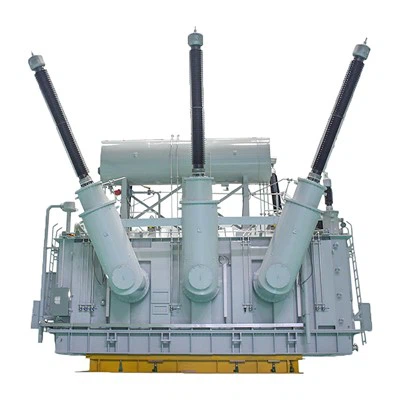
Let’s start with the basics, because too many people skip this part. Oil-immersed transformers work on a simple principle: the oil inside doesn’t just insulate the windings—it transfers heat. Copper and iron losses (from electrical resistance and magnetic flux) create heat inside the core and coils. The oil absorbs that heat, then moves it to the tank walls, which radiate it into the surrounding air. That’s the core of natural cooling. For forced cooling, we add components to make that heat transfer faster. The line between them isn’t just “no parts vs. parts”—it’s how they handle load, efficiency, and cost, day in and day out.
Natural cooling, often labeled ONAN (Oil Natural Air Natural, in industry terms), is the simplest system. It relies solely on natural convection: warm oil rises to the top of the transformer, where it meets the cooler tank walls or external radiators, releases heat, and sinks back down. No fans, no pumps, no extra power needed. That’s both its biggest strength and its biggest limitation. Think about it: if you’re running a transformer at 50% of its rated capacity in a cool, well-ventilated utility yard, natural cooling works perfectly. It’s reliable—fewer moving parts mean less to break down. You won’t get a sudden fan failure shutting down a critical feeder, no pump seals to replace. For small to medium transformers, especially in areas with mild climates, this is the go-to.
But here’s the catch: natural cooling has a hard ceiling on load. That same transformer rated for 100 kVA with ONAN might only be able to handle 100 kVA in a 20°C ambient environment. Crank the ambient temp up to 40°C, or ask it to run at 120 kVA (a common overload for peak demand), and that heat can’t escape fast enough. The winding temperature climbs—transformers are rated for a maximum hot-spot temperature of 110°C for continuous operation; go above that, and the insulation degrades faster. I’ve seen ONAN transformers in desert locations run 15-20°C hotter than they should, which cuts their expected lifespan from 25 years to 15 or less. It’s a tradeoff: simplicity, reliability, and low upfront cost, but limited capacity, especially in demanding conditions.
Forced cooling, on the other hand, uses mechanical components to push that oil and air harder. The two most common types are ONAF (Oil Natural Air Forced) and OFAF (Oil Forced Air Forced), plus even more specialized ones like OFWF (Oil Forced Water Forced) for very high-load applications. Let’s break down ONAF first, since it’s the most common forced option. In ONAF, we add fans mounted on the external radiators. The oil still circulates naturally through the radiators, but the fans blow air across the finned radiator surfaces, increasing heat transfer by up to 30-40% compared to ONAN. That means the same 100 kVA transformer can now handle 150 kVA at the same ambient temp—without overheating.
Go a step further with OFAF, and we add an oil pump to force the oil through the cooling system instead of relying on convection. Now the oil flows faster, moving heat from the core and windings to the radiators much quicker. OFAF can increase capacity by 50-70% over ONAN, making it ideal for transformers that need to handle variable peak loads, or for locations with limited space for a larger ONAN transformer. The tradeoff here is obvious: moving parts mean more potential points of failure. Pumps and fans need regular maintenance—oil changes, bearing checks, fan blade inspections. They also draw power: a small 10 kVA fan motor might use 100 W, but on a 10 MVA transformer, that’s a continuous load that adds up over years. I always tell customers: if your load stays consistent, natural cooling is more efficient long-term. If you run at 80-100% of capacity for 8+ hours a day, forced cooling will save you from overloading and premature failure.
A lot of customers ask me which is better, and the answer is always “it depends on your use case.” Let’s talk about a few real-world examples. A small business with a 50 kVA transformer for a retail strip mall in a temperate climate: natural cooling is perfect. It’s cheap, requires almost no maintenance, and the load never spikes enough to need extra capacity. But a data center’s backup transformer, which has to run at full load for days during a power outage? Forced cooling is non-negotiable. The data center can’t afford a downtime event caused by overheating, so they need extra capacity on demand, even if it means a bit more upkeep.
Another difference is noise. Forced cooling’s fans and pumps add operational noise. A natural cooling transformer can be almost silent—you’ll only hear the hum of the core. A forced cooling transformer might add 15-20 dB, which is noticeable in residential areas or quiet industrial parks. That’s a big factor for locations near neighborhoods: natural cooling is the only option that meets noise regulations in many suburban areas.
Heat dissipation is where the two systems diverge most. Let’s get into the science a little to make this clear. The heat transfer rate for natural convection is roughly proportional to the temperature difference between the oil and the air. If the oil is 50°C above ambient, heat transfer is X. If the oil is 60°C above ambient, it’s only a small increase—convection doesn’t scale linearly. For forced air, the heat transfer is proportional to air velocity across the radiator. Double the fan speed, and you can get almost double the heat transfer, because you’re moving more cool air past the hot fins. That’s why forced cooling can handle higher loads without a huge jump in temperature.
Wait, but what about thermal runaway? That’s a concern with any transformer, but it’s more common in undercooled natural cooling systems. If the heat can’t escape, the insulation breaks down, increasing electrical losses, which creates more heat, and so on. For forced cooling, the system has built-in safety features: temperature sensors that trigger alarms if a fan fails, or even shut down the transformer temporarily to prevent damage. Natural cooling has fewer alarms, which means more reliance on regular temperature checks.
Cost is another big one. Upfront, a natural cooling transformer is cheaper to buy. No fans, no pumps, simpler construction. But over the 25+ year lifespan, forced cooling might be more cost-effective if you need that extra capacity. If you buy a 150 kVA transformer with forced cooling when you only need 100 kVA, you’re paying for components you don’t use. But if your load grows, or if you’re in a hot climate where natural cooling can’t handle peak temps, you’ll avoid the cost of premature replacement.
I’ve seen this play out with a customer last year. A manufacturing plant in Arizona bought two 200 kVA transformers. They went with natural cooling because the initial cost was lower. By summer, the ambient temp hit 45°C, and their peak load climbed to 210 kVA. The transformers were running at 115°C hot-spot temp—way over the rated limit. Within six months, one of the windings failed. They ended up replacing both with forced cooling transformers, plus paying for the repairs on the first. The total cost was twice what they would have paid for the forced cooling units upfront. That’s the call I want every customer to make: not just the initial price, but the long-term operating cost and reliability.
Maintenance is where the two systems differ drastically. Natural cooling transformers have almost no scheduled maintenance beyond oil sampling every few years. You don’t have to check fan belts, replace pump seals, or test fan motors. For forced cooling, we recommend monthly checks of fans and pumps, annual lubrication of bearings, and regular testing of the control systems. That means more downtime for maintenance, and more labor costs. But if a fan does fail, most forced cooling systems have a backup, or a warning alarm that alerts your maintenance team before it causes damage.
Wait, are there any other use cases? Let’s think about offshore platforms, where space is tight and weight is a factor. Natural cooling transformers are bulkier—you need a larger tank and more radiators to dissipate heat naturally. Forced cooling lets you shrink the transformer size, which saves space and weight on the platform. On the flip side, remote mining sites, where maintenance is hard to access: natural cooling is better, because there’s no equipment to break when parts are hard to replace.
I get asked sometimes, “Can I convert a natural cooling transformer to forced cooling?” Technically, yes—you can add fans and pumps, but it’s not usually cost-effective. The transformer’s core and coils are designed for natural cooling, so adding forced components might not handle the extra load without rewinding, which is almost as expensive as buying a new transformer. It’s better to choose the right system upfront.
The science of cooling also ties into transformer ratings. Every transformer has a “self-cooled” rating (ONAN) and a “forced-cooled” rating (ONAN, ONAF, etc.). The ANSI and IEC standards both define these: the self-cooled rating is the continuous load at which the transformer can operate without exceeding temperature limits under natural cooling. The forced-cooled rating is the maximum load when using the mechanical cooling systems. That rating difference is a key spec to look at—ignoring it leads to overheating, insulation failure, and costly outages.
Let’s wrap this up with a clear summary, because it’s easy to get bogged down in specs. Natural cooling: simple, reliable, low upfront cost, low noise, minimal maintenance, but limited capacity, not ideal for high ambient temps or variable peak loads. Forced cooling: higher capacity, better for heavy or variable loads, smaller footprint, but higher upfront and maintenance cost, more noise, more potential points of failure.
At the end of the day, the right choice depends on your specific needs: your load profile, ambient conditions, available space, maintenance resources, and budget. As a supplier, I don’t push one system over the other—I work with customers to figure out which will keep their transformers running reliably for 25+ years, without the hidden costs of under sizing. If you’re planning a new installation, upgrading your electrical system, or replacing an old transformer, let’s talk. We can walk through your load needs, location conditions, and long-term goals to find the right cooling solution that fits your application, no guesswork, no overspending.
Power Transformer References:
- American National Standards Institute (ANSI) C57.12.00, Standard for General Requirements for Liquid-Immersed Distribution, Power, and Regulating Transformers
- International Electrotechnical Commission (IEC) 60076-2, Power Transformers – Part 2: Temperature Rise for Liquid-Immersed Transformers
- Transformer Cooling: Principles, Types, and Applications, Electric Power Research Institute (EPRI), 2021
- “Cooling System Selection for Power Transformers,” IEEE Transactions on Power Delivery, Vol. 36, No. 4, 2021, pp. 1872-1880
Nantong Yawei New Energy Technology Co., Ltd.
As one of the most professional oil immersed transformer manufacturers and suppliers in China, we’re featured by quality products and good service. Please rest assured to wholesale durable oil immersed transformer made in China here from our factory. Customized orders are welcome.
Address: Room 28-101, Building 27 and 28, No.333 Kaiyuan Avenue, Sunzhuang Subdistrict, Hai’an City, Nantong City, Jiangsu Province, China
E-mail: admin@nantongyawei.com
WebSite: https://www.nantongyawei.com/
