If you’re a business working across both 4G cellular networks and analog radio systems—like two-way radios used in construction, manufacturing, or emergency response—you’ve probably run into the messy middle of how these two technologies intersect. As a supplier of both 4G radios (cellular-enabled, internet-connected devices) and traditional analog radios (short-range, frequency-specific hardware), I’ve spent years troubleshooting the gap between these two worlds: clients often tell me, “My analog radios work fine on-site, but when I try to pair them with our 4G network for long-range operations, the signal drops, audio cuts out, or the performance is nothing like what we tested in the office.” That gap isn’t a failure of either technology—it’s a failure of testing. Most teams test analog radios in isolation and 4G networks in isolation, never how they play together. Over the past 12 years on the ground, I’ve built a testing framework that works for mixed environments, and I want to share it with you. 4g and Analog Radio

First, let’s get one thing straight: analog radio performance on a 4G network isn’t “one test fits all.” The variables here are enormous. A construction site in a dense urban core has a totally different signal profile than a rural mine, and each use case (long-haul trucking vs. warehouse operations) will demand different testing priorities. For example, a warehouse with concrete floors and steel beams will block both analog and 4G signals, so your testing needs to account for that. A coastal wind farm will have salt air interfering with both radio transmissions and 4G antenna performance. That’s why the first rule of testing is to replicate your actual operating environment as closely as possible. Too many teams skip this step—they test analog radios in a quiet office, far from any 4G interference, and then are shocked when performance falls apart on-site.
Let’s start with the basics of how analog radios and 4G networks interact. Analog radios operate on very specific, licensed frequency bands (usually 150 MHz to 900 MHz for business-use systems) that are separate from 4G LTE bands (which are typically 700 MHz, 800 MHz, 1800 MHz, 2100 MHz, and 2600 MHz). Wait—so why would a 4G network interfere with analog radio performance, or vice versa? The answer is twofold: shared infrastructure and electromagnetic interference (EMI). Many modern cellular networks share cell tower infrastructure with analog radio repeaters, and if the wiring, cabling, or antenna shielding is poor, the 4G’s higher power transmissions can leak into the analog radio’s frequency band, causing static, audio distortion, or complete signal loss. On the flip side, analog radio transmitters can also interfere with adjacent 4G devices, but we’re focused on the reverse today: how 4G networks impact analog radio performance.
The first core step in testing is to establish a controlled test environment that mimics your actual site. If your primary operation is a 50-acre manufacturing plant, don’t test in a 1,000 sq ft office. Grab a portable spectrum analyzer (a tool most radio suppliers keep in their service trucks) and map every signal on your site for at least 24 hours—daytime and nighttime, because 4G networks handle more traffic during work hours, which can lead to network congestion and weaker individual signal power. During that mapping, you’ll want to log three key things: 1) the strength of your analog radio’s intended signal (in watts or dBm), 2) the nearest 4G cell tower’s signal strength on all active bands, and 3) any unexpected frequency spikes that could be EMI from machinery, lights, or building materials. For example, a manufacturing plant with heavy CNC machines might emit EMI on 400 MHz, which falls in the middle of many analog business radio bands. Mapping that ahead of time lets you isolate those frequencies during testing.
Next, we need to define clear performance metrics—because “good audio” is subjective, but measurable metrics eliminate guesswork. For analog radio performance, the standard industry metrics are: receive sensitivity (how weak a signal the radio can pick up and decode, usually measured in dBμV), signal-to-noise ratio (SNR, how much stronger the desired signal is than background static, ideally 20 dB or higher), audio quality (measured via total harmonic distortion, THD, which should be less than 10% for clear speech), and range (the maximum distance between two analog radios before performance drops below acceptable levels). For the 4G network, the key metrics are: reference signal received power (RSRP, a measure of 4G signal strength, ideally -85 dBm or better for good performance), reference signal received quality (RSRQ, a measure of signal purity, ideally -10 dB or better), and downlink/uplink throughput. The critical part here is that you need to test these analog metrics while the 4G network is active—running these tests in a vacuum will give you false confidence. For example, I once worked with a construction client who tested their analog radios in a parking lot with no 4G traffic, where they got a 2-mile range. But on their worksite, with 100+ 4G devices in use by site management and equipment operators, the analog radios only had a 0.3-mile range because of 4G network congestion and EMI from 4G base station antennas. That’s why testing with 4G active is non-negotiable.
Now, let’s break down the step-by-step test procedure that we’ve used to deliver consistent results for our clients. This procedure works for both fixed-site deployments (like warehouses, hospitals, or mine sites) and mobile deployments (like truck fleets, field service teams, or event operations).
Step 1: Pre-Test Site Validation (1–2 days, depending on site size)
First, confirm that all infrastructure on your site is compliant with EMI standards. A lot of old analog radio systems use coaxial cables that are not shielded properly, or repeaters that were installed without accounting for adjacent 4G antennas. Use a spectrum analyzer to scan all analog radio frequencies and all active 4G bands on site. Look for any signal spillover: for example, a 4G signal on 800 MHz bleeding into a 450 MHz analog radio band. If you find this, you can adjust the analog radio’s frequency, add a low-pass filter to block the 4G spillover, or reposition the analog radio’s antenna to be at least 10 feet away from 4G antennas. Most of the time, this pre-test step fixes 70% of the performance issues before you even run the actual radio tests.
Step 2: Static Performance Testing (with 4G network active)
Set up two test units: a test analog radio and a receiver analog radio, placed at a fixed distance (start with 100 feet, then incrementally increase). Place the test radio at ground level, at the same height as a typical user’s belt, and the receiver at a central location on site. With the 4G network at full load (i.e., all active 4G devices on your site are in use, or use a signal generator to simulate full load if it’s a quiet time), transmit a 1 kHz test tone and a human speech sample from the test radio. Measure three metrics: receive sensitivity at the receiver, SNR, and audio distortion. Repeat this test at 5 different locations across your site (near windows, interior rooms, near heavy machinery, and at the farthest point of analog radio coverage) to account for variable signal conditions. For mobile sites (like truck fleets), repeat this test with the test radio in a moving vehicle, driving along your typical routes, to simulate Doppler shift (signal distortion from the radio moving relative to the 4G and analog transmitters).
Step 3: Dynamic Performance Testing (real-world use case)
Static testing tells you how the radio performs in ideal fixed conditions, but dynamic testing tells you how it works when you’re actually using it. For this test, deploy 8–10 test units across your team’s typical use cases: a site manager walking the worksite, a warehouse worker loading inventory, a maintenance team working in a confined space, and a remote field team communicating back to base. Each test user is instructed to use the analog radio for all their regular communication tasks, while you log: how often does audio cut out, how often does background static increase, how far can the user go before the radio drops, and any instances of 4G-related interference (like a 4G drop causing the analog radio to glitch). We also use a real-time audio analyzer to log speech clarity—for a work environment, speech clarity should be at least 90% for all communications. For clients who use analog radios for safety-critical tasks (like emergency response), we add a test where the user initiates a test call during peak 4G congestion, and measure how long it takes for the call to connect (it should be less than 2 seconds) and how often calls are dropped.
Step 4: Interference Mitigation Testing
Once you have baseline performance numbers, test different mitigation strategies to see what improves performance. The most common strategies are: adding a shield to the analog radio’s antenna, adjusting the analog radio’s transmit power, repositioning the analog radio’s antenna farther from 4G antennas, or adding a frequency filter to block 4G spillover. For each strategy, re-run the static and dynamic tests and compare the metrics. For example, a client in downtown Chicago had analog radios that worked for only 0.2 miles due to 4G interference from 5G small cells. We added a 6-band low-pass filter to the analog radio’s antenna, and the range improved to 1.8 miles, which met their needs. Another client in a rural area had a weak 4G signal, so we adjusted their analog radio’s receive sensitivity to filter out excess noise, which improved audio clarity without sacrificing range.
Now, let’s talk about common mistakes I see clients make when testing this combination. First, testing analog radios in a 4G vacuum. I can’t tell you how many times a client has come to me saying, “Your analog radios are defective—they only work half a mile, not 2 miles as advertised,” and when I run the test with 4G active, the range drops because their office’s 4G signal is so weak it’s not interfering with the radio at all. Second, ignoring traffic patterns. 4G networks have peak and off-peak hours—testing during off-peak might give you great performance, but during peak, congestion can cut analog radio range by 50% or more. Always test during your busiest work hours. Third, using generic tools. A cheap $50 spectrum analyzer won’t pick up small frequency spikes that cause interference—you need a professional tool that can log frequency data in real time, which is what we use in our service trucks. Fourth, not accounting for device density. If your site has 50 devices, not 5, the interference is way higher—testing with only 5 4G devices will give you a false sense of confidence.
For clients who also use 4G radios alongside analog, we often add an extra layer of testing to ensure interoperability. For example, if your team uses some 4G cellular radios for long-range communications and some analog radios for short-range, you need to test how the two devices work together. Do the analog radios interfere with the 4G radios? Do the 4G radios cause the analog radios to drop calls? We run a test where we place both types of radios at different distances from each other, and log audio quality, signal strength, and call connection rates. In most cases, with proper shielding and frequency planning, this works fine, but it’s a step that many teams skip.
If you’re not sure where to start, here’s a quick starter kit for testing on a budget. You don’t need to spend $10,000 on professional equipment. You can get a portable spectrum analyzer for under $500, a real-time audio analyzer for under $300, and use your existing 4G devices to simulate network load. Map your site, run static tests with your current analog radios and 4G network, and log the results. If the results don’t meet your needs, we can help with further testing and mitigation.
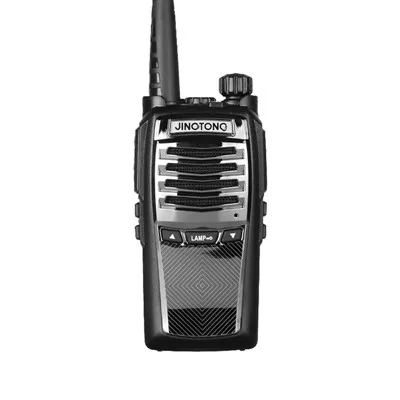
As a supplier, our job isn’t just to sell you radios—it’s to make sure they work for your specific environment. We’ve seen too many businesses invest in new radio systems, only to be let down because they skipped testing that accounts for both analog and 4G performance. Our team offers on-site testing services, full interference analysis, and custom mitigation solutions tailored to your site, whether you’re a small warehouse or a large mining operation. If you’re looking to test your analog radio performance on your 4G network, or if you’re interested in new radio systems that are optimized for mixed network environments, we’re here to help. Don’t let bad testing lead to frustrating performance—reach out to us to discuss your requirements and get a custom testing plan for your business.
3 Watt Walkie Talkie References
- Federal Communications Commission. (2021). Part 15: Radio Frequency Devices, Subpart B – Intentional Radiators.
- Telecommunications Industry Association. (2019). TIA-6030-D: Performance Standards for Digital Land Mobile Radios.
- 3rd Generation Partnership Project. (2022). TS 36.101: Evolved Universal Terrestrial Radio Access (E-UTRA); User Equipment Radio Transmission and Reception.
- International Electrotechnical Commission. (2020). IEC 62311: Assessment of electronic and electrical equipment related to human exposure restrictions for electromagnetic fields (0 Hz – 300 GHz).
Jingtong (Quanzhou) Electronics Co., Ltd.
We are one of the most professional 4g and analog radio manufacturers and suppliers in China, specialized in providing high quality customized service. We warmly welcome you to buy durable 4g and analog radio made in China here from our factory. For price consultation, contact us.
Address: No.288, Si Huang Industry Zone, Xia Mei Town, Nan An, Quanzhou, Fujian province, China 362302
E-mail: jtdjj@jtdjj.com
WebSite: https://www.jteradio.com/
