In the era of rapid technological advancement, high – speed data transmission has become the cornerstone of various industries, from telecommunications to consumer electronics, and from automotive to aerospace. As a reliable flexible cable supplier deeply involved in this field, I’ve witnessed firsthand the escalating demand for these cables in high – speed data transfer scenarios. But the question arises: are there any special requirements for flexible cables when it comes to high – speed data transmission? The answer is a resounding yes. Flexible Cable
Electrical Performance Requirements
Signal Integrity
One of the primary concerns in high – speed data transmission is signal integrity. Flexible cables need to maintain a consistent impedance throughout their length. Any impedance discontinuities can cause signal reflections, leading to data errors. For instance, in a USB 3.0 cable, which is designed for high – speed data transfer, the characteristic impedance is typically specified at 90 ± 15 ohms. Our flexible cables are engineered with precision to meet these strict impedance requirements. We use advanced manufacturing techniques to ensure the uniform distribution of conductors and dielectric materials, which helps minimize impedance variations.
Another aspect related to signal integrity is attenuation. As data travels along the cable, the signal strength decreases due to factors such as conductor resistance and dielectric loss. In high – speed applications, even a small amount of attenuation can degrade the signal quality. To combat this, we select high – quality conductors with low resistance, such as oxygen – free copper. Additionally, we use low – loss dielectric materials that can reduce the energy loss during signal transmission. For example, in high – speed Ethernet cables, we often use polyethylene or polypropylene as the dielectric, which have excellent electrical properties and low attenuation characteristics.
Crosstalk and Noise Immunity
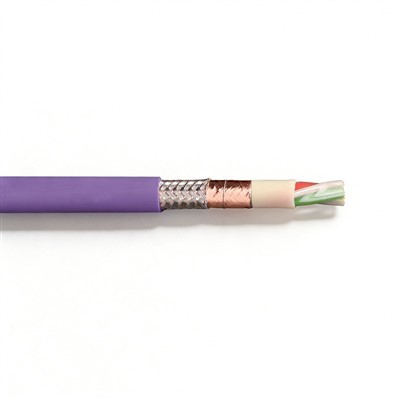
Crosstalk is the interference that occurs between adjacent conductors within a cable. In high – speed data transmission, where multiple signals are transmitted simultaneously, crosstalk can severely affect the performance of the cable. Our flexible cables are designed with proper shielding and conductor spacing to minimize crosstalk. We use shielding materials such as aluminum foil or braided copper to create a barrier that can prevent electromagnetic interference (EMI) from one conductor to another.
Noise immunity is also crucial. External electromagnetic fields can induce noise in the cable, which can corrupt the data signals. Our cables are engineered to be resistant to external electromagnetic interference. We conduct extensive testing in anechoic chambers to evaluate the cable’s ability to withstand external noise sources. By using ferrite beads and other noise suppression techniques, we can further enhance the cable’s noise immunity.
Mechanical Performance Requirements
Flexibility and Bending Radius
By the very nature of flexible cables, they need to be able to bend and flex repeatedly without significant degradation in performance. In high – speed data transmission applications, the cable may be subject to frequent bending, such as in robotics or movable industrial equipment. We understand the importance of flexibility and have developed cables with optimized construction. The conductor stranding and insulation materials are carefully selected to ensure a small bending radius. For example, our cables can typically achieve a bending radius of 5 to 10 times the cable diameter, which is much better than the industry average in many cases.
Tensile and Compressive Strength
When cables are installed in various environments, they may be subjected to tensile and compressive forces. In high – speed data transmission systems, it is essential that the cable can withstand these forces without damage. Our flexible cables are designed with strong outer jackets and internal support structures. The outer jacket is made of materials like polyurethane or PVC, which have excellent mechanical properties and can protect the internal conductors from damage. The internal support structures, such as aramid fibers or fiberglass, can enhance the cable’s tensile strength.
Environmental Performance Requirements
Temperature and Humidity Resistance
High – speed data transmission systems can operate in a wide range of environments, from extremely cold to extremely hot conditions. Our flexible cables are tested and certified to withstand a broad temperature range. For example, some of our cables can operate reliably in temperatures ranging from – 40°C to 85°C. We use temperature – resistant insulation and conductor materials that can maintain their electrical and mechanical properties under these harsh conditions.
Humidity can also have a significant impact on cable performance. Moisture can cause corrosion of the conductors and degradation of the insulation. Our cables are designed with moisture – resistant materials and sealing techniques. The outer jacket is often waterproof, and the internal components are protected from humidity ingress.
Chemical Resistance
In some industrial applications, cables may come into contact with various chemicals. Our flexible cables are engineered to be resistant to chemicals such as oils, solvents, and acids. We select chemical – resistant materials for the outer jacket and insulation, which can prevent damage to the cable and ensure stable data transmission over time.
Adherence to Standards
To ensure the quality and performance of flexible cables in high – speed data transmission, it is essential to adhere to international standards. Standards such as ISO, IEC, and UL provide guidelines for cable design, manufacturing, and testing. As a supplier, we are committed to meeting these standards. Our production processes are strictly monitored to ensure compliance with these international requirements. We also conduct rigorous in – house testing to ensure that our cables meet or exceed the specified standards.
Customization for Specific Applications
Every high – speed data transmission application has its unique requirements. As a flexible cable supplier, we understand the importance of providing customized solutions. Whether it’s a specific cable length, connector type, or performance parameter, we can work closely with our customers to develop cables that meet their exact needs. Our experienced R & D team can use advanced simulation and testing tools to optimize the cable design for each application.
Conclusion

In conclusion, there are indeed numerous special requirements for flexible cables in high – speed data transmission. These requirements cover electrical, mechanical, and environmental aspects. As a leading flexible cable supplier, we are dedicated to meeting these requirements. Our commitment to research and development, quality control, and customer – centric solutions enables us to provide high – performance flexible cables for a wide range of high – speed data transmission applications.
Bus Cable If you are in the market for high – quality flexible cables for your high – speed data transmission needs, we would be delighted to have a discussion with you. Our team of experts is ready to understand your specific requirements and offer the most suitable cable solutions. Contact us to start a productive conversation about your cable procurement.
References
- Groth, C. (2022). High – Speed Digital Design: A Handbook of Black Magic. Prentice Hall.
- Chen, Z. (2023). Fundamentals of Electrical Engineering for Data Transmission. Wiley.
- International Electrotechnical Commission (IEC). (2021). IEC standards for flexible cables. Geneva: IEC.
- Underwriters Laboratories (UL). (2022). UL standards for cable safety and performance. Northbrook: UL.
Cixi Davos Wire & Cable Co., Ltd.
As one of the most professional flexible cable manufacturers and suppliers in China, we also support customized service. Please feel free to buy bulk high quality flexible cable in stock here from our factory. For price consultation, contact us.
Address: No.3, Lane 91, Ruan Ding Road, Linxi Village, Xiaolin Town, Cixi City
E-mail: roy798@163.com
WebSite: https://www.cj-supplychain.com/
