When it comes to temperature test chambers, two common types often discussed in the industry are single-chamber and multi-chamber temperature test chambers. As a supplier in this field, I have witnessed firsthand the diverse needs of our customers and how these two types of chambers can meet different requirements. In this blog, I’ll delve into the fundamental differences between single-chamber and multi-chamber temperature test chambers, their unique advantages, and the scenarios where each type is most suitable. Temperature Test Chamber
Structural Design
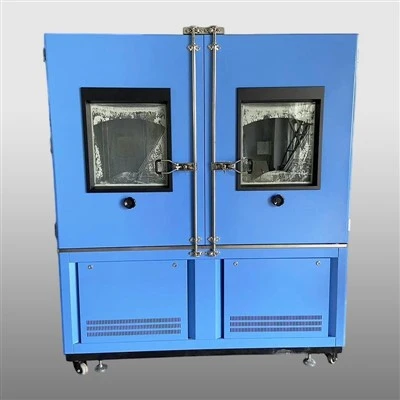
The most obvious difference between single-chamber and multi-chamber temperature test chambers lies in their structural design. A single-chamber temperature test chamber, as the name implies, consists of a single enclosed space. This chamber is designed to maintain a uniform temperature environment for testing purposes. The internal structure is relatively simple, with heating and cooling systems working together to achieve and maintain the desired temperature within the chamber.
On the other hand, a multi-chamber temperature test chamber is composed of multiple independent chambers. These chambers can be arranged in various configurations, such as side-by-side or stacked. Each chamber has its own set of temperature control systems, allowing for different temperature conditions to be maintained simultaneously. This modular design provides greater flexibility and the ability to conduct multiple tests with different temperature requirements at the same time.
Temperature Range and Control Precision
In terms of temperature range, both single-chamber and multi-chamber temperature test chambers can typically achieve a wide range, from extremely low temperatures to high temperatures. However, the maximum achievable temperature range and the control precision may vary between the two types.
Single-chamber temperature test chambers are generally designed to provide a stable and precise temperature environment within a specific range. They are well-suited for applications that require a single, consistent temperature for testing. The temperature control system in a single-chamber chamber is optimized to maintain a uniform temperature throughout the chamber, ensuring accurate test results.
Multi-chamber temperature test chambers, on the other hand, offer the advantage of being able to maintain different temperature conditions in each chamber. This allows for more complex testing scenarios, such as simulating different environmental conditions or conducting multiple tests with different temperature requirements simultaneously. However, achieving the same level of temperature control precision in each chamber can be more challenging, especially when the chambers are operating at different temperatures.
Testing Capacity and Efficiency
The testing capacity and efficiency of single-chamber and multi-chamber temperature test chambers also differ significantly. Single-chamber temperature test chambers are ideal for applications where a large quantity of samples need to be tested under the same temperature conditions. The single, large chamber provides ample space for accommodating multiple samples, allowing for efficient testing of a large batch of products at once.
Multi-chamber temperature test chambers, on the other hand, are better suited for applications that require testing samples under different temperature conditions. The ability to maintain different temperature environments in each chamber allows for simultaneous testing of multiple samples with different temperature requirements. This can significantly reduce the overall testing time and increase the efficiency of the testing process.
Cost Considerations
Cost is an important factor to consider when choosing between a single-chamber and a multi-chamber temperature test chamber. Single-chamber temperature test chambers are generally more cost-effective than multi-chamber chambers. The simpler design and fewer components of a single-chamber chamber result in lower manufacturing costs, which are reflected in the purchase price.
Multi-chamber temperature test chambers, on the other hand, are more expensive due to their complex design and the need for multiple temperature control systems. However, the increased flexibility and efficiency offered by multi-chamber chambers can offset the higher initial cost in the long run, especially for applications that require frequent testing of samples under different temperature conditions.
Applications
The choice between a single-chamber and a multi-chamber temperature test chamber depends largely on the specific application requirements. Single-chamber temperature test chambers are commonly used in industries such as electronics, automotive, and aerospace, where products need to be tested under a single, consistent temperature environment. For example, in the electronics industry, single-chamber chambers are used to test the performance and reliability of electronic components at high or low temperatures.
Multi-chamber temperature test chambers, on the other hand, are more suitable for applications that require testing samples under different temperature conditions. They are commonly used in research and development laboratories, where scientists need to simulate different environmental conditions to study the behavior of materials and products. For example, in a materials science laboratory, multi-chamber chambers can be used to test the thermal properties of different materials at different temperatures simultaneously.
Conclusion
In conclusion, single-chamber and multi-chamber temperature test chambers have their own unique advantages and are suitable for different application scenarios. Single-chamber chambers are ideal for applications that require a single, consistent temperature environment and large testing capacity. They are cost-effective and easy to operate, making them a popular choice for many industries.

Multi-chamber chambers, on the other hand, offer greater flexibility and the ability to conduct multiple tests with different temperature requirements simultaneously. They are more suitable for research and development applications and industries that require frequent testing of samples under different temperature conditions.
UV Weather Resistance Test Chamber As a supplier of temperature test chambers, we understand the importance of choosing the right chamber for your specific needs. Our team of experts can provide you with professional advice and guidance to help you select the most suitable chamber for your application. If you are interested in learning more about our temperature test chambers or have any questions, please feel free to contact our sales team. We look forward to discussing your requirements and finding the perfect solution for you.
References
- ASHRAE Handbook-Equipment. American Society of Heating, Refrigerating and Air-Conditioning Engineers.
- ASTM Standards. American Society for Testing and Materials.
- IEC Standards. International Electrotechnical Commission.
ALP Technology (T&M) Ltd.
With abundant experience, we are one of the most reliable temperature test chamber manufacturers and suppliers in China. Please feel free to buy advanced temperature test chamber for sale here from our factory. All customized products are with high quality and competitive price.
Address: No.19, Mingde Road, Xi’an, China
E-mail: info@alp-environment.com
WebSite: https://www.alp-environment.com/
