If you’ve ever driven down a suburban street and passed a neat little container home tucked at the end of a driveway, or browsed modular home listings online, you’ve probably wondered: can modular container homes be moved after installation? As a supplier who’s built and relocated dozens of these structures over the past eight years, I can tell you the short answer is… it depends. The long answer? That’s where things get nuanced—and far more interesting than most people expect. Modular Container Homes
When I first got into the modular container home business, nearly every customer who came through my workshop asked the same question: “If I build this for my land, can I take it with me if I move?” Back then, I’d give them a vague, “It’s possible” and leave it at that. But after a client in Texas had to relocate his two-bedroom container home 40 miles when he sold his property, and another in Oregon had to move a single-unit unit twice in five years, I started digging into the details that make relocation work—or fall apart.
First, let’s get clear on what we mean by “after installation.” Modular container homes aren’t the same as a tiny house on wheels, where you can hitch it up and drive off at a moment’s notice. Most of the units we build are “permanent-installed” when we first set them up: that means we anchor them to a concrete or gravel foundation, connect all utilities (sewer, water, electric, HVAC), and finish the exterior so it blends in with the surrounding property. In that state, moving isn’t just a matter of unhooking wires. It requires planning, permits, and a team of specialists—and it also depends on how your home was built in the first place.
Let’s break down the factors that determine whether a post-installation move is feasible. The biggest one is the number of shipping containers your home uses and how they’re configured. A single 20-foot container is the easiest to move post-install. We had a young couple in Florida who used a 20-foot unit as a guesthouse for their parents, and when the parents moved out of state, we disconnected the utilities, unbolted it from its foundation, and hauled it to their new home in Georgia without a single issue. That took about two days of work, plus a mobile transport permit and a local road escort—no major hiccups.
Double that to a 40-foot single container, and things get a little trickier. Forty-foot units are heavier, and most local governments have weight limits on residential roads that can make moving them without a specialized oversize load permit. We once tried to move a 40-foot single unit in Tennessee, and the permit process took three weeks longer than we’d planned because the county required a structural survey to confirm the frame could support transport stress. That’s not a red flag—just a bureaucratic step that’s easy to miss if you don’t work in the industry.
The really tricky ones are multi-unit container homes. That’s when you connect two or more shipping containers side-by-side, end-to-end, or stacked on top of each other for extra square footage. If your home is two 20-foot containers bolted together side-by-side, moving it as a single unit is almost impossible after installation. The seams where the containers are connected are designed to be strong enough for daily use, but not for the vibration and weight of a road trip. We learned that the hard way in 2019, when a client in Arizona tried to move a two-unit side-by-side home he’d installed on his property. He hired a general mover who didn’t specialize in modular structures, and when they lifted the unit, the seam between the two containers split, ruining the insulation and exterior siding. We had to rebuild half the unit, and it cost him twice what the relocation would have with a specialized team.
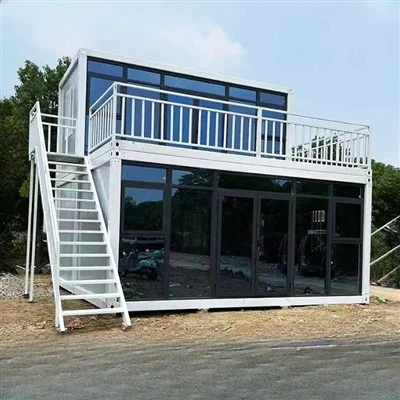
Stacked containers are even more complicated. If you’ve got a two-story container home, lifting the top floor alone is risky—most stack configurations rely on the bottom container’s frame to support the weight of the top one, so unbolting it can compromise its structural integrity. We had a client in Washington State who had a stacked two-unit home, and when he wanted to move, we had to separate the units entirely, move them one at a time, and reconfigure them at his new site. That added two weeks of work to the project, and required a custom transport plan to navigate narrow backroads.
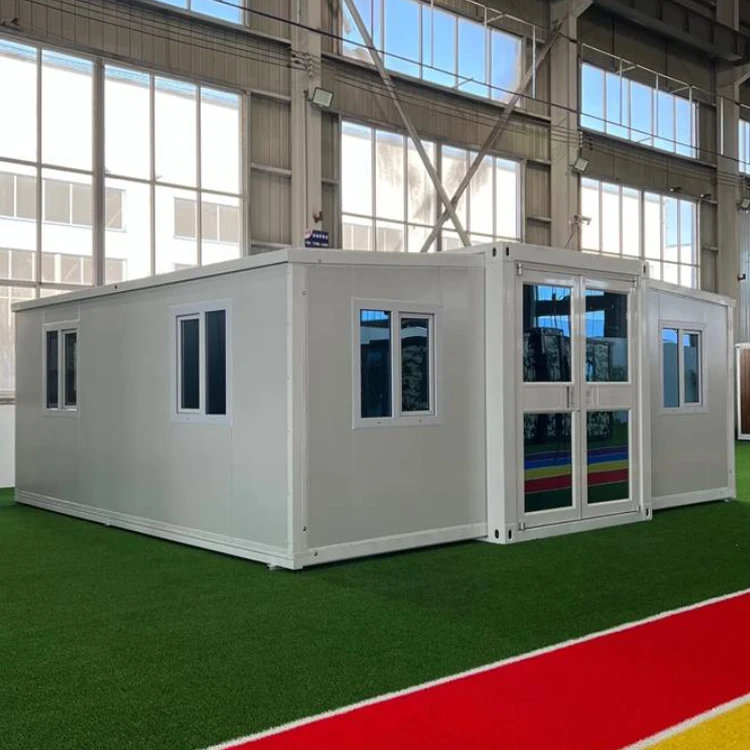
But here’s the good news: for most multi-unit homes, if you plan the move before you even install the unit, you can eliminate most of those headaches. That’s a service we now offer exclusively to clients who mention relocating later in the process. Instead of permanently bolting the containers together and sealing the seams during initial installation, we leave temporary connections that are easy to unbolt, and we design the foundation to have lifting points built in. We also use lightweight insulation and exterior siding that can handle the vibration of transport, instead of the more permanent, heavy materials we use for homes that will stay in one place forever.
Another common question I get: what about utilities? Can you move a home that’s connected to a septic system, electric, and water? The answer here is yes, but you have to disconnect properly—and that’s not something you want to do yourself. We always hire licensed plumbers, electricians, and HVAC technicians to disconnect all utilities, and we make sure all connections are capped and sealed to prevent damage during transport. It’s also important to check local regulations about utility disconnection: some areas require a permit to disconnect a home from the public grid, and you can face fines if you skip that step.
There’s one myth I need to bust here: some people think you can’t move a container home because it’s “permanent” once installed. That’s not true. In fact, modular container homes are often more moveable than traditional stick-built homes, because their steel frames are designed to be taken apart and rebuilt. We’ve seen stick-built homes that were bolted to a foundation and connected to utilities end up being demolished when the owner moved, because moving a stick-built home requires taking it apart piece by piece, which is far more expensive than relocating a container home.
But relocation isn’t always the right call, even if it’s technically feasible. There are a few scenarios where moving a container home after installation just doesn’t make sense. First, if your home is older than 10 years. Shipping containers have a lifespan of about 25 years, but the structural integrity of the frame can weaken over time—especially if it’s been exposed to salt air, extreme heat, or constant moisture. Moving an old container home often leads to structural damage, which can cost more to repair than building a new unit. We had a client in coastal Texas who had a 12-year-old container home, and when he tried to move it, the frame cracked at the base, making it unsafe to live in. We had to buy it back from him for a fraction of its original cost, because the repair was too expensive.
Second, if you’re planning to move the home more than 100 miles. The further you go, the more oversize load permits you’ll need, and the higher the transport cost. Most of our clients who move their homes go 50 miles or less, and even then, the transport cost can be anywhere from $1,500 to $5,000, depending on the size of the unit. If you’re moving 200 miles, that cost can double, and sometimes it’s cheaper to sell your existing home and build a new one at your new site. We always advise clients to do a cost-benefit analysis before deciding to move: add up the transport cost, permit fees, foundation work at the new site, and any repairs that might come up during relocation, and compare that to building a new unit. More often than not, it’s cheaper to build new, but that’s not always the case.
Another factor to consider is zoning and building codes at your new site. When you install a container home at your original property, you probably went through a zoning approval process. But every county, city, and even neighborhood has different rules about modular structures. Some areas ban container homes entirely, or require them to meet strict setback requirements or height limits. We had a client in California who moved his single-unit container home from Oregon, only to find out that his new city required all accessory dwelling units (ADUs) to have a minimum square footage of 500 square feet. His 40-foot unit was only 320 square feet, so he had to add an extension at his own cost to comply with local codes. That’s a mistake a lot of people make—always check the zoning rules at your new site before planning a move.
So, let’s wrap this up: can modular container homes be moved after installation? The answer is, yes—if you plan ahead, hire the right team, and account for the costs and regulations. It’s not as simple as hitching up a tiny house trailer, but for many people, it’s a viable option. We’ve moved units across state lines, across town, and even across a county, and every time, as long as we followed the steps of planning, permitting, and customizing the home for relocation, it worked out.
If you’re considering a modular container home and wondering if it can go with you when you move, the best thing to do is talk to a supplier who has experience with relocations—not just building units. When you’re ready to start planning your home, we’re here to walk you through every step, from initial design to post-installation options. For questions about your project or to request a consultation, reach out to our team to discuss your needs.
Capsule House References
- International Code Council. (2021). International Residential Code for One- and Two-Family Dwellings.
- National Association of Home Builders. (2022). Modular and Manufactured Home Relocation Guidelines.
- Steel Shipping Institute. (2020). Structural Integrity of Repurposed Shipping Containers for Modular Construction.
- US Department of Transportation. (2021). Oversize Load Transport Permitting Regulations for Residential Structures.
- American Plumbers Association. (2023). Utility Disconnection and Reconnection Standards for Modular Buildings.
Jiangsu Suqian Longze Modular Construction Co., Ltd.
As one of the most professional modular container homes manufacturers and suppliers in China, our products have good reputation in the market. Please feel free to buy high quality modular container homes at competitive price from our factory. We also accept customized orders.
Address: No. 8, Weisan Road, Shuanggou Town, Sihong County, Suqian City, Jiangsu Province, China
E-mail: Lzmk88888888@163.com
WebSite: https://www.expandablehousefactory.com/
