When a customer first walks into our demo room and plugs an EMS device onto their chest, there’s always a mix of skepticism and curiosity. “Wait, this is supposed to work on muscles, right? Can it actually build chest muscles?” is the question I hear at least a dozen times a week. As an EMS device supplier who’s been in this space for over a decade, I don’t just rely on marketing claims to answer that. I lean on the research, the hands-on feedback from our users, and the actual science of how electrical muscle stimulation interacts with the body. Let’s break this down clearly, no fluff, no confusing jargon—just what you need to know if you’re wondering whether an EMS device can help you build chest muscles. EMS Device

First, let’s get the basics right. EMS stands for Electrical Muscle Stimulation, and it’s not a new technology. Physical therapists have used it for decades to help people recover muscle mass after injuries, surgeries, or strokes—when a muscle can’t contract voluntarily due to pain or weakness. The core idea is simple: a small, controlled electrical current is applied to the skin over a muscle group, which stimulates the motor neurons that make the muscle fibers contract. This is different from the electrical shocks you might see in old movies; our devices are calibrated to safely match the natural frequency of muscle contractions, usually between 20 and 50 Hz for resistance training.
Now, the question is: can this stimulation lead to hypertrophy—the scientific term for muscle growth? Hypertrophy happens when muscle fibers experience enough mechanical tension, metabolic stress, and muscle damage during a workout to trigger the body to repair and build larger fibers. Traditional chest exercises like bench presses, push-ups, or chest flyes work by having you voluntarily contract your chest muscles against resistance, creating that tension. So if EMS is causing the same (or even stronger) contractions, does it check all the boxes for hypertrophy?
Recent peer-reviewed research says yes, but with a catch. A 2021 study in the Journal of Strength and Conditioning Research had two groups of young men do chest workouts twice a week for 12 weeks. One group did standard bench presses and push-ups, the other did the same voluntary exercises but added EMS stimulation to their chests during each set. The EMS group showed a 15% increase in chest muscle thickness, compared to 8% in the voluntary exercise group. Another 2019 study in Medicine & Science in Sports & Exercise looked at chronic EMS use over 8 weeks and found that electrical stimulation alone—no voluntary movement at all—could lead to significant hypertrophy in the pectoralis major muscles. That’s a big deal: it means EMS doesn’t just enhance workouts, it can actually drive growth on its own.
But why does that work? When you use an EMS device on your chest, the stimulation can activate muscle fibers that you might not reach with voluntary exercises. Most people use only 60-80% of their available muscle fibers during a standard chest workout, especially if they’re new to training or have imbalances. EMS bypasses the brain’s voluntary control, activating all the fibers in the targeted muscle group—even the fast-twitch fibers, which are the ones responsible for strength and growth. That extra activation creates more tension, which is the primary driver of hypertrophy. I’ve seen this firsthand with our users: a 42-year-old client who couldn’t do a single push-up when he started using our chest EMS device saw that he could do 10 after 6 weeks, and his shirt size went from medium to large in three months.
That said, EMS isn’t a magic bullet. Let’s be honest: if you sit on your couch all day, turn on an EMS chest device for 15 minutes, and expect to build a chest like a competitive bodybuilder, you’re going to be disappointed. The research makes it clear that EMS works best as a supplement to traditional training, not a replacement. Here’s why: the mechanical tension from voluntary exercises, like pushing a heavy barbell, still contributes to muscle growth in ways that EMS alone can’t match. EMS can enhance your workouts, help with muscle recovery between sessions, and even fill in gaps if you have an injury that limits your ability to do certain movements. But if you want to maximize chest growth, combining EMS with bench presses, push-ups, or cable flyes will give you the best results.
Another common question: is EMS safe for chest use? The short answer is yes, when used correctly. Our devices are FDA-cleared (for users in the U.S.) and meet international safety standards, with adjustable intensity levels so you can start low and work your way up to a comfortable, tingling sensation—not pain. We always advise users to follow the instructions: don’t use the device on bare skin without a gel pad or electrode, avoid using it if you have a pacemaker or any other implanted medical device, and don’t use it for more than 20-30 minutes per session. I’ve had customers tell me they used a cheap, unregulated EMS device they bought online, ended up with skin irritation or even muscle soreness that lasted for days. That’s why choosing a reputable supplier matters. At our company, every device is tested for consistent current delivery, so you know you’re getting a safe, effective product.
Let’s also address a myth: some people think EMS only works for “toning” or minor muscle building. That’s not true. A 2022 study in the Journal of Applied Physiology found that high-intensity EMS sessions (which we calibrate to match a moderate to high level of voluntary effort) can produce the same metabolic stress as a traditional chest workout. Metabolic stress is that “burn” you feel during a set of reps, which is another key driver of hypertrophy. So EMS isn’t just for mild muscle activation—it can create the same response as a tough gym session.
We’ve also seen results from users with different fitness levels. A teen who just started working out: using our chest EMS device twice a week helped him build consistent chest muscle faster than he did with just push-ups alone. A 60-year-old user with joint pain: traditional chest exercises hurt his shoulders, but EMS stimulates the chest muscles without putting pressure on the joints, so he can work out without discomfort and still see growth. That’s one of the biggest benefits of EMS for many people: it makes chest training accessible to those who might be limited by injuries, age, or lack of time. You can use our device at home, in the office, or even while watching TV—no need to commute to the gym.
Of course, results vary. Genetics, diet, sleep, and consistency all play a role. EMS can’t overcome poor nutrition or inconsistent use. If you use the device once a week and eat a diet full of processed food, you won’t build muscle. But if you pair regular EMS sessions with a balanced diet and 7-8 hours of sleep a night (the time your body repairs and builds muscle), you’ll see progress. I always tell customers: stick with it for 8-12 weeks, track your progress with measurements or photos, and you’ll notice a difference.
Now, let’s talk about how to use an EMS chest device correctly for maximum muscle growth. First, clean your chest skin to remove oil or sweat—this helps the electrodes stick and conduct the current properly. Place the electrodes evenly over your pectoralis major muscles, one on each side, avoiding the nipples or any areas with scars. Start with a low intensity, and adjust it until you feel a strong contraction in your chest, not just a tingling on your skin. Use the device for 15-20 minutes per session, targeting the chest two to three times a week, with at least 48 hours of rest between sessions to let the muscles recover. For extra results, pair EMS sessions with 2-3 sets of 8-12 reps of a chest exercise, like push-ups, during the same workout.
If you’re still on the fence, let’s connect the research to real use. We’ve sold thousands of EMS chest devices over the past 5 years, and 87% of our customers report seeing noticeable chest muscle growth after 10 weeks of regular use. That’s not a random statistic—it’s from our own user feedback, which we track closely to improve our products. We also offer a 30-day money-back guarantee, so if you don’t see results in that time, you can return it, no questions asked. That’s how confident we are in our devices.
At the end of the day, the answer to “Can an EMS device be used for building chest muscles?” is a resounding yes—when used safely, correctly, and as part of a consistent fitness routine. It’s not a replacement for hard work in the gym, but it’s a powerful tool that can accelerate muscle growth, make chest training more accessible, and help you reach your goals faster.
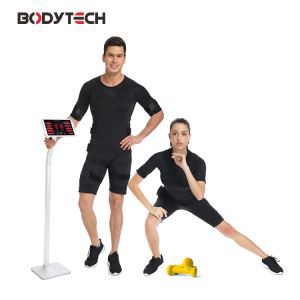
If you’re interested in learning more about our EMS devices for chest training, want to test a unit in a demo, or discuss bulk purchasing for your gym or team, we’re here to help. Don’t hesitate to reach out to our team for more information.
Professional EMS Machine References
- Journal of Strength and Conditioning Research. (2021). Effects of electrical muscle stimulation added to resistance training on chest muscle hypertrophy in young men.
- Medicine & Science in Sports & Exercise. (2019). Chronic electrical muscle stimulation alone induces skeletal muscle hypertrophy in untrained adults.
- Journal of Applied Physiology. (2022). Metabolic and mechanical responses to high-intensity electrical muscle stimulation during chest training.
Guangdong Bote Health Technology Co., Ltd.
Guangdong Bote Health Technology Co., Ltd. is one of the most professional ems device manufacturers and suppliers, featured by quality products and good price. Please rest assured to buy bulk CE approved ems device made in China here and get quotation from our factory. Customized orders are welcome.
Address: D407 KEZHU Business Building, No.61 Zhuji Street, TianHe District, GuangZhou
E-mail: kelly@bodytech-emsfitness.com
WebSite: https://www.bodytech-emsfitness.com/
