If you’ve ever walked the floor of a metal fabrication plant, a cement production facility, or a mineral processing mill, chances are you’ve seen a horizontal grinding table in action—even if you didn’t know exactly what you were looking at. For years, I was right there alongside it, troubleshooting glitches and fine-tuning performance, so I can tell you it’s far more than a spinning platform with rocks piled on top. It’s the core of some of the most energy-efficient grinding systems on the market, and if you’re in the market for reliable grinding equipment, understanding how it works, what sets it apart from other grinding technologies, and why it might be the right fit for your operation is key. Grinding Table
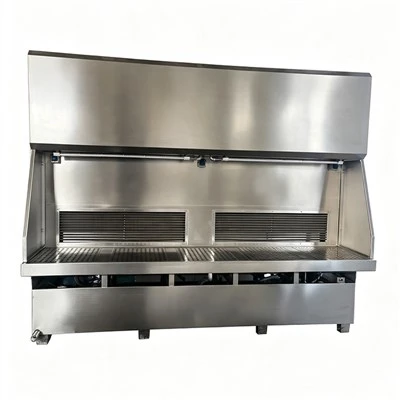
Let’s start with the basics: what a horizontal grinding table is, and how it differs from other grinding methods you might be familiar with. Unlike ball mills, which use large steel balls tumbling inside a rotating cylinder to crush and grind material, a horizontal grinding table (often shortened to HGT in the industry) is a stationary base with a horizontal rotating table mounted on top. Raw material—whether it’s clinker for cement, quartz for glass manufacturing, or iron ore for mineral processing—is fed onto the center of the table via a chute or feed pipe. As the table spins at a slow, controlled speed (usually just 15 to 50 revolutions per minute, depending on the model), centrifugal force pushes the material outward toward the edges of the table. That’s where the magic happens: a set of heavy, motor-driven grinding rollers, positioned at an angle above the table, bear down on the material as it passes between the roller and the table surface. The rollers pivot slightly to adjust to the thickness of the material layer, so every particle gets consistent, uniform pressure. Finished, ground material is then swept away by a stream of hot air that blows through the gap between the roller and table, carrying fine particles up to a classifier where oversized grains are sent back to the table for regrinding. Coarse, unground material never leaves the system; it’s recirculated until it meets your exact particle size specifications.
One of the biggest advantages of a horizontal grinding table comes down to energy efficiency—and in an industry where power costs make up 30 to 40 percent of total operating expenses, that’s a game-changer. Ball mills grind material by impact and attrition, which can waste a lot of energy as balls bounce against each other and the mill lining. Horizontal grinding tables, by contrast, use pressure and shear force to break down particles, which requires far less energy to achieve the same result. Studies I’ve seen in the field show that HGT systems use 20 to 30 percent less electricity than ball mills of the same capacity, with lower heat generation and less wear on components over time. That translates directly to lower utility bills for plant managers, and less downtime for maintenance, too. Because ball mills have thousands of moving parts and rotating cylinders that wear out quickly, they need frequent relining and ball replacement. Horizontal grinding tables have fewer moving parts, and the table surface is typically made of a hardened alloy or rubber composite that’s designed to withstand constant friction, so downtime for repairs is far less frequent.
But like any piece of industrial equipment, horizontal grinding tables aren’t one-size-fits-all. They work best for soft to medium-hard materials—minerals like limestone, coal, gypsum, and phosphate, as well as cement clinker and non-metallic ores. They’re less ideal for extremely hard materials, like certain types of granite or heavy metals with high abrasiveness, which can wear down the grinding rollers and table surface too quickly for cost-effective operation. They also have a maximum feed size: most HGT systems can handle raw material up to about 50 millimeters in diameter, so if your operation is processing rocks larger than that, you’ll need a primary crusher to reduce the feed before it reaches the table. That’s not a dealbreaker, of course—most mineral and cement facilities already have primary crushers on hand—but it’s an important detail to keep in mind when evaluating if an HGT is right for you.
Let’s talk about how we, as a grinding table supplier, approach working with customers, because that’s where the real value comes in. Too many equipment vendors sell a one-size-fits-all machine and call it a day, but we know that every plant is different. A cement mill in a remote part of Canada has vastly different needs than a mineral processing facility in Australia, and a glass manufacturing plant in Germany has different specifications than a power plant in South America. That’s why we start every project by walking the customer’s facility, talking to their operations managers, maintenance teams, and lab technicians, and gathering data on their current process: what’s their particle size requirement? How much material do they process per hour? What’s the hardness and moisture content of their raw material? What’s their budget for upfront costs and long-term maintenance?
For example, a few years back, we worked with a small cement plant in the Midwest that was using a traditional ball mill and struggling with two big issues: rising energy costs that were eating into their profit margins, and inconsistent particle size that was making their finished cement less competitive. They thought they needed to replace their entire grinding system, which would have cost millions of dollars and taken their plant offline for weeks. Instead, we walked through their process with them, adjusted the feed rate and air classifier settings on a custom horizontal grinding table, and integrated it into their existing system without needing to replace their primary crusher. The result? They reduced their energy use by 28 percent, cut maintenance downtime by 15 hours a month, and their finished cement particle size was consistent within 2 percent of their specification, up from 8 percent with the old system. That’s the kind of result that matters to operators, not just theoretical efficiency numbers on a spec sheet.
Another key factor to consider when looking at horizontal grinding tables is automation and control systems. Modern HGT models come with advanced PLC (programmable logic controller) systems that monitor everything from table speed and roller pressure to air flow and feed rate, adjusting in real time to keep the process running smoothly. Older grinding systems often required manual adjustment by an operator, which could lead to inconsistent output or even damage if a feed rate spike went unnoticed. Today’s automated HGT systems can send alerts to maintenance teams if a roller is showing unusual wear, or if the air flow is dropping, before a small problem becomes a major breakdown. That’s not just a convenience—it’s a way to extend the lifespan of your equipment and avoid costly unplanned downtime.
Of course, no piece of industrial equipment is without challenges. For all their benefits, horizontal grinding tables require a more precise initial setup than ball mills. If the table isn’t level, or the rollers aren’t aligned correctly, you’ll get uneven wear on the table and rollers, which can reduce efficiency and shorten component life. That’s why proper installation and ongoing support are non-negotiable. As a supplier, we don’t just ship the machine and leave. We provide on-site installation supervision, training for your operators and maintenance teams, and a 24/7 support line for troubleshooting, no matter where your plant is located. We also offer custom retrofits if you already have a grinding system in place and want to switch to an HGT without building a whole new grinding hall. We can adapt to your existing infrastructure, adjust the size and capacity of the table to fit your space, and make sure the transition is as smooth as possible.
So how do you know if a horizontal grinding table is the right choice for your operation? Let’s break down the key signs: if you’re looking to cut energy costs, reduce maintenance downtime, improve the consistency of your finished product, or process materials like limestone, coal, gypsum, or non-metallic ores, an HGT is almost always worth a close look. If you’re processing extremely hard, highly abrasive materials, or have very large feed sizes that would require extra primary crushing, it might not be the best fit, but we can work with you to adjust the system to meet your needs.
At the end of the day, the goal of any industrial equipment is to help your operation run better, faster, and more profitably. A horizontal grinding table isn’t just a piece of machinery—it’s an investment in lower operating costs, higher product quality, and less downtime. If you’re currently evaluating grinding equipment, or looking to upgrade your existing system, we’d encourage you to reach out. Let’s talk through your specific needs, walk through how an HGT could fit into your process, and figure out a solution that works for you. Don’t hesitate to connect with our team to schedule a consultation and get answers to any questions you have about horizontal grinding tables, their capabilities, and how they can benefit your operation.
Wastewater Treatment Equipment References
- Wills, B. A., & Napier-Munn, T. J. (2006). Mineral Processing Technology: An Introduction to the Practical Aspects of Ore Treatment and Mineral Recovery. Elsevier.
- Cement Manufacturing Association. (2019). Energy Efficiency in Cement Grinding Systems. CMA Technical Report Series.
- AusIMM. (2021). Horizontal Grinding Technology: Design, Operation, and Performance Optimization. Australian Institute of Mining and Metallurgy.
Ningbo Jialong Energy-saving and Environmental Protection Technology Co., Ltd.
As one of the most professional grinding table manufacturers and suppliers in China, we also support customized service. We warmly welcome to buy advanced grinding table in stock here from our factory. If you have any enquiry about quotation, please feel free to email us.
Address: Dong Village, Dongwu Town, Yinzhou District, Ningbo City, Zhejiang Province (No.63 Zhennan Road, Dongwu Town)
E-mail: Lin.cx@nb-jalo.com
WebSite: https://www.cnjialong.com/
