If you’ve ever walked through a warehouse, distribution center, or even a busy retail stockroom, you’ve probably seen someone pushing a manual stacker—grunting a little as they heft a pallet of boxes onto a high shelf, or pausing for a quick break because their arms and back are screaming. As a supplier of electric stackers, I get asked this question all the time: “Are ride-on electric stackers really worth the extra cash?” It’s not a yes-or-no answer, and it’s definitely not a fluff piece. Let’s break this down like I’m chatting with a fellow warehouse manager or small business owner who’s staring at a budget and a stack of pallets that need moving. Electric Stacker
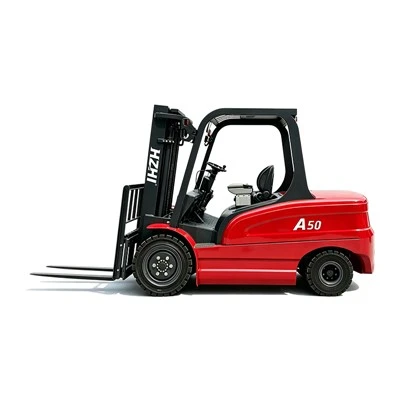
First, let’s get one thing straight: I sell both manual and electric stackers, and I don’t push ride-ons on everyone. If you’re running a tiny shop with 20 pallets a day max, a manual stacker will do the job and save you a few bucks upfront. But if you’re moving 50, 100, or more pallets a day, or your workers are struggling with repetitive lifting, that extra cost starts to look way more reasonable than it does at first glance. Let’s start with the hard numbers—because that’s what matters to most people.
I recently worked with a client who runs a beverage distribution hub. They had 12 part-time workers shifting cases of soda and water around their 10,000 sq ft space. Before switching to 3 ride-on electric stackers, their manual stacker team was logging about 12 miles of walking a day each. That’s roughly 12,000 steps for every worker, every single shift. By the end of the month, they were dealing with 4 or 5 workers out with back strains or knee pain—common issues when you’re pushing 3,000 lbs of pallets around all day. Workers’ comp costs were averaging $1,800 a month, plus they were dealing with slowdowns because people were pulling double shifts to cover absences. Once they swapped to ride-on electric stackers? Workers’ comp dropped to $200 a month, and their daily output went up 22%. They paid off the extra cost of the 3 stackers in 11 months. That’s not a sales pitch—that’s real numbers from a real client.
Now, let’s talk about day-to-day use, because ride-on electric stackers aren’t just “toys for warehouses.” Let’s compare a manual stacker vs. a ride-on: a manual one is great for light loads and short distances, but if you’re moving a full pallet 500 feet, you’re going to be sore. A ride-on lets you sit (or stand, depending on the model) and drive, so you’re expending almost no physical energy. No more hefting the stacker up a ramp, no more stopping every 10 feet to catch your breath. For workers who do this 8 hours a day, that’s a game-changer. I’ve heard so many people say, “But my workers don’t want to sit all day!” Let me tell you: after a week of sitting and moving pallets instead of walking and pushing, most of them don’t want to go back to manual. Less fatigue means less mistakes—no dropped pallets, no accidents from overexertion. That’s another hidden cost you don’t have to factor in.
Wait, but what about the cost of the ride-ons themselves? Yeah, they’re pricier upfront. A good manual stacker runs around $1,500 to $2,500. A basic ride-on electric? It’s $5,000 to $8,000. That’s a big gap, but let’s do the math over 5 years, which is the average lifespan for a quality electric stacker. Let’s say you have a team of 4 workers. If you’re dealing with even one worker out for 10 days a year due to musculoskeletal issues, that’s 40 days of lost labor. The average hourly wage for a warehouse worker is around $18 an hour, so that’s 40 days x 8 hours x $18 = $5,760 a year. Over 5 years, that’s $28,800. The extra cost of 2 ride-on stackers (let’s say $5,000 each, vs. $2,000 for 2 manual ones) is $6,000. So even if you only save on labor and workers’ comp, you’re way ahead in the long run.
But here’s where a lot of people get confused: not all ride-on electric stackers are the same. I’ve seen cheap knockoffs online that are basically glorified golf carts with a fork lift on the front. Those are not worth the money. They break down all the time, parts are hard to find, and they’re not built for heavy loads or daily use. The ride-ons that are worth the extra cost are the ones built for industrial use—with solid lithium-ion batteries (no more swapping heavy lead-acid batteries every 6 months), reinforced forks, and controls that are easy for any worker to learn. Lithium-ion batteries last 3,000 to 5,000 cycles, which is about 5 to 7 years of daily use. No more charging for 8 hours overnight, either—most of our ride-ons charge to 80% in 2 hours, so you can top them up during a break. That’s a huge perk for operations that run two shifts.
Another thing people overlook: space. If your warehouse is cramped, you might think, “A ride-on stacker is too big.” But a lot of modern ride-on models are actually as narrow as most manual stackers—you can maneuver them through aisles that are just 8 feet wide, which is the same as what you’d need for a manual. I’ve had clients with 5,000 sq ft warehouses, not just big 100,000 sq ft distribution centers, that switched to ride-ons and made more space for storage because their workers could stack pallets higher without taking extra time to move the stacker. Wait times for loading and unloading trucks also dropped—ride-ons can move faster than manual stackers, so you can turn a truck around in half the time. That means you can accept more orders without needing to hire extra workers.
Of course, there are cases where a ride-on isn’t worth it. If you’re only moving pallets a few times a day, if you have super tight spaces that a ride-on can’t fit into, or if your budget is so tight that you can’t swing even the extra upfront cost, a manual stacker is the way to go. Also, if you have workers who are physically unable to do heavy manual lifting—say, someone with a bad knee or back—a ride-on is basically a must, not a luxury. It’s not fair to ask a worker to risk their health for your bottom line.
Let’s talk about sustainability too, because that’s a big deal for a lot of businesses now. Ride-on electric stackers don’t burn gas, so they don’t emit fumes in your warehouse. That means better air quality for your workers, no need for ventilation systems to pull out exhaust, and a smaller carbon footprint. If you’re trying to green your business, switching from manual or gas-powered stackers to electric ride-ons is an easy win. I had a small e-commerce client last year who was trying to hit their 2024 sustainability goals, and they switched to 1 ride-on stacker for their order picking area. They reduced their warehouse carbon emissions by 12% just from that one change. Plus, electric stackers are easier to dispose of or recycle at the end of their life than gas ones, which is a big plus for businesses that care about that stuff.
Now, let’s address the elephant in the room: maintenance. Do ride-on electric stackers cost more to maintain? Maybe a little, but not nearly as much as you’d think. A manual stacker has moving parts that wear out fast—wheels, chains, handles, forks. You’ll be replacing parts every year or so, and if you overuse a manual stacker, you might have to replace the whole thing in 2 or 3 years. A quality ride-on electric stacker has fewer moving parts (no manual lifting mechanism, so less strain on chains and handles), and most of the maintenance is just checking the battery, keeping the forks clean, and tightening bolts every few months. We offer a 2-year warranty on all our ride-ons, and most of our clients only spend $200 to $300 a year on maintenance, vs. $1,000 a year on parts and repairs for manual stackers. That’s another hidden savings.
Wait, but what about upfront cash flow? A lot of small businesses can’t drop $8,000 on a stacker right away. That’s why we offer flexible financing options—you can pay a small deposit, and then make monthly payments over 2 or 3 years, so the monthly cost is often less than what you were spending on workers’ comp and labor overtime. I’ve had clients who thought they couldn’t afford ride-ons, but when they crunched the numbers, the monthly payment was $150, vs. the $500 a month they were spending on overtime to cover absences. It adds up fast.
Let me give you a real example of a client who almost skipped the ride-on. They run a 20,000 sq ft furniture store, moving big wooden pallets of couches and chairs. They had 2 manual stackers, and their main worker (who’d been there for 8 years) started having chronic back pain. They were debating between hiring a part-time worker (which would cost $2,500 a month) or buying a ride-on. They got a ride-on, and the worker’s back pain got better in 2 weeks. They saved $2,500 a month on part-time labor, plus they didn’t have to worry about finding and training a new worker. That’s a huge win for a small business, where every dollar counts.
I’m not here to sell everyone a ride-on. If you’re a small shop with 10 pallets a day, a manual stacker is perfect. But if you’re moving more than that, or if you care about your workers’ health, your bottom line, and your space, the extra cost is totally worth it. Let’s be honest: the cost of not getting a ride-on is often way higher than the cost of the ride-on itself. Lost work days, higher labor costs, workers’ comp claims, slower output—those all add up.
If you’re still on the fence, here’s what I suggest: first, track your current numbers. How many pallets do you move a day? How much are you spending on overtime, workers’ comp, and repairs for manual stackers? Then, compare that to the cost of a ride-on—both upfront and monthly. It won’t take long to see the math add up. And if you have questions, we’re here to walk through your specific needs, no pressure.
At the end of the day, a stacker isn’t just a tool to move pallets. It’s a tool to keep your workers safe, your business running smoothly, and your profits up. Ride-on electric stackers might cost a little more upfront, but they pay for themselves faster than you think.
If you’d like to chat through your warehouse needs, get a custom quote, or learn more about how our electric stackers can help your operation, feel free to reach out to discuss your requirements.
Shelf References
- Occupational Safety and Health Administration (OSHA). Musculoskeletal Disorders in Warehouses: Prevention and Best Practices.
- Material Handling Industry of America (MHIA). 2023 Report on Electric Stacker Efficiency and Cost Savings.
- Lithium-ion Battery Association. Industrial Electric Equipment Battery Lifespan and Maintenance Guidelines.
- U.S. Bureau of Labor Statistics. 2024 Average Hourly Wages for Warehousing and Storage Occupations.
- EPA. Green Business Practices for Material Handling Equipment.
Huazheng Heavy Industry Machinery Equipment Co., Ltd.
With abundant experience, we are one of the most professional electric stacker manufacturers and suppliers in China. Please feel free to buy high quality electric stacker for sale here from our factory. We also accept customized orders.
Address: Room 423-101, Building C-4, Electronics Valley Technology Center, No.3088 Lekai North Street, Gaokai District, Baoding City, Hebei Province, China
E-mail: sales02@hzheavy.com
WebSite: https://www.hzheavy.com/
