If you’ve ever worked in forestry, demolition, material handling, or any industry that relies on moving heavy, irregular loads, you know a fixed grapple isn’t just another tool—it’s the workhorse that keeps your operation on track. As a fixed grapple supplier, I get asked one question more than any other: “What’s the weight of a standard fixed grapple?” It’s a fair query, too. The weight of your grapple isn’t just a number on a spec sheet; it impacts machine compatibility, lifting capacity, fuel efficiency, and even long-term equipment wear. Skip the guesswork here, and let’s break this down based on real-world engineering, not marketing fluff—plus, I’ll share what every operator and fleet manager needs to know when picking the right fixed grapple. Fixed Grapple
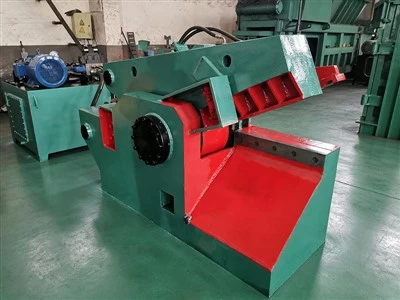
First, let’s clarify what a “standard fixed grapple” actually is, because that term gets thrown around loosely. A fixed grapple (sometimes called a solid or rigid grapple) differs from rotating grapples in that its main body and tines don’t spin; they’re fixed to the base, designed to clamp and lift loads via hydraulic arms connected to your carrier machine. “Standard” here refers to units built for mid-sized carriers (10 to 50 ton excavators, log loaders, or material handlers) that are the most common for general industrial and forestry work, not custom-made for tiny compact excavators or 100+ ton heavy-duty mining equipment. Those custom units have wildly different weights, but the standard fixed grapple is a sweet spot for most operations.
Now, to the core question: weight. For standard fixed grapples, the total operating weight (that’s the full weight of the grapple, including tines, housing, hydraulic cylinders, mounting bracket, and pins) ranges from 800 pounds (363 kg) up to 4,500 pounds (2,041 kg). Wait, that’s a big gap—so what’s in that range, and how do you know which category applies to your work? Let’s split it into common classes, since that’s how we design and sell these units, not just pick random weights.
The light end of the spectrum, around 800 to 1,500 pounds (363 to 680 kg), are what we call “light standard fixed grapples.” These are built for smaller carriers, usually 10 to 25 ton excavators or compact log loaders, and used for lighter tasks: sorting construction debris, moving small to medium logs in timber yards, handling scrap metal in smaller auto salvage lots, or landscaping material handling (like moving large rocks or mulch piles). Why are these lighter? The tines here are typically made from high-grade 40 grade steel, a durable but lighter alloy, and the housing is a thinner-welded steel design that doesn’t need to support the extreme loads of heavy-duty work. A common example of a light standard fixed grapple we supply is our FG-1200, which clocks in at 1,250 pounds (567 kg), built for 15 ton excavators and used by small-scale loggers and residential demolition teams.
Next, the mid-range, the workhorse of standard fixed grapples, falls between 1,500 to 3,000 pounds (680 to 1,361 kg). This is the most popular category for general industrial operations—think mid-sized construction sites, large timber harvesting and hauling, municipal waste processing, and scrap yards handling medium-sized metal loads. The extra weight here comes from beefed-up components: tines switch to 50 grade steel, which is stronger and more resistant to bending, the housing is thicker to handle 20,000 to 40,000 pound lifting capacities, and hydraulic cylinders are sized to match the grapple’s load limit. Most of our standard fixed grapple sales are in this range, with our FG-2500 coming in at 2,450 pounds (1,111 kg) for 25 to 40 ton carriers, and the FG-3000 at 2,980 pounds (1,352 kg) for 35 to 50 ton units. I see why this is the sweet spot: it’s heavy enough to lift dense loads like railroad ties or full pallets of brick, but light enough that it doesn’t eat into the carrier machine’s useful lifting capacity. Here’s a key point to remember: for every 100 pounds of grapple weight, you lose roughly 100 pounds of load capacity, depending on your carrier’s lift chart. That’s why matching grapple weight to your machine is non-negotiable.
Then there’s the heavy end of standard fixed grapples, from 3,000 to 4,500 pounds (1,361 to 2,041 kg). These are for the big jobs: high-volume scrap yards moving entire car bodies, timber operations handling 20+ foot logs and tree trunks, and large-scale demolition where you’re grabbing entire sections of concrete or steel beams. These units use the thickest 60 grade steel for tines and housing, heavy-duty pins rated for up to 100,000 psi, and dual hydraulic cylinders to generate enough clamping force to hold dense, awkward loads. Our FG-4500, the largest standard fixed grapple we offer, weighs in at 4,280 pounds (1,941 kg), built for 50+ ton carriers and used by major waste processing companies across North America. It’s not for every job, but when you need to move a 10,000 pound steel I-beam, this is the unit that won’t bend or slip.
Now, you might be thinking: “Why does the exact weight matter, beyond matching my machine?” Let’s get into the practical implications, because as a supplier, I’ve seen too many operations make costly mistakes by ignoring grapple weight. First, carrier machine compatibility: every excavator, log loader, or material handler has a maximum attachment weight listed on its spec sheet, usually in the lift chart in the operator’s manual. If your grapple is too heavy, you risk overloading the machine’s boom, arm, or hydraulic system, leading to premature wear, increased fuel consumption (because the machine has to work harder to lift the extra weight), and even safety hazards like tipping or boom failure. I once worked with a small demolition contractor who bought a used heavy-duty rotating grapple because it was on sale, only to find it was 1,200 pounds heavier than his machine’s limit. He had to sell it at a loss and buy a smaller unit—costing him thousands in downtime and wasted money. Grapple weight isn’t just a number; it’s a safety and cost factor.
Second, load performance. A grapple that’s too light for its intended load will have weak clamping force, leading to dropped loads, which are not only dangerous but also cause delays and product damage. A grapple that’s the right weight for its class will have clamping force that’s proportional to its size—for example, a 2,500 pound mid-range grapple typically generates 12,000 to 15,000 pounds of clamping force, enough to hold a 8,000 pound log securely. We design all our standard fixed grapples so that the weight correlates directly to the load rating, so you don’t have to sacrifice strength for a lighter unit or vice versa.
Another common misconception: “All fixed grapples are the same weight.” That’s far from true, even for standard units. Differences in steel grade, tine thickness, hydraulic component quality, and mounting hardware can add or subtract hundreds of pounds from the same class of grapple. For example, a cheap imported fixed grapple might use thinner steel and smaller cylinders to cut costs, coming in 500 pounds lighter than our equivalent unit—but that lighter unit will bend under heavy load, leaving you with a $1,000 repair bill after a single day of work. We always tell customers: if a grapple’s weight is significantly lower than the industry standard for its class, ask why. Chances are it’s built with inferior materials to keep costs down, and it won’t last.
Now, let’s talk about how we test and confirm the weight of our standard fixed grapples, because credibility matters. We don’t just calculate weight from a 3D model; we build each unit in-house on our production floor and weigh it on certified industrial scales, so every FG-1200 is exactly 1,250 pounds, no deviations. We also publish that weight, along with load ratings, hydraulic requirements, and compatible carrier sizes, right on our spec sheets, so customers don’t have to guess. That transparency is what we’ve built our business on, because we want our customers to make informed decisions, not just buy a grapple based on price.
I should also mention that “standard fixed grapple” doesn’t mean one-size-fits-all. We offer different tine configurations within each weight class to match different tasks. For example, a light 1,250 pound grapple can have wide tines for sorting debris or narrow tines for picking up small logs, but the weight stays consistent. That consistency is key for fleets: if you have multiple excavators in your yard, you can interchange standard fixed grapples across carriers of similar size without having to adjust lift limits or hydraulic settings.
So, what should you take away from all this? First, the weight of a standard fixed grapple is not a random number—it’s a critical spec that impacts safety, performance, and cost. For most small to mid-sized operations, the sweet spot is the mid-range 1,500 to 3,000 pound category. For light tasks, go for the 800 to 1,500 pound range, and for heavy high-volume jobs, you’ll need the 3,000 to 4,500 pound units. Always match the grapple’s weight to your carrier’s lift chart, and avoid units that are significantly lighter than industry standards for their class—they’re likely built with subpar materials.
If you’re in the market for a fixed grapple, whether you’re replacing an old unit or outfitting new equipment, we can help you pick the right weight and configuration for your specific tasks. We’ve supplied grapples to forestry teams, demolition contractors, scrap yards, and municipal operations across the country, and we back every unit with a 2-year warranty and 24/7 support for any questions or issues. Don’t waste money on a grapple that’s too heavy, too light, or not built to last—reach out to our team today to discuss your needs and get a custom quote for a standard fixed grapple tailored to your operation.
Metal Shear References:
- Forestry Equipment Manufacturers Association. (2022). Standard Attachment Specifications for Log Loaders and Excavators. FEMA Technical Bulletin Series.
- National Demolition Association. (2021). Attachment Weight and Compatibility Guidelines for Demolition Equipment. NDA Safety Manual.
- Steel Market Development Institute. (2020). High-Strength Steel Applications in Heavy Equipment Attachments. SMDI Engineering Report.
- International Organization for Standardization. (2019). Earth-Moving Machinery—Hydraulic Excavators—Attachment Classification and Testing Standards. ISO 10254:2019.
Jiangyin Hangli Technology Co., Ltd.
Jiangyin Hangli Technology Co., Ltd. is one of the most professional fixed grapple manufacturers and suppliers in China. We are committed to providing high quality custom service and OEM service with low price. We warmly welcome you to buy high-performance fixed grapple for sale here from our factory. Also, pricelist is available.
Address: No. 11, Louxia Road, Zhouxi Village, Zhouzhuang Town, Jiangyin City, Wuxi City, Jiangsu Province, China
E-mail: sherry@hanglimachinery.com
WebSite: https://www.hanglirecycling.com/
