Hey there! If you’re running a lab, a brewery, a hydroponics setup, or even just tweaking your home soil test for your backyard garden, you already know a pH meter is only half the battle. When I’m talking to folks who reach out to me as a pH meter supplier, the #1 question after “does this meter work for my use case?” is always “what accessories do I actually need to make this thing accurate and last?” PH Meter
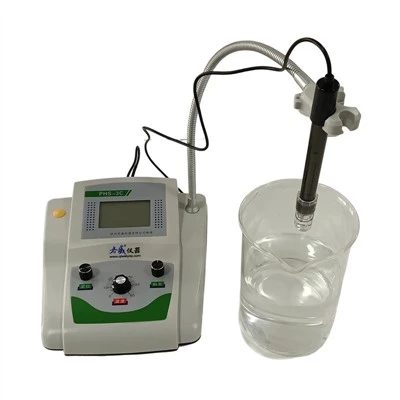
It’s easy to grab a meter off the shelf and call it a day, but skip the right add-ons and you’re wasting time, money, and risking bad data. I’ve seen beginners grab a $20 pH meter, forget to buy probe storage solution, and then wonder why their readings are off by half a point a week later. So let’s break down the stuff that’s non-negotiable, the stuff that’s nice to have, and what you can skip.
First up, the single most important accessory you can’t use a pH meter without: the pH probe (wait, no, technically it’s built in, but wait—no, hold on, I mean the probe maintenance kit? No, wait, the probe itself is the part that makes a pH meter work. Wait, no, let’s start with the core component that most people mix up: the pH electrode, often just called the probe, and it’s the part that you actually need to pair with the right accessories. Wait, let’s reorient. Let’s start with what connects to your meter, because if you have a handheld meter, the probe isn’t just part of the meter—wait, no, some meters have built-in probes, but most professional ones are replaceable. Wait, let’s make this relatable. When I’m explaining to a customer, I don’t use jargon. I say, “Your pH meter is like your phone. The probe is the battery, the storage solution is your phone’s case, and the calibration solution is the charger.” Yeah, that’s a way better analogy.
So first: Calibration Solutions. This is non-negotiable. I don’t care what anyone says—you can’t get accurate readings without calibrating your pH meter regularly, and you need the right calibration buffers. Let’s be clear: tap water isn’t a buffer. Plain old water has a pH that’s all over the place, and it doesn’t hold a stable pH for calibration. Calibration solutions are pre-made, sealed bottles of liquid with a known pH—usually 4.01, 7.00, and 10.01. Those are the standard ones. Why three? Most meters let you do a 2-point calibration, but doing a 3-point (covering acidic, neutral, and basic ranges) is way more accurate, especially if you’re testing things like wine (acidic, around 3-4) or cleaning solutions (basic, around 10).
Wait, here’s a common mistake: people buy a $5 bottle of 7.00 solution once, use it a dozen times, then wonder why their readings are off. Those small bottles are single-use after opening? No, wait, no—some are multi-use, but you have to store them properly. Wait, no, let’s correct that: once you open a calibration solution bottle, it can degrade, especially if it’s exposed to air, light, or gets contaminated with your probe after you use it. So for regular users—like a home brewer who tests every brew, a hydroponic grower who tests daily, or a lab tech who tests samples all day—buying larger, resealable bottles (like 250mL or 500mL) is cheaper in the long run. For people who only test once a month, small 10mL single-use packets are perfect—no waste, no risk of the solution going bad before you use it.
I always tell my customers: don’t skimp on calibration solution. I’ve had someone bring a meter to me that was giving them 5.5 readings for their pool water, and it turned out they were using a lemon as a “calibration” standard. Yeah, that’s a real story. Don’t do that.
Next up: Probe Storage Solution. This is another one that trips people up. After you’re done using your probe, you can’t just set it on the counter to dry out, and you can’t store it in tap water. Tap water has minerals and other stuff that can gunk up the probe’s glass bulb, which is the part that actually reads pH. The glass bulb needs to stay hydrated 24/7 to work right. That’s where pH probe storage solution (sometimes called electrode storage solution) comes in. It’s a mild, stable liquid that keeps the bulb moist and prevents it from drying out. If your probe does dry out, you can usually revive it by soaking it in 4.01 calibration solution for a few hours, but it’s way easier to just store it properly.
Wait, what if you don’t have storage solution in a pinch? Some people use pH 4.01 or 7.00 calibration solution in a pinch, but that’s not ideal because the buffers have salts that can build up over time. For a long-term fix, get the storage solution. Also, when storing, make sure the probe’s cap is on tight—you don’t want it spilling, and you don’t want dust or stuff getting in. I had a customer who stored her probe in a jar of deionized water once, and after a month, the readings were so erratic she thought her meter was broken. Turned out the deionized water had no ions, so the probe couldn’t get a stable reading. Oops.
Then, Probe Cleaning Kits. Let’s be real: your probe is going to get gunked up. If you’re testing food samples (like fruit juice, yogurt, or meat), you’re gonna have food residue. If you’re testing soil, you’re gonna have dirt. If you’re testing chemical solutions, you might have salts or proteins. All that stuff builds up on the glass bulb, and it can mess with your readings. That’s why a cleaning kit is worth it. Most basic kits have two solutions: one for general dirt and residue (usually a mild detergent or 0.1M HCl) and one for stubborn stuff like proteins or oils (usually pepsin in HCl). For example, if you tested a bunch of milk samples, soaking your probe in the protein cleaner for 10 minutes before cleaning off the residue will make your next readings way more accurate.
Wait, can you use a paper towel to wipe off residue? Don’t. Paper towel has lint and fibers that can get stuck in the bulb. Use a soft, lint-free cloth or a cotton swab. And never scrub the bulb— it’s super fragile, can break easily if you’re too rough. I’ve seen way too many customers come in with a cracked probe because they scrubbed it like a dirty dish. Don’t do that.
Now, what about accessories for handheld vs. benchtop meters? If you’re using a benchtop meter in a lab, you might need a stand to hold the probe while it calibrates or tests. Those stands are cheap, and they prevent you from setting the probe on the bench and getting contaminants on it. For handheld meters, a carrying case is a good idea, especially if you’re moving it around a lot—like if you’re testing hydroponic tanks in a greenhouse, or testing pool water at different houses. The carrying case will protect the meter from bumps, dust, and temperature changes, which can ruin it.
Another thing: pH 4.00 and 7.00 calibration solutions are standard, but what if you’re testing samples outside those ranges? Like if you’re testing a very acidic sample (like battery acid, around 1) or very basic (like bleach, around 12)? Then you’ll want to buy 1.68 or 10.01 calibration solutions too. Don’t try to calibrate a meter that’s meant for neutral samples to read 12 pH— it’ll never be accurate. That’s a common mistake I see with hydroponic growers, who often test nutrient solutions around 5.5-6.5, so they stick to 4 and 7, which works. But if you’re testing something like fertilizer stock solutions that hit 10, you need the 10.01 buffer to calibrate correctly.
Wait, what about deionized (DI) water? Do you need that? Sometimes. If you’re rinsing your probe between samples, DI water is better than tap water, because tap water has minerals that can leave residue on the bulb. But you don’t need a big jug of it— a small bottle works, or even the packets you can buy at a lab supply store. Just don’t use DI water to store your probe, like that customer I mentioned earlier. It’s good for rinsing, not storage.
Now, let’s talk about what you can skip. I know there are a ton of fancy accessories out there— Bluetooth adapters for your phone, fancy cleaning brushes, custom cases. If you’re a home user, you don’t need any of that. The only stuff you need is calibration solution, storage solution, and a basic cleaning kit. If you’re a professional who needs to log data, a Bluetooth adapter might be nice, but it’s not necessary for accurate readings. The most important thing is the basics.
Let me throw in a quick tip that I give every customer: test your meter’s accuracy with a known standard before you use it for critical samples. For example, if you’re testing beer, test a sample of a beer with a known pH (like a commercial beer that’s labeled 4.2) and make sure your meter reads that. If it’s off, recalibrate. That takes 2 minutes and saves you from wasting a whole batch of beer because your meter was wrong.
Another thing: how often do you need to replace your probe? Most probes last 1-2 years with proper care, but if you’re using it every day, it might only last 6 months. If your readings start being erratic or you can’t calibrate it no matter what you do, it’s time for a new probe. Don’t try to fix a broken probe— they’re fragile, and the glass bulb is hard to replace.
Wait, let’s make sure I didn’t miss anything. What about temperature compensation? Oh right! Some pH meters have automatic temperature compensation (ATC), which is a probe that measures the temperature of the sample and adjusts the pH reading accordingly. If your meter doesn’t have ATC, you’ll need a separate temperature probe, or you’ll have to manually adjust the reading based on the sample temperature. Most modern meters have ATC, but if you have an older one, that’s an accessory to consider. That’s a big one—pH changes with temperature, so if you’re testing a cold sample and not compensating, your reading will be wrong.
Okay, let’s wrap this up. The key accessories are: calibration solutions (the right pH 4, 7, and 10 buffers, depending on your use case), storage solution for the probe, a basic cleaning kit, and DI water for rinsing between samples. The nice-to-haves are a carrying case for handheld meters, a stand for benchtop ones, and ATC if your meter doesn’t have it. Skip the fancy stuff unless you really need it.

If you’re not sure which accessories fit your specific meter or use case, feel free to reach out to talk shop. Whether you’re a home brewer, a hydroponic grower, a lab tech, or someone just testing their backyard soil, I can help you pick exactly what you need so your pH meter works as well as it should.
Multi-Parameter Ion Meter References
- “Best Practices for pH Meter Calibration and Maintenance,” Lab Manager Magazine, 2022.
- “Electrode Care: Keeping pH Probes in Top Shape,” Environmental Protection Agency, 2021.
- “Handheld pH Meter Accessories: A Buyer’s Guide,” Home Brew Journal, 2023.
Hangzhou Qiwei Instrument Co., Ltd.
Hangzhou Qiwei Instrument Co., Ltd. is one of the most reliable manufacturers and suppliers of ph meter in China, featured by quality products and good service. Please rest assured to buy bulk durable ph meter in stock here from our factory. We also accept customized orders.
Address: Room 101, Building 25, No.488-1, Donghu North Road, Linping District, Hangzhou City, Zhejiang Province, China
E-mail: info@qiweilab.com
WebSite: https://www.qiweilab.com/
