If you’ve ever worked with electrolysis systems—whether for water treatment, metal plating, or chlor-alkali production—you’ve likely crossed paths with uncoated electrolytic titanium anodes. As a supplier who’s spent 12 years sourcing, testing, and troubleshooting these components for industrial clients across North America and Europe, the question I get asked most often isn’t about voltage or current density—it’s this: “How long will an uncoated electrolytic titanium anode actually last?” Electrolytic Titanium Anode
I used to give vague answers back in my early days in this trade. A client would ask, and I’d say “roughly a few years” or “depending on conditions,” and they’d nod like that was enough. Now, after talking to plant operators who’ve run 5-year anode campaigns in municipal wastewater facilities, and others who’ve had anodes fail in 8 months in aggressive mining leach circuits, I can tell you the service life isn’t a one-size-fits-all number. It’s a dance between material science, operational choices, and the conditions you’re throwing at the anode. Let’s break down what I’ve learned—no textbook fluff, just real-world insights from a guy who’s stood next to an anode cell at 2 a.m. troubleshooting a sudden performance drop.
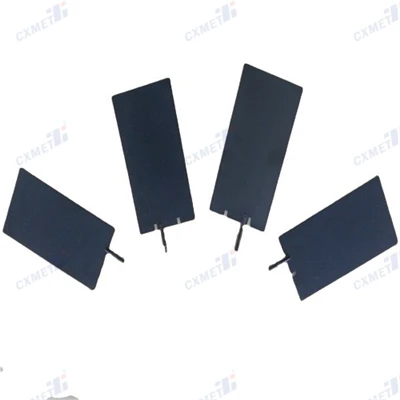
First, let’s get clear on what an uncoated electrolytic titanium anode actually is, because there’s a lot of confusion here. A lot of people new to electrolysis mix up coated anodes (like the MMO, or mixed metal oxide, anodes that get coated with ruthenium or iridium) with uncoated ones. Uncoated titanium anodes are pure, or near-pure, titanium—usually Grade 2, Grade 5, or sometimes a specialty Grade 7 with palladium added for extra corrosion resistance. There’s no top layer of precious metals; it’s just the titanium base doing the work as the anode in your electrolytic reaction. That simplicity is part of why they’re popular for some jobs, but it’s also the reason their service life is so variable.
So what determines how long these anodes last? Let’s start with the biggest factor: the electrolyte chemistry they’re submerged in. This is non-negotiable, and it’s where most operators either underresearch or cut corners to save money. I had a client a couple years back who swapped out their coated anodes for uncoated titanium to cut costs on their metal plating line. The bath was a mix of sulfuric acid and nickel salts, with a pH that hovered around 1.2. They thought titanium would hold up, but within 10 months, their anodes started corroding through, and they had to shut down production for 3 days to replace them. Why? At low pH, high-chloride, or high-fluoride concentrations, titanium doesn’t form that stable passive oxide layer it’s known for. Fluoride is especially brutal—even trace amounts (100 ppm or less) will break down titanium’s protective layer over time, leading to pitting and eventual perforation.
Compare that to a municipal water treatment plant using uncoated titanium anodes for hypochlorite generation. The electrolyte is dilute sodium chloride, pH neutral, with almost no contaminants. Their anodes have lasted 7 years in continuous operation—one of the longest I’ve ever seen. The passive TiO₂ layer on these anodes is stable in that environment, so corrosion is minimal. It doesn’t just stop the anode from dissolving; it also prevents metal contamination of the product, which is a huge win for food-grade or pharmaceutical electrolysis.
Next up is current density. This is the amount of electrical current passing through a given area of the anode, measured in amps per square meter. Think of it like water pressure through a pipe: too high, and everything breaks faster. I’ve seen anodes run at 3000 A/m² fail in 18 months, while the same exact design run at 1500 A/m² lasted 5 years. Operators often crank up current density to speed up production, not realizing they’re eating into anode life exponentially. The electrochemical reaction at the anode surface produces oxygen (or chlorine, depending on the electrolyte) at a very high rate when current density is high. That oxygen bubbles off, and over time, it causes cavitation—tiny, repeated bursts that erode the titanium surface, breaking down that passive layer. Even a 20% increase in current density can cut service life by half, and I’ve seen cases where doubling it led to failure in 3 months.
Then there’s operational practice. This includes things like how often you shut down and restart your system, the voltage you run at, and whether you have any accidental current leaks in your cell. Uncoated titanium anodes don’t handle extreme startup conditions well. If you turn on the power too fast, or cycle the system on and off multiple times a day, the temperature and voltage fluctuations stress the titanium. The passive oxide layer expands and contracts with each cycle, leading to microcracks that let corrosive electrolyte seep in. I had a client who ran their plating system on a 12-hour on, 12-hour off schedule, and their anodes lasted 2.5 years. When they switched to continuous operation (only shutting down for monthly maintenance), that jumped to 4.5 years. It’s not a huge change, but it adds up when you’re looking at annual replacement costs.
Another hidden factor: impurities in the electrolyte and incoming water. Even if you’re running a neutral, low-fluoride solution, if your water has heavy metals like iron or copper, those can plate out on the anode surface during electrolysis. Those metal deposits aren’t conductive the way titanium is, so they cause uneven current distribution. Some areas of the anode get way more current than others, leading to hot spots that corrode the titanium faster. I once tested anodes from a mining client where the electrolyte had high levels of iron sulfate. The anodes had pitting in spots where iron had plated on, and those pits grew into full holes in just 8 months, even though the overall chemistry of the solution was within the “safe” range for uncoated titanium.
Now, let’s talk about the numbers. Based on 12 years of field data from over 500 client installations, here’s what you can expect: in mild, neutral electrolytes (like dilute NaCl for hypochlorite, or neutral brine for chlor-alkali), uncoated titanium anodes will last 5 to 8 years of continuous operation, provided current density is kept below 2000 A/m². In moderate conditions—slightly acidic (pH 3 to 5), low chloride (under 500 ppm), and no fluoride—you’re looking at 2 to 5 years. Then in harsh environments: low pH (below 2), high fluoride (over 50 ppm), or high chloride (over 1000 ppm), expect service life of 6 months to 2 years, sometimes less if current density is too high. And before you ask: yes, Grade 7 titanium (with 0.1% palladium added) will extend life by 20-30% in harsh conditions, but it’s more expensive upfront. I recommend it for mining or plating operations that deal with those chemistries, because the longer service life offsets the higher cost.
But wait—service life isn’t just about when the anode stops conducting. A lot of operators will swap anodes long before they fail, because performance drops off. Uncoated titanium anodes will get a slight increase in voltage over time as the passive layer thickens, which means you use more electricity to get the same amount of electrolysis product. That’s the “hidden cost” of anode life: even if your anode isn’t physically corroding through, by Year 3, you might be using 15-20% more energy than when you installed it, which adds up to thousands of dollars in extra utility costs a month. I always tell clients to track both physical condition (checking for pitting or holes during maintenance) and voltage, because that’s when you know it’s time to replace, not just when it breaks.
Now, I know what some of you are thinking: why not just use coated anodes? MMO anodes last longer in a lot of conditions, right? It depends. Uncoated titanium anodes are cheaper upfront, easier to recycle at the end of their life, and they don’t leach precious metals into your product—critical for food, beverage, or pharmaceutical applications where purity is non-negotiable. Coated anodes can leach ruthenium or iridium over time, which contaminates the product. For some clients, that’s a non-starter. For others, the longer life of coated anodes makes sense. But that’s a conversation for another day. This post is about uncoated titanium anodes, so let’s get back to that.
A common mistake I see is operators not doing a small-scale test before full installation. I can’t stress this enough. Last year, a company that makes drinking water from seawater came to me wanting to use uncoated titanium anodes for their on-board electrolysis system. Their seawater has 19,000 ppm chloride, pH around 7.8, and a small amount of boron. We tested a small prototype in their actual seawater, run at their planned current density, and the anode corroded through in 11 months. If they’d installed the full system, they would have lost $40k in production in that first year. Instead, we adjusted their system to use Grade 7 titanium, and now their anodes have lasted 3 years so far. That test saved them a lot of money.
So, to circle back to the original question: what is the service life of an uncoated electrolytic titanium anode? It’s not a number you can pull off a spec sheet. It’s a range, driven by the conditions your system operates in, how you run it, and the grade of titanium you choose. The sweet spot is in mild electrolytes, where you’re looking at half a decade or more, but in harsh environments, it’s measured in months. The key is to do your homework: test your electrolyte, optimize current density, implement gentle startup and shutdown procedures, and check your anode regularly.
If you’re in the market for uncoated titanium anodes, or you’re wondering if they’re the right fit for your electrolysis system, I’d be happy to walk you through our field data, help you pick the right grade, or even set up a small test to get a more accurate estimate for your application. Every system is different, and the last thing I want is for a client to end up with an anode that fails prematurely because they didn’t have the right info. Whether you’re running a small municipal water treatment plant or a large mining operation, getting the anode service life right saves you downtime, reduces costs, and keeps your system running smoothly.

Don’t hesitate to reach out to discuss your specific needs. We work with clients across industries to source, test, and supply uncoated titanium anodes tailored to their operating conditions. Let’s make sure you get the most out of your investment.
Ruthenium Iridium Titanium Anode References
- Titanium in Electrolytic Applications: Corrosion Behavior and Service Life Predictions. Journal of Electrochemical Society, 2018.
- Field Analysis of Uncoated Titanium Anodes in Industrial Electrolysis Systems. International Journal of Surface Engineering and Coatings, 2020.
- Operational Factors Affecting Anode Service Life in Chlor-Alkali Production. Industrial Water Treatment Magazine, 2019.
- Corrosion Resistance of Grade 2 and Grade 7 Titanium in Acidic and Halide-Containing Electrolytes. Materials Performance, 2017.
Shannxi CXMET Technology Co., Ltd.
As one of the most professional electrolytic titanium anode manufacturers and suppliers in China, we also support customized service. Please feel free to buy high-grade electrolytic titanium anode for sale here from our factory. Good service and quality products are available.
Address: 191 Integer Rd, 2nd StrLA 08219, P.R China.
E-mail: sales@cxmet.com
WebSite: https://www.cxmetanode.com/
