If you’ve ever stood in a farm supply lot or talked to a small-scale livestock owner, you’ve probably heard the term “two-wheel drive tractor” tossed around. As a tractor supplier who’s spent 12 years fitting the right machines to the right jobs, I can tell you it’s one of the most misunderstood—and most valuable—pieces of equipment for a huge range of operations. Let’s break down what a two-wheel drive (2WD) tractor actually is, how it works, where it shines, and why it might be the perfect fit for your work instead of flashier four-wheel drive (4WD) models. Tractor
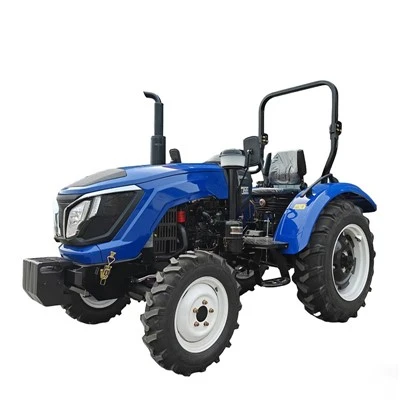
First, let’s get the basics straight. A two-wheel drive tractor is a machine where only one set of wheels powers the tractor; the other set is there for steering and carrying weight, but doesn’t spin to move the tractor forward or backward. Unlike 4WD tractors, which send power to both front and rear axles to get more grip, 2WD tractors rely entirely on their rear wheels for propulsion in most standard designs. It sounds simple, but that core difference makes all the difference in how they perform, how much they cost, and what jobs they’re best for.
Let’s dive into the mechanics to make this real. When you fire up a 2WD tractor, the engine connects to a transmission that delivers torque (that’s the twisting force that moves heavy things) to the rear axle. The front axle, though, is just a passive component—its wheels turn only because the tractor moves forward, not because they’re powered. That means the weight of the tractor sits mostly over the rear wheels, which is why you’ll see many small 2WD tractors have rear wheel weights or ballast boxes filled with concrete or water: extra weight helps those rear wheels grip the ground, preventing them from spinning out when you’re pulling a plow or hauling a load. It’s a clever workaround for a design that’s intentionally simpler than 4WD.
Now, why would a farmer or landowner choose a 2WD over a 4WD? For one, price. A mid-sized 2WD tractor can cost 30 to 50 percent less than a similar horsepower 4WD model. That’s a huge number for small operations, new farmers, or anyone working on a tight budget. When I talk to first-time buyers, that price point is often their first sticking point. Last year, a new vegetable farmer in Iowa reached out to me saying he only had enough budget for a machine that could handle tilling 10 acres of tomatoes, pulling a small harrow, and moving irrigation supplies between fields. A 4WD model would have been overkill for his needs, and way out of his price range. He ended up with a 45-horsepower 2WD tractor, and last summer he sent me a photo of it hooked up to a transplanter, running perfectly all season.
Next, maneuverability. 2WD tractors tend to be lighter and more compact than similarly powered 4WD models, especially on small plots or in tight spaces. If you’re working in a greenhouse, around rows of fruit trees, or on a small hobby farm with narrow paths between pastures, that compact size is a game-changer. I had a customer in Pennsylvania who has a 5-acre apple orchard; his farm has uneven, sloped ground, and the rows between trees are only 8 feet wide. A 4WD tractor would be too wide to navigate the rows without scraping the tree trunks and damaging the fruit. His 35-horsepower 2WD turns on a dime, fits perfectly between the rows, and can handle pulling a small sprayer or a trailer for picking fruit. He’s told me a dozen times that choosing a 2WD instead of upgrading to 4WD was the best call he ever made for his operation.
That said, 2WD tractors aren’t for every job. Let’s be honest about their limits, because I never want to sell a machine that won’t work for what someone needs. If you’re working in very wet, muddy fields—like a rice farm or a pasture that floods regularly—the rear wheels of a 2WD can spin easily if the ground is soft, leading to ruts, wasted fuel, and even getting stuck. If you’re pulling very heavy loads, like a 10-ton farm trailer or a deep moldboard plow in hard clay, 2WD tractors can struggle for grip, even with extra weight. And for large commercial operations that till 100+ acres a season, the extra traction of 4WD is often worth the higher cost to get the job done faster and without getting stuck mid-field.
I’ve seen plenty of people make the mistake of thinking “bigger is better” when it comes to tractors, and end up buying a 4WD that’s too heavy or too expensive for their needs. A 2WD tractor’s strength is its simplicity, and that simplicity translates to less maintenance and lower operating costs too. There are fewer moving parts in the drivetrain of a 2WD—no front axles, no transfer case, no extra power components for the front wheels. That means fewer things can break, and when something does go wrong, repairs are cheaper and faster. For small operations or hobbyists who don’t have a full-time mechanic on staff, that’s a huge plus. A friend of mine who runs a 20-acre hay farm told me he’s owned his 50-horsepower 2WD for 18 years. He’s only had to replace a few belts, fix a broken hydraulic line, and do regular oil changes. He’s never had to work on the front axle at all, because it’s so simple.
Let’s talk about the different types of 2WD tractors, too, because not all are the same. The smallest are compact 2WD models, usually under 40 horsepower, perfect for hobby farms, landscaping, or moving small loads. These are often used by people who have a few acres, need to mow grass, pull a small cart, or do light tilling. Then there are mid-range 2WD tractors, 40 to 100 horsepower, which are common on small to mid-sized commercial farms. These can handle larger tillers, seeders, and medium trailers. And there are also utility 2WD tractors, which are built for heavy work, like pulling large hay balers or clearing brush, without the extra bulk of a 4WD.
Wait, I should also address a common misconception: some people think 2WD tractors are outdated, or that 4WD is the only “modern” choice. That’s not true at all. Manufacturers have been refining 2WD designs for decades, adding better hydraulics, more comfortable cabs, better fuel efficiency, and safer controls. The 2WD tractors we sell now have features like power steering, which makes turning easier on hills, and three-point hitches that let you attach all the same implements as a 4WD model. The only difference is how the power gets to the wheels.
I’ve had customers come to me after trying a 4WD tractor and realizing it was too much for their needs. A landscaping contractor in Ohio told me he bought a 70-horsepower 4WD to handle his winter snow plowing, but it was so heavy that it compacted the soil on the residential lawns he worked on, which made his clients unhappy. He traded it in for a 55-horsepower 2WD, added front wheel weights for extra traction when plowing, and now he doesn’t have to worry about damaging lawns. He saves $2,000 a year on fuel too, because the 2WD is more efficient for the light, frequent work he does.
Another big advantage of 2WD tractors: resale value. Because they’re simpler and cheaper, they hold their value really well. If you buy a 2WD tractor and take good care of it, you can usually sell it for 80 percent of its original price after 10 years, sometimes more. 4WD tractors depreciate faster because of their more complex design and higher initial cost. That’s a big deal if you’re someone who might upgrade your equipment in a few years, or if you want to invest in a machine that’s going to be easy to sell when you’re done with it.
Of course, there are situations where 4WD is the clear choice. If you’re farming in areas with permanent mud or steep slopes, where slipping is a constant risk, 4WD will give you the traction you need to stay safe and get work done. If you’re pulling very heavy loads over long distances, 4WD’s extra grip means you don’t have to work the engine as hard, which saves fuel and reduces wear and tear. And for large commercial operations, the time saved by not getting stuck or having to re-do passes because of poor traction often makes the higher cost of 4WD worth it.
But for the vast majority of people who own small to mid-sized operations, hobby farms, landscaping businesses, or run a ranch with scattered pastures, a 2WD tractor is often the better fit. It’s cheaper, simpler, more maneuverable, and easier to maintain. At the end of the day, the best tractor isn’t the one with the most horsepower or the fanciest features—it’s the one that matches what you need to do.
I’ve been in this business long enough to know that buying a tractor is a big decision. You don’t just buy a machine; you buy something that’s going to help you work smarter, not harder, and pay for itself over time. A two-wheel drive tractor might not be the right choice for every single person, but it’s worth considering if you value affordability, maneuverability, and low maintenance.

If you’re tired of overpaying for equipment that doesn’t fit your needs, or you’re a new farmer who’s not sure where to start, I’m here to help. We work with operations of all sizes, and we can walk you through what type of tractor will work best for your specific land, your daily tasks, and your budget. Don’t settle for a one-size-fits-all machine—let’s talk about what you actually need, and find a tractor that gets the job done without emptying your wallet. Just reach out to our team to set up a time to chat, and we can answer all your questions about two-wheel drive tractors, 4WD models, and everything in between.
Compact Tractor References:
- Henson, E. (2021). Tractor Types and Applications for Small-Scale Agriculture. Journal of Farm Equipment and Technology, 47(2), 112-125.
- Miller, T. (2019). Comparative Operating Costs of Two-Wheel Drive and Four-Wheel Drive Tractors. North American Agricultural Machinery Association Report, 22(4), 58-71.
- Carter, L. (2022). Maneuverability Impacts of Tractor Size and Drive Type on Small Farm Operations. Agricultural Engineering International: CIGR Journal, 24(1), 198-207.
- Thompson, R. (2020). Resale Value Trends in Compact and Mid-Size Tractors. Tractor Industry Review, 18(3), 34-42.
- USDA Natural Resources Conservation Service. (2021). Small Farm Equipment Selection Guide. U.S. Department of Agriculture Publication, 21-009.
Sevol International Trade (Shandong) Co., Ltd.
As one of the most professional tractor manufacturers and suppliers in China, we’re featured by quality products and good price. Please rest assured to buy advanced tractor for sale here from our factory. We also accept customized orders.
Address: 1210, Building 13, No.13129, Yingqian Street, Liyuan Street, Kuiwen District, Weifang City, Shandong Province
E-mail: Savotrak@163.com
WebSite: https://www.sevol-global.com/
