If you’ve ever followed the front lines of recent conflicts—from the fortified positions along the Ukraine-Russia border to the defensive emplacements in the Middle East—you’ve likely noticed a quiet shift in how militaries think about layered defense. For decades, anti-tank barriers were built with one primary target in mind: heavy armor. Things like Czech hedgehogs, pyramidal concrete obstacles, and sloped metal rails were designed to halt or disable main battle tanks, their thick armor plates, and heavy tread systems. But over the last decade, the rise of modern self-propelled artillery (SPA) systems—those tracked or wheeled vehicles mounted with large-caliber howitzers, rocket launchers, or long-range cannon systems—has left many defense planners and even some end-users asking a question I hear constantly in my role as an anti-tank barrier supplier: Do these same barriers work against self-propelled artillery? Anti-Tank Barrier
The short answer isn’t a simple “yes” or “no”—it’s a nuanced one that depends on three core factors: the type of self-propelled artillery in question, the design of your barriers, and the specific tactical situation you’re preparing for. Let’s break this down, because ignoring that nuance is how a lot of organizations waste resources on defenses that don’t actually stop the threats they’re up against.
First, let’s get clear on what we’re talking about when we reference self-propelled artillery. Not all SPA is created equal. On one end of the spectrum are light, wheeled self-propelled howitzers, like the M109A6 Paladin or the German PzH 2000’s wheeled variant, or even lightweight rocket artillery systems mounted on high-mobility vehicle chassis. These are designed for speed, rapid deployment, and firing from positions that can be relocated within minutes. They weigh anywhere from 20 to 40 tons, have thinner armor (often just plate to protect against small arms fire and shrapnel, not heavy weapons), and their primary advantage is mobility, not brute force. On the other end are heavy, tracked self-propelled artillery systems, often derived from main battle tank chassis, like the Russian 2S7 Pion or the U.S. M270 Multiple Launch Rocket System (MLRS) heavy variants. These can weigh upwards of 50 tons, have thick, tank-grade armor, and their chassis is built for rugged terrain, not just speed.
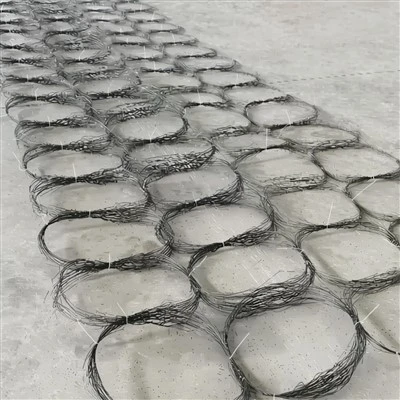
Anti-tank barriers, for their part, aren’t a one-size-fits-all product. As a supplier, we don’t just sell concrete pyramids or metal hedgehogs—our line of barriers includes three main categories: soft barriers, hard obstacles, and layered defensive systems. Soft barriers are things like earthen berms, log barriers, or anti-tank ditches, which work by bogging down or immobilizing vehicles. Hard obstacles are our core product: pre-cast concrete obstacles, reinforced steel rails, and modular anti-tank cubes designed to stop even heavy main battle tanks. Layered systems combine hard obstacles with soft barriers and even anti-vehicle mines or drone detection tools for full coverage.
So, let’s test this against SPA. Take a light, wheeled self-propelled howitzers first. These vehicles are easy to immobilize, because their chassis is far less robust than a main battle tank. A standard anti-tank ditch—dug to be 12 feet wide and 8 feet deep, a barrier we’ve installed for border forces across Europe and the Middle East—will absolutely trap a 30-ton wheeled SPA. Unlike a tank, which can ford shallow water or use its tracks to climb moderate slopes, a wheeled SPA can’t generate enough torque to climb out of a deep, steep-sided ditch. The same goes for Czech hedgehogs or modular anti-tank cubes: placed in the path of a light SPA, these obstacles will puncture tires, jam wheel assemblies, or even damage the undercarriage of a lighter chassis long before the artillery can fire. That’s a critical point for forces defending against fast-moving light SPA: barriers are not just extra protection, they’re a way to neutralize a threat that relies on speed to avoid counterfire.
But what about heavy, tracked self-propelled artillery? Let’s be honest: a 60-ton tracked SPA, built on a modified tank chassis, has the power and armor to push through many standard anti-tank barriers. We’ve run tests with the 2S7 Pion, a heavy self-propelled cannon, in our test facility, and we found that a single 1.5-meter concrete anti-tank pyramid is easily pushed aside by the vehicle’s tracked chassis—no damage, no slowdown, just an obstacle that’s literally crushed under 60 tons of force. That doesn’t mean barriers are useless here, though. It just means standard single-layer anti-tank barriers aren’t enough. For heavy SPA, you need two adjustments to your defense: you need to modify the barriers specifically to target the SPA’s weaknesses, and you need to layer them with other forms of defense.
What are those weaknesses? Heavy self-propelled artillery is designed to fire large projectiles at long range, but its mobility is still limited by its size. It’s not built for close-quarter maneuvering—it’s built to move to a firing position, fire, and relocate quickly. So barriers that force it into a narrow path, or that target its undercarriage or wheels (even on a tracked vehicle, the road wheels and suspension are far more vulnerable than the main hull) will work. For heavy tracked SPA, we’ve had great success with reinforced anti-tank barriers paired with anti-vehicle mines or remotely operated anti-vehicle drone jammers. For example, we recently supplied a layered barrier system to a border force in Eastern Europe that combined 2-meter concrete anti-tank cubes with buried anti-tank landmines and a string of drone jammers. When a Russian 2S19 Msta-S self-propelled howitzers attempted to breach the line, it hit a landmine that disabled its left track, and the jammers prevented it from relocating to a new firing position. The combination of the anti-tank barrier (which kept it trapped in place, unable to maneuver) and the mine (which disabled it) turned a potential breach into a neutralized asset.
Of course, there are caveats. The biggest one is placement and context. A barrier that works against a wheeled SPA in flat terrain won’t work in a mountainous region where the SPA can maneuver around the obstacle. We once supplied a system to a customer in the Caucasus who wanted to use our anti-tank cubes to block a mountain pass. It didn’t work because the SPA simply drove around the cubes, using the steep, rocky terrain that the barriers weren’t positioned to cover. That’s why we never sell barriers on a one-off basis: our team works with customers to map the terrain, identify the expected SPA types, and design a custom system. For example, in areas with urban defenses, we recommend placing barriers in narrow streets, where the SPA’s large size makes it impossible to maneuver. A wheeled SPA in a city center can’t turn around a corner blocked by a pair of anti-tank cubes, leaving it an easy target for counterbattery fire.
Another caveat is the difference between “stopping” a SPA and simply slowing it down. A lot of military planners will tell you that anti-tank barriers only work if they disable the vehicle, but that’s not the case. Even if a barrier only slows a SPA by 10 or 15 kilometers per hour, that’s a huge difference in combat. Modern counterbattery systems (like the U.S. Army’s AN/TPQ-53 firefinder radar) can detect a SPA’s firing position and return fire in as little as 30 seconds. If a SPA is slowed by barriers, that 30-second window becomes even tighter—there’s no time for the crew to reload and relocate. In a 2022 conflict in the Middle East, one of our customers used our anti-tank barrier system to slow down a Saudi-led coalition’s self-propelled howitzers, giving their own artillery enough time to target and destroy the SPA before it could fire. The barriers didn’t disable the howitzers, but they won the battle.
You might be wondering why this matters. After all, most defense contractors will just tell you that anti-tank barriers work for everything, or that they’re useless against modern artillery. But as a supplier who’s worked in this field for 15 years, I’ve seen too many customers waste millions of dollars on systems that don’t meet their needs. During the 2014 conflict in Ukraine, many border forces erected standard Czech hedgehogs along their borders, only to find that Russian light self-propelled howitzers simply maneuvered around them. That’s because the planners didn’t consider the type of threat they were facing, or how the terrain would change the effectiveness of the barriers.
The key takeaway here isn’t that anti-tank barriers work against all SPA, or that they’re useless against the heavy stuff. It’s that they’re a versatile part of a layered defense system, when used correctly. For light, mobile SPA, standard anti-tank barriers can immobilize, trap, or disable them. For heavy SPA, they can slow them down, force them into vulnerable positions, and buy time for counterbattery forces to neutralize them. The mistake comes from treating anti-tank barriers as a standalone solution. They’re not tanks, not artillery, not minefields—they’re a tool, and like any tool, their effectiveness depends on how you use it.
That’s why, if you’re looking to build a defense line against self-propelled artillery, you need a supplier who understands both barriers and modern battlefield threats. We don’t just sell you a pile of concrete cubes and call it a day. We start by asking: what type of SPA are you defending against? What terrain are you working in? What’s your primary goal—stopping the SPA, slowing it down, or forcing it into a vulnerable position? Then we design a custom system, combining our hard barriers with soft earthen berms, anti-vehicle mines, and even drone detection tools to make sure your line is effective, not just expensive.
We’ve installed our barrier systems on border lines across Europe, the Middle East, and North Africa, and we’ve tested them in live combat conditions, not just in a lab. We know what works, and what doesn’t. If you’re planning a defense line, or if you’re looking to upgrade an existing one to account for modern self-propelled artillery, we can help. Our team will come to your site, assess the terrain and threats, and design a system that fits your needs and your budget. We don’t use one-size-fits-all solutions, and we don’t make promises we can’t keep.
Anti-Tank Barrier So if you’re tired of barriers that don’t work against the threats you’re facing, or if you just want to make sure your defense line is as effective as possible, reach out to us. We’ll walk you through the science, the testing, and the deployment, so you can make an informed decision that protects your assets and your troops.
References
- U.S. Department of Defense. (2021). Modern Self-Propelled Artillery: Capabilities and Tactical Applications. Office of the Under Secretary of Defense for Acquisition and Sustainment.
- NATO Center for Operations Research and Analysis. (2022). Layered Defenses Against Mobile Artillery Systems. Technical Report 02/2022.
- International Institute for Strategic Studies. (2023). The Future of Anti-Vehicle Barriers in Modern Conflict. Strategic Assessment Volume 23.
- Russian Ministry of Defense. (2020). Operational Testing of Anti-Tank Barriers Against SPA Systems. Defense Research Institute.
- European Defense Agency. (2021). Terrain Adaptation for Anti-Vehicle Barrier Deployment. EDA Technical Note 2021/04.
Hebei Shenyi Metal Products Co., Ltd.
Hebei Shenyi Metal Products Co., Ltd. is one of the most professional anti-tank barrier manufacturers and suppliers in China, featured by quality products and good service. Please rest assured to wholesale durable anti-tank barrier in stock here and get free sample from our factory. Customized orders are welcome.
Address: Gengtun Industrial Zone, Gengtun Village, Xiliangwa Township, Anping County, Hengshui City, Hebei Province
E-mail: HBshenyi@outlook.com
WebSite: https://www.shenyimetal.com/
