If you’ve ever worked in electrical distribution, substations, or industrial power systems, you’ve probably heard the term “dropout high-voltage fuse” thrown around—maybe you’ve even used one, but never stopped to ask how it’s different from the fuses sitting in your home electrical panel. As a high-voltage fuse supplier who’s spent the last decade troubleshooting and equipping facilities with the right protection gear, I’ve seen first-hand how these unsung components keep power systems safe, and how much confusion there is around what makes them stand out from standard high-voltage fuses. Let’s break it down, no overly technical jargon, just the practical details you need to know. High-voltage Fuse
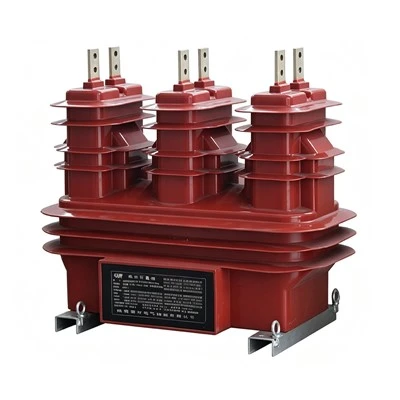
First, let’s start with the basics: a high-voltage fuse, at its core, is a safety device designed to protect electrical equipment from damage caused by overcurrent (too much electricity flowing through a circuit) or short circuits. When the current exceeds the fuse’s rated limit, a thin metal element inside the fuse melts, breaking the circuit and stopping the flow of excess power—think of it like a circuit breaker, but simpler, and built for voltages way higher than what your home uses. A standard high-voltage fuse stays fixed in its holder, right? It’s mounted permanently, and when it blows, you have to go through the trouble of disconnecting the power, removing the blown fuse, and installing a new one. That works for some applications, but not for a lot of medium-to-high-voltage setups where quick access and visible confirmation of a working circuit matter most.
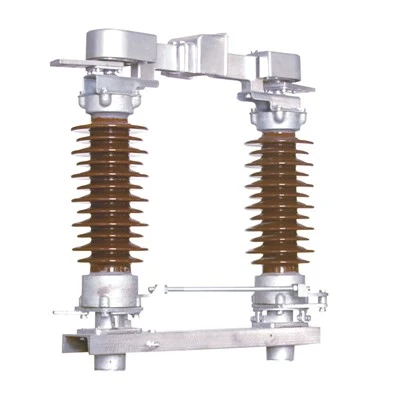
That’s where the dropout high-voltage fuse comes in. The biggest difference is its ability to “drop out” of its holder when it blows. Let’s get specific: it’s a two-part device—first, the fuse itself, which contains the metal element and the arc-quenching material (the stuff that puts out the electrical spark when the element melts), and second, a mounting holder that’s designed to release the fuse if the current overload triggers a blow. When the element melts, the internal pressure from the arc inside the fuse pushes a mechanism that disengages the fuse from the holder. Instead of staying locked in, the fuse swings down on a hinge or drops vertically out of the holder, often hanging at a 45-degree angle or lower.
Why is that such a big deal? Let’s talk about the practical use cases that make this design a game-changer. First, visible status confirmation. If you’re a technician walking a substation or an industrial plant, you don’t have to pull out a multimeter or check a control panel to see if a fuse is working. If the dropout fuse is in its normal, upright position, you know the circuit is intact. If it’s hanging down, you know it’s blown and needs replacing. That cuts down on maintenance time so much—instead of spending 10 minutes verifying every fuse, you can do a quick visual check during a routine walkthrough.
Second, safety. When a standard high-voltage fuse blows, it’s often inside a closed, sealed holder. Even if you know it blew, you still have to turn off the power, open the holder, and handle the hot, potentially pressurized fuse. With a dropout fuse, once it’s dropped out, it’s physically separated from the live parts of the circuit. You can’t accidentally make contact with a live fuse when it’s hanging down away from the busbars (the conductors that carry high voltage) or disconnects. That’s a huge win for technicians who work on energized or near-energized equipment, which is common in many industrial and utility settings.
Third, fast replacement. In applications like distribution transformers—smaller transformers that power residential neighborhoods or commercial buildings—downtime costs add up fast. If a transformer’s primary fuse blows, you can’t afford to wait hours for a replacement. Dropout fuses are designed to be easy to replace: once the blown one is hanging, you just lift the new fuse into the holder until it clicks into place, and you’re back in business in a matter of minutes. No special tools, no need to disconnect long wiring runs—just a quick swap. That’s why you’ll see these fuses everywhere on pole-mounted distribution transformers, which are the little green or gray boxes at the top of utility poles in most suburban areas.
Now, let’s get into the specs that define a dropout high-voltage fuse, because not all are the same. First, voltage rating. These are made for systems ranging from 1 kV all the way up to 38 kV, sometimes higher depending on the application. The voltage rating matters because a fuse designed for 15 kV can’t safely handle a 25 kV circuit—you’d risk the fuse rupturing or failing to interrupt the current, which is a major safety hazard.
Next, interrupting rating. That’s the maximum amount of short-circuit current the fuse can safely stop. For pole-mounted transformers, which have lower short-circuit currents, you’ll see interrupting ratings around 10 kA (kiloamperes) or lower. For larger industrial substations, you’ll need ratings up to 50 kA or more. If a fuse’s interrupting rating is too low, a severe short circuit could cause the fuse to explode instead of breaking the circuit, leading to equipment damage and injury.
Then there’s the fuse’s “current rating”—that’s the amount of normal current it can carry without blowing. For transformers, that’s usually a multiple of the transformer’s rated current, called a “fuse factor.” For example, a 50 kVA transformer might use a fuse rated at 5 A, but wait—no, actually, it’s common for the fuse to be rated at 1.5 to 2.5 times the transformer’s full-load current to avoid blowing on temporary overloads, like when a refrigerator turns on or a motor starts up. That’s a key point: a dropout fuse isn’t just a one-size-fits-all part. It has to be selected to match the equipment it’s protecting, otherwise you’ll have unnecessary outages or no protection at all.
Let’s also clear up a common misconception: dropout fuses aren’t just for transformers. They’re used in a ton of other applications too—like motor control circuits in industrial plants, where a blown fuse can shut down an entire production line, or in capacitor banks, which store electrical energy and need fast, reliable protection if there’s a fault. They’re also used in some switchgear setups, though fixed fuses are more common there, but dropout fuses are still preferred in areas where accessibility and visual status are top priorities.
Now, as someone who’s been selling these fuses for years, I’ll tell you about the mistakes I see people make all the time. First, using a standard high-voltage fuse in a dropout holder. If you try to put a fixed fuse into a dropout holder, it won’t release when it blows. You’ll end up with a blown fuse that’s still in the holder, hidden from view, leading to extended outages and unnecessary maintenance. Second, mismatching the voltage or interrupting rating. I had a client a few years back who tried to save a few bucks by buying a 10 kV fuse for a 15 kV circuit. It blew during a storm, but instead of dropping out, it ruptured, sending shrapnel into the transformer and causing $20,000 in damage. That’s the kind of mistake that can be avoided with the right part, and that’s why we always take the time to ask about the system’s voltage, short-circuit current, and the equipment it’s protecting before making a recommendation.
Another common question: can a dropout high-voltage fuse be reset? No, and that’s intentional. Unlike a circuit breaker, which you can flip back on, a fuse is a single-use device. When the element melts, it’s destroyed—you can’t “reset” it. That’s actually a safety feature. If a fault occurs, the fuse blows, drops out, and physically can’t be turned back on until it’s replaced. That prevents technicians from accidentally re-energizing a faulty circuit, which is a leading cause of electrical accidents.
Let’s talk about how these fuses work internally, just to give you a better idea of the science. The main body of the fuse is a ceramic tube, which is strong, insulating, and heat-resistant. Inside the tube is the metal element—usually silver, copper, or a silver-tin alloy, because silver has low resistance and is good at interrupting arcs. The element is coiled or shaped to fit inside the tube, and it’s surrounded by a granular material like quartz sand. That sand is the arc-quenching material: when the element melts, the sand absorbs the heat from the arc, cools the ionized gas, and stops the current from continuing. The mechanism that makes it drop out is a small spring or latch inside the fuse holder that holds the fuse in place. When the current reaches the fuse’s rated limit, the melting element creates a tiny amount of pressure inside the tube, which releases the latch, and the fuse drops.
Now, where do you see dropout fuses in action? Take a drive through any suburb, and you’ll see utility poles with transformers mounted on crossarms. The transformers have two insulators on the primary side (the side that carries high voltage from the grid) and a fuse mounted between them. That’s the dropout fuse. On a clear day, you can see the fuse upright. If there’s a power outage in a few houses, the utility crew will drive out, look at the transformer, and see if the fuse is hanging down. If it is, they replace it, and power is restored in minutes—way faster than if they had to troubleshoot a complex breaker or fixed fuse setup. For industrial plants, these fuses are used on medium-voltage motor circuits to protect against overloads, which can burn out motors and halt production. A motor burnout can cost a factory thousands of dollars in downtime, so a reliable dropout fuse is a small investment to prevent that.
As a supplier, I’ve worked with everything from small businesses needing a single fuse for their own transformer to utility companies ordering hundreds for a new substation. The key is understanding that each application has unique needs. For a residential distribution transformer, you don’t need a high interrupting rating—just something that can handle the normal current and drop out when it blows. For a large industrial motor with a high short-circuit current, you need a fuse that can safely interrupt 30 kA or more, and that’s where we come in: we carry a range of dropout fuses with different voltage, current, and interrupting ratings, so you can get exactly what you need, no compromises.
I always tell new clients: don’t just buy the cheapest fuse. Check the manufacturer’s specs, make sure the rating matches your system, and confirm that it’s designed as a dropout fuse, not a fixed one. I’ve seen clients buy a $10 fuse that doesn’t work, instead of spending $15 on the right one, and end up paying $1,000 in equipment damage. It’s not worth cutting corners here.
If you’re working on a project, upgrading your electrical system, or just need to replace a blown dropout fuse, the most important thing is to get the right part for your application. Every system is different, and selecting the wrong fuse can lead to outages, safety hazards, or even equipment failure. That’s why we take the time to walk through your needs, answer your questions, and make sure you get a dropout high-voltage fuse that’s reliable, safe, and fits your setup. If you’re ready to source the right fuse for your project, or have questions about specifications, use cases, or maintenance, we’re here to help with your procurement needs. Reach out to our team to discuss your requirements and find the perfect solution for your power system.
High and Low Voltage Switchgear References
- IEEE Std C37.41-2020, IEEE Standard for High-Voltage Fuses for Alternating-Current Systems (1000 V to 38 kV)
- Electrical Safety Foundation International (ESFI). “Fuse Safety and Application Guide for Industrial and Utility Systems.” 2022
- Schneider Electric. “Dropout Fuses: Application and Selection for Distribution Transformers.” Technical Bulletin, 2021
- National Electrical Manufacturers Association (NEMA). High-Voltage Fuse Standards and Performance Requirements, 2020
Zhongtai Electric Power Technology Co., Ltd.
With abundant experience, we are one of the most professional high-voltage fuse manufacturers and suppliers in China. We warmly welcome you to wholesale bulk customized high-voltage fuse from our factory. If you have any enquiry about quotation, please feel free to email us.
Address: High-tech Industrial Park, Chongren County, Fuzhou City, Jiangxi Province (No. 261 Yingbin Avenue)
E-mail: info@zhongtaielectric.com
WebSite: https://www.zhongtaipower.com/
